Webull API Access Guide
Does Webull Have Api: webull api access explained: availability, documentation, rate limits, and integration requirements for developers.

Marketing

-
Webull now documents official Trading and Market Data APIs for eligible retail users, so the article's conclusion that automation requires another broker has been corrected.
If you're seeking to automate your trading strategies through Webull, you might wonder about the availability of an API. Webull now offers official Trading and Market Data APIs for eligible retail traders, alongside its manual trading experience1. In this guide, we'll explore the current landscape regarding Webull's API status, the implications for traders, and alternative solutions like TradersPost that facilitate automated trading with other brokers.
Understanding Webull's Approach
Target Market Focus
Webull caters primarily to retail traders with an emphasis on mobile-first experiences. This focus is reflected in its platform design which prioritizes simplicity and accessibility. Features such as social trading and education tools are integral to its strategy, providing users with a community-driven approach to learning and trading.
Revenue Streams and Strategy
Webull generates revenue through various streams including margin interest, premium subscriptions, and options trading fees. The platform differentiates itself with an intuitive user interface (UI) and user experience (UX), offering advanced charting tools and free market data to enhance user engagement.
Infrastructure Challenges
Launching a public API comes with significant infrastructure demands such as scalable servers, rate limiting systems, secure authentication processes, and comprehensive documentation. These requirements necessitate ongoing developer support and robust security measures to prevent unauthorized access and ensure data integrity.
Unofficial API Methods
Alongside Webull's official API, developers have explored unofficial methods for accessing Webull's services2. This includes using libraries like webull-python-sdk or node-webull-api, though these come with inherent risks.
Risks of Unofficial APIs
- Account Suspension: Utilizing unofficial APIs can lead to account suspension or termination due to violations of Webull's Terms of Service.
- Security Vulnerabilities: These methods expose users to potential security threats such as credential theft or man-in-the-middle attacks.
- Lack of Support: There is no official support or documentation available for these unofficial tools, making troubleshooting difficult.
Official Integrations and Institutional Access
Webull offers official API access for eligible retail and institutional clients. Eligible clients can apply for API service through Webull's website3.
Available Features for Institutional Access
- OAuth authentication
- Limited account data
- Trading API access1
- Third-party app integration
These options are available to eligible clients, including retail investors, individual investors, day traders, and program developers1.
Exploring Alternative Solutions
For traders requiring API access, several alternatives provide robust capabilities:
- Alpaca: Offers commission-free trading with a comprehensive API supporting crypto trading.
- TD Ameritrade: Provides a robust API with extensive documentation suitable for developing sophisticated trading strategies.
- Interactive Brokers: Known for its professional-grade API supporting global markets at low costs.
- TradeStation: Features EasyLanguage support for strategy development along with integrated backtesting tools.
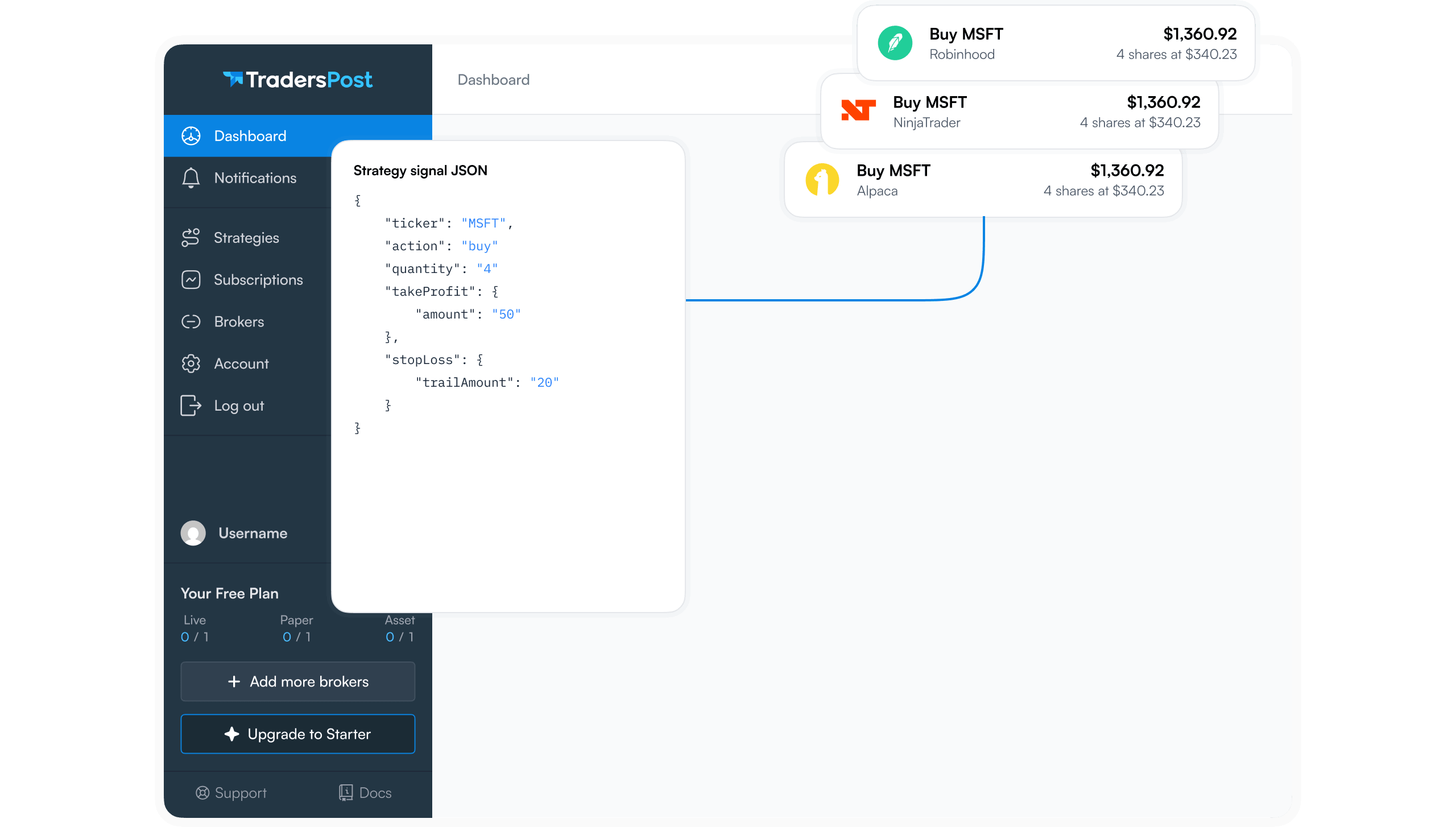
Platforms like TradersPost seamlessly connect TradingView strategies to brokers like Alpaca, TradeStation, Tradier, Interactive Brokers, providing an automated bridge between strategy development and execution without the need for coding expertise.
Manual Trading Options at Webull
Even without an API, Webull offers features valuable for manual traders:
Technical Analysis Tools
With over 50 technical indicators and customizable chart layouts, Webull supports in-depth analysis essential for discretionary strategies.
Real-Time Data Access
Real-time market data including Level 2 quotes and options chains are available to help traders make timely decisions during extended trading hours from pre-market to after-hours sessions.
Practice Accounts
Webull offers practice accounts with $1 million in virtual capital allowing users to test strategies risk-free under real market conditions.
Conclusion
While Webull now offers official APIs for eligible retail traders, understanding the landscape helps set realistic expectations1. If automation is critical to your strategy execution, consider transitioning to brokers offering robust APIs supported by platforms like TradersPost. By doing so, you can leverage technology to enhance your trading efficiency while adhering to sound risk management practices.
TradersPost acts as a vital link between your strategic ideas on TradingView and their realization through automated execution across multiple supported brokers such as Alpaca or Interactive Brokers. Whether you opt for manual trade execution on Webull or explore automated solutions elsewhere, aligning your approach with your trading goals will pave the way toward success in the evolving world of retail trading.
References
1 Webull OpenAPI | Multi-Asset Trading & Market Data APIs
2 developer.webull.com, Welcome | Webull API
3 webull.com, A trading API (Application Programming Interface) ...