Navigating Prop Firm Trading Rules and How TradersPost Can Help
Prop firm trading’s strict rules can make passing evaluations challenging. Automating trading strategies with TradersPost helps traders navigate these constraints by applying the same rules to every trade, reducing manual errors, and managing multiple accounts.

Marketing

-
Traders ask how prop firm limits work, so the guidance now matches Topstep's 3:10 p.m. Central Time close and its trailing Maximum Loss Limit.
Prop firm trading has gained popularity, offering traders the opportunity to manage large accounts funded by the firms themselves. However, prop firms impose strict rules to minimize risk, which can make it difficult for traders to pass evaluations and maintain funded accounts. One common complaint is the tight risk controls, such as small daily loss limits and required account closures before market maintenance periods. These constraints can force traders to take a more conservative approach than they might otherwise.
Understanding the Risk Constraints
Prop firms typically have risk parameters that are tighter than those found in personal accounts. For instance, some firms may require traders to close all positions by 3:10 p.m. Central Time1. While this allows for positions to be reopened during electronic trading hours, it limits the ability to swing trade over multiple days. Some of these limits work like a trailing stop: Topstep's Maximum Loss Limit rises as the end-of-day balance grows but never moves down2.
These strict rules mean that traders need to be highly disciplined, ensuring that risk management practices are top priority. The evaluation process can be particularly challenging, as traders are often required to hit profit targets while staying within tight drawdown limits, such as reaching a $3,000 profit target without hitting a $2,000 maximum loss limit3. This necessitates a slow, methodical trading approach where smaller, more consistent gains are emphasized over rapid, high-risk trades.
The Role of Automated Trading in Passing Evaluations
Automation can be a game-changer in navigating the complexities of prop firm trading. Prop firms like Topstep allow automated strategies as part of their rules, enabling traders to set up systems that adhere to the firm’s trading requirements. Automated trading systems can be configured to close out positions before maintenance periods and reopen them during electronic hours, thereby maintaining compliance with firm rules while still capitalizing on trading opportunities.
With automated trading, traders can minimize the human error factor, such as forgetting to close positions or mismanaging risk levels. Automated systems execute trades based on predetermined rules, which helps trades follow the prop firm’s guidelines and reduces the likelihood of costly mistakes.
How TradersPost Can Simplify Prop Firm Trading
1. Automated Strategy Execution
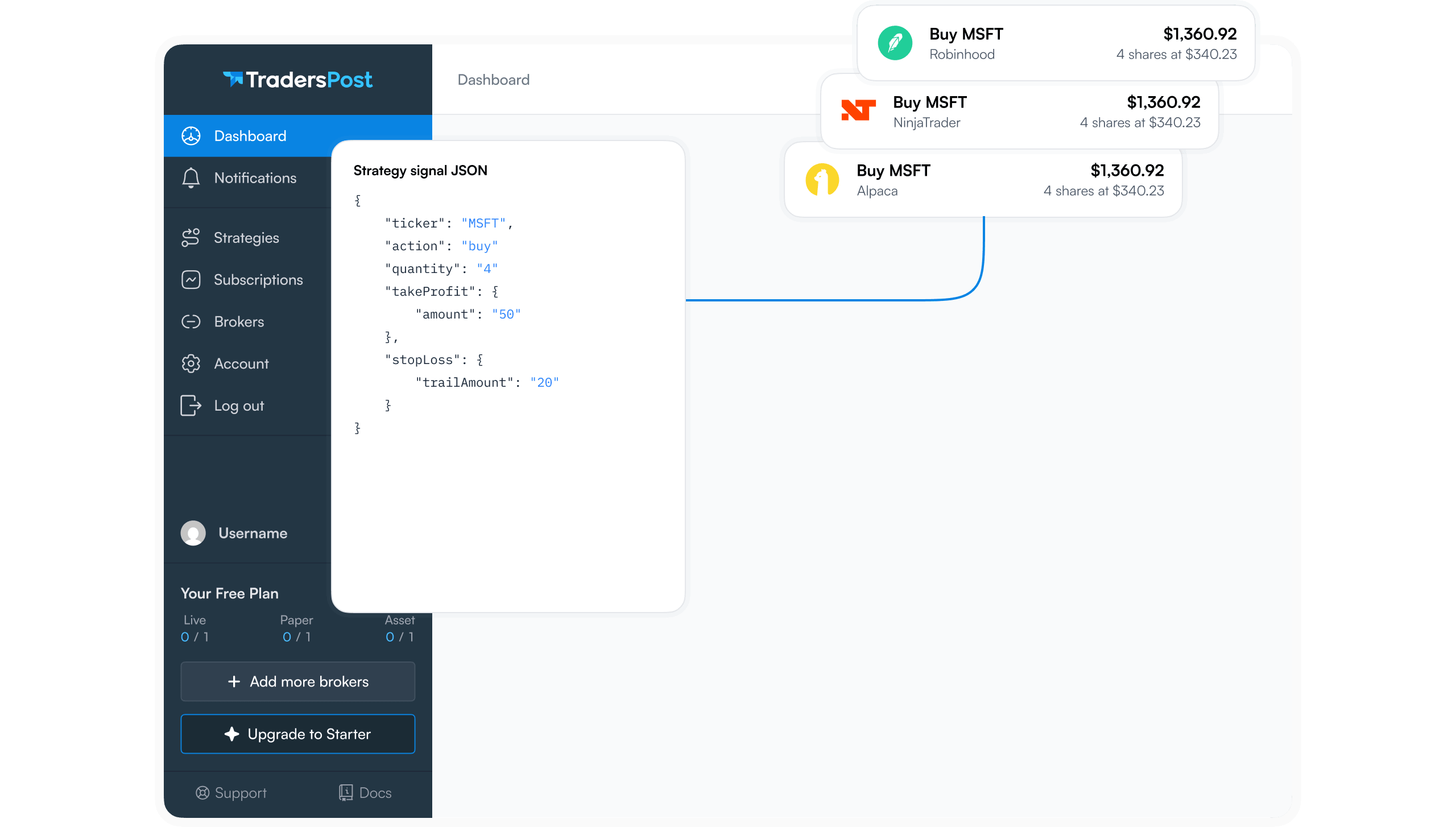
TradersPost enables traders to automate their strategies, ensuring consistency in execution. Traders can adjust their signals to account for rules to manage entry and exit points, close trades before mandatory times, and control position sizes according to the prop firm’s requirements relying on TradersPost to reliably execute those trade signals. This automation helps strategies stay within the firm’s risk controls, but traders remain responsible for following the firm’s rules.
2. Managing Multiple Accounts
For traders looking to diversify across various funded accounts or strategies, TradersPost supports the management of multiple accounts simultaneously. This feature is useful for spreading risk and capitalizing on different market opportunities without the need to manually intervene across several accounts. Automation ensures that each account follows its designated trading plan, optimizing performance and reducing administrative workload.
Common Mistakes to Avoid in Prop Firm Trading
1. Overtrading
One of the most frequent mistakes is overtrading, which can quickly lead to exceeding daily loss limits. The temptation to trade aggressively often stems from the desire to reach profit targets rapidly. However, with prop firms’ tight risk parameters, it’s crucial to focus on making steady, smaller gains rather than aiming for large, risky profits.
2. Ignoring Firm-Specific Rules
Each prop firm has unique rules, and failing to adhere to these can lead to disqualification. For instance, not closing trades by the mandated time or holding positions overnight when not allowed can result in penalties or account termination. Traders must familiarize themselves with all guidelines and automate tasks where possible to ensure compliance.
3. Lack of a Consistent Trading Plan
Without a well-defined strategy, traders are more likely to make impulsive decisions that conflict with prop firm rules. Automation can help by enforcing a structured trading plan that includes predefined entry, exit, and risk management rules.
Adapting to Different Market Conditions
The trading environment can change rapidly, requiring different approaches depending on market volatility and liquidity. During electronic trading hours, for example, volatility may be lower, making it suitable for specific strategies like range trading or scalping. TradersPost allows for strategy customization to adapt to these conditions, helping traders remain profitable under various market scenarios.
Conclusion
Prop firm trading offers unique opportunities, but it also comes with significant challenges due to stringent rules and risk parameters. Automation through platforms like TradersPost can help traders navigate these complexities by executing a consistent, rule-based plan, minimizing manual errors, and enabling effective risk management. By leveraging automated trading systems, traders can enhance their chances of passing prop firm evaluations and maintaining long-term success with funded accounts.
References
1 help.topstep.com, When and What Products Can I Trade?
2 help.topstep.com, What is the Maximum Loss Limit?
3 topstep.com, How to get funded as a trader: your path to a funded account