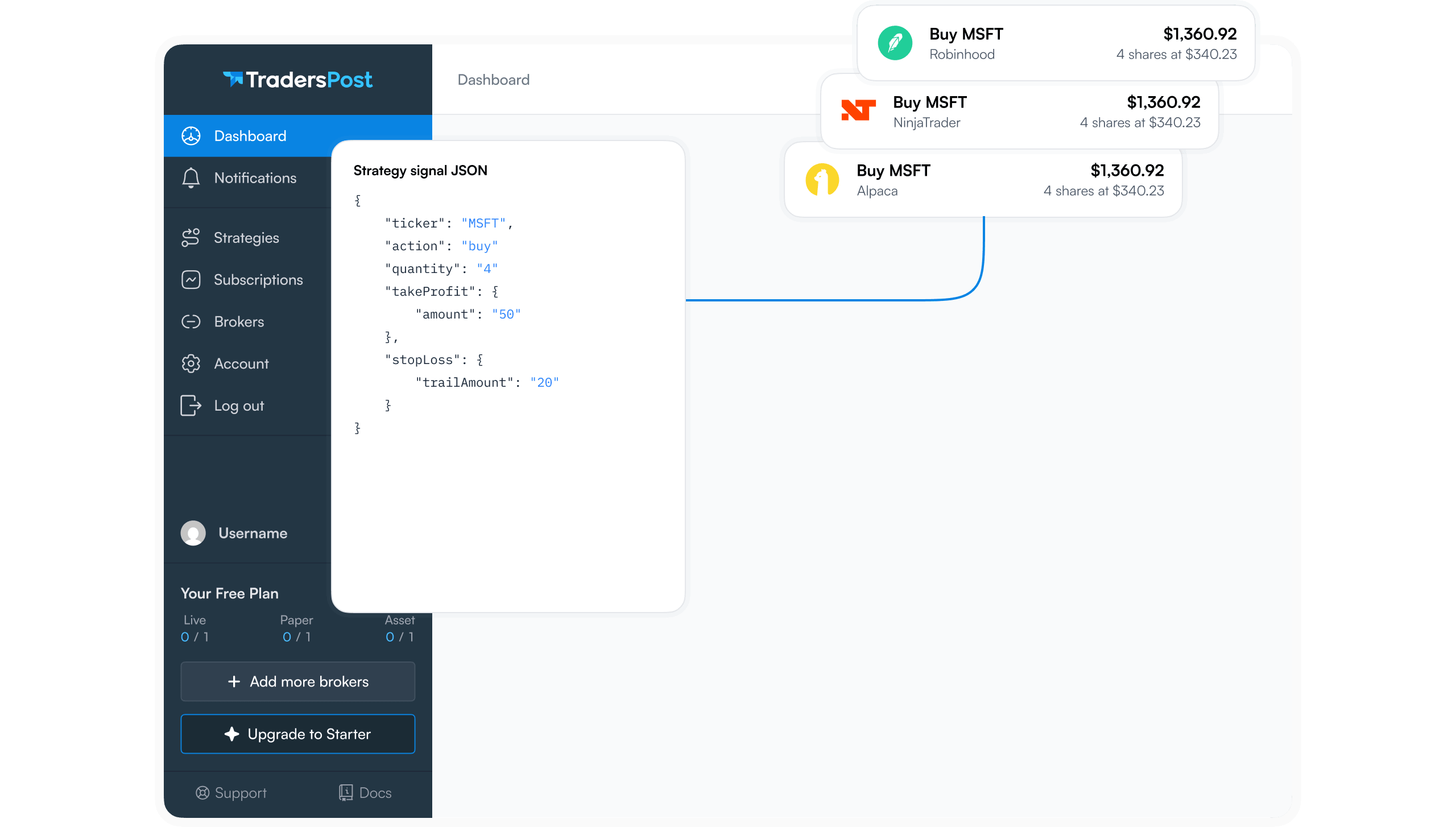
TradersPost operates as a non-custodial automated trading platform, enabling users to connect alerts from their preferred trading platforms to their selected brokerage or exchange accounts. It abstains from the transmission, custody, or management of customer funds, covering both traditional and cryptocurrency assets. Typically, registration requirements set by regulatory entities such as the SEC, FINRA, or FinCEN apply to entities that hold or transmit customer funds. To ensure ongoing compliance, TradersPost regularly engages with regulatory authorities to confirm its adherence to all relevant local and federal laws.
TradersPost does not provide alerts, signals, research, analysis, or trading advice of any kind. It is designed to assist traders and investors in making their own trading decisions based on their alerts. The platform does not offer recommendations regarding securities to buy or sell, nor does it provide trading or investing advice. The platform and its features, capabilities, and tools are provided 'as-is' without any warranty.
Risk Disclosure: The use of automated trading systems involves inherent risks, including the potential for significant financial loss. These systems operate based on predetermined algorithms that may not fully adapt to changing market conditions, possibly making them unsuitable for some investors. Individuals are advised to thoroughly assess their financial situation and risk tolerance before using this platform.
Testimonials appearing on this website may not be representative of other clients or customers and is not a guarantee of future performance or success.
Broker, exchange, trading platform, company names, product names, service marks, trademarks, and logos appearing on this website are the property of their respective owners and are used solely to identify supported connections and technical compatibility. TradersPost is an independent third-party platform and is not affiliated with, endorsed by, sponsored by, or authorized by any of these organizations unless expressly stated. Technical compatibility does not imply a commercial partnership, sponsorship, endorsement, or authorization.
See Important Disclosures
for trademark information.
© 2026 TradersPost, Inc. All rights reserved.