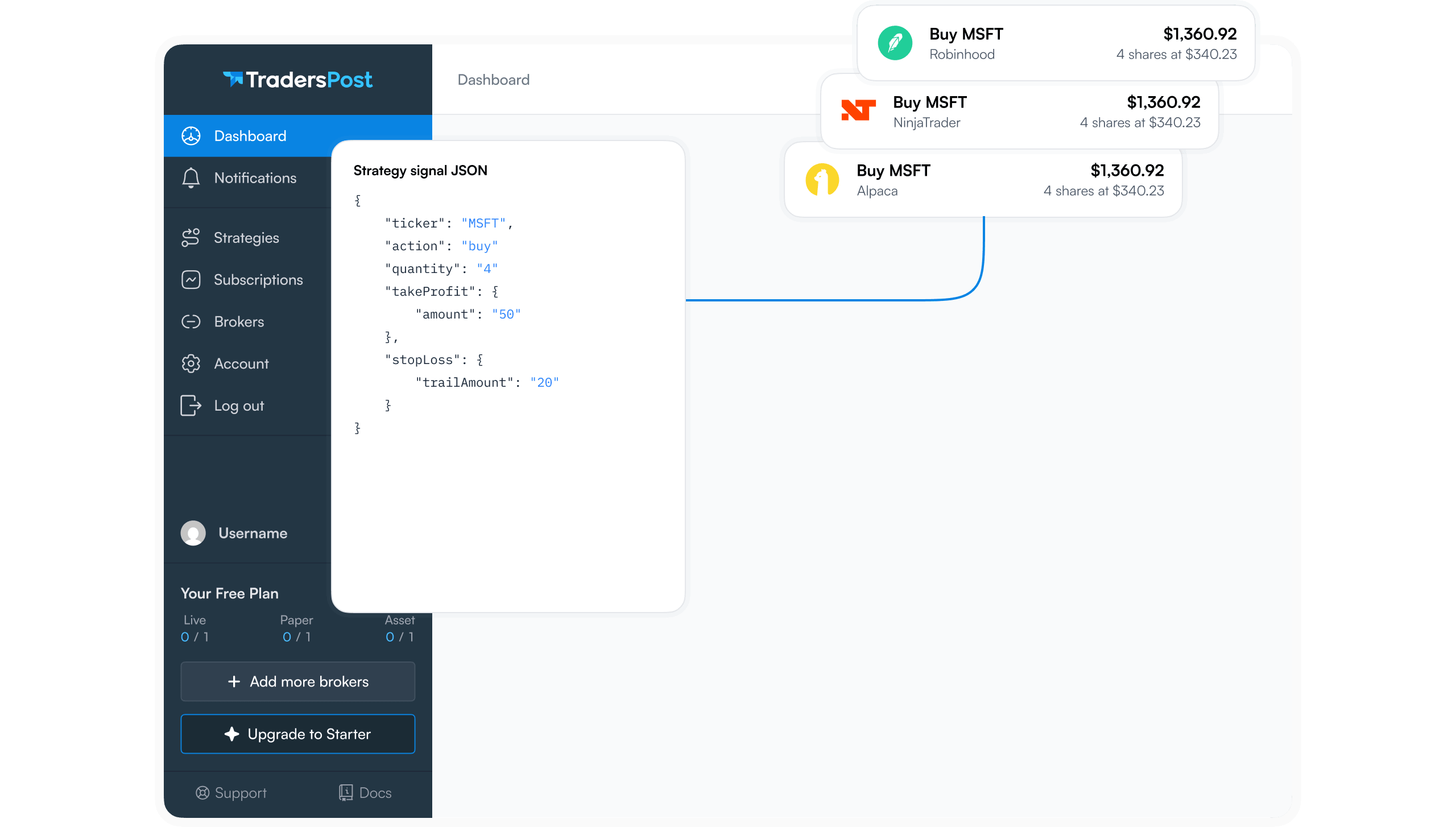
Setting Take Profit and Stop Loss Relative to Market Order Fill Price on TradersPost
TradersPost currently calculates take profit and stop loss based on specified entry prices, but a future update will align these with the actual market order fill price to improve trading accuracy.

Marketing

-
Current documentation shows that market-order exits use the latest quote midpoint or a required signalPrice rather than the actual fill, so the guidance now describes estimate-based levels instead of a planned fill-price adjustment.
For traders using market orders on TradersPost, ensuring that take profit and stop loss levels align with the actual fill price is important for accurate execution. This guide explains how take profit and stop loss settings currently work with market orders and what improvements TradersPost is considering to make these levels more reliable.
Current Functionality for Take Profit and Stop Loss Orders
When a market order is executed on TradersPost, the exact fill price may vary due to slippage or fast-moving markets. Currently, TradersPost calculates take profit and stop loss levels for market orders using the midpoint of the latest quote as the estimated entry price, rather than adjusting based on the final fill price1. This can sometimes lead to discrepancies, where take profit and stop loss targets are not precisely aligned with the market entry point due to this slippage.
Challenges with Setting Relative Take Profit and Stop Loss
Market orders do not have a fixed entry price, so any predefined take profit and stop loss levels may end up being slightly off if significant slippage occurs. For example, a market order intended to enter at $50 may fill at $50.10. If the take profit and stop loss are set based on the initial $50, they may not match the final entry point, potentially affecting the trade’s effectiveness.
Planned Improvements for Relative Position Tracking
TradersPost calculates relative take profit and stop loss levels for market orders using an estimated entry price2. This enhancement would allow the platform to adjust take profit and stop loss levels based on the actual execution price, creating a more accurate alignment with the trade’s entry point. This estimate-based approach makes the stop-loss and take-profit targets relative to the estimated entry price while accounting for current market pricing2.
Tips for Managing Take Profit and Stop Loss with Market Orders
Because market-order levels use an estimated entry price, traders can manage relative levels by:1
1. Setting Buffer Levels: Allow a small buffer for stop-loss and take-profit levels to account for possible slippage.
2. Using Limit Orders When Precision Is Key: If entry precision is essential, consider using limit orders instead, as they provide more control over entry price but are subject to fill availability.
Conclusion
TradersPost calculates take profit and stop loss for market orders from an estimated entry price, using the latest quote midpoint or a signalPrice when required, rather than the actual fill price2. This approach helps align exits with current market pricing while accounting for the estimated entry price1.
References
1 blog.traderspost.io, Can You Set Relative Take Profit and Stop Loss Based on Fill ...
2 Correct JSON Structure for TradersPost Take Profit Webhooks