Understanding Federal Reserve Rate Cut Cycles
Learn how Federal Reserve rate cuts impact trading strategies, what double rate cuts signal, and how to position for different monetary policy phases.

Marketing

Federal Reserve interest rate decisions rank among the most impactful events for traders across all asset classes. Whether you trade stocks, bonds, crypto, or forex, understanding rate cut cycles and their implications helps you position strategies appropriately. This guide breaks down Fed rate dynamics and what they mean for your trading.
The Federal Funds Rate Explained
The federal funds rate represents the interest rate at which banks lend reserves to each other overnight. While this seems like an obscure banking detail, it cascades through the entire economy affecting:
- Consumer borrowing costs (mortgages, auto loans, credit cards)
- Business investment decisions and expansion plans
- Bank lending standards and credit availability
- Currency exchange rates and international capital flows
- Asset valuations across stocks, bonds, and real estate
When the Fed raises rates, it makes borrowing more expensive, which slows economic activity and reduces inflation pressure. When the Fed cuts rates, it makes borrowing cheaper, stimulating economic activity and investment.
As of January 2025, the federal funds rate sits at 4.00-4.25%, following a series of 25 basis point cuts through late 2024 and early 2025. Market expectations point to gradual additional cuts through 2025 and 2026.
What Is a Double Rate Cut?
Rate changes typically come in 25 basis point (0.25%) increments. A "double rate cut" refers to a 50 basis point (0.50%) cut—double the standard amount. Some market participants colloquially refer to 50 basis point cuts as "half rate cuts" to emphasize they're only half a full percentage point, though the more common term is "double cut."
As one trader observed: "That's the first time, just casually, we got a double rate cut from the Fed. And already, it's sort of like, we're used to it. What do you mean? Now we're getting, I've heard some people call it a half rate cut. If it's not 50 basis points."
This linguistic shift reveals how quickly markets adapt expectations. What was once considered an aggressive emergency measure becomes normalized after a single occurrence.
The Significance of Rate Cut Size
The size of rate cuts signals Fed urgency and economic assessment:
25 Basis Point Cuts (Standard)
These represent normal monetary policy adjustments. The Fed makes incremental changes based on economic data trends without signaling immediate crisis.
50 Basis Point Cuts (Aggressive)
Double cuts indicate accelerated easing, typically in response to rapidly deteriorating conditions or to preempt expected weakness.
75+ Basis Point Cuts (Emergency)
Cuts exceeding 50 basis points signal crisis response. These typically occur during financial market emergencies or severe economic dislocations.
Zero Percent Rates (Crisis)
When rates hit the zero lower bound, the Fed exhausted conventional tools and must deploy unconventional measures like quantitative easing.
The progression from standard cuts to emergency cuts reveals deteriorating Fed confidence in economic stability.
Fed Rate Recalibration Phases
The Fed describes its rate adjustment process using specific terminology that provides insights into policy thinking:
Restrictive Policy
When rates are "meaningfully restrictive," the Fed intentionally slows the economy to combat inflation. Restrictive policy creates headwinds for growth.
Neutral Policy
Neutral rates neither stimulate nor restrict economic activity. The Fed estimates neutral rates around 2.5-3%, though this varies based on structural economic factors.
Accommodative Policy
Below-neutral rates actively stimulate the economy by encouraging borrowing and investment. Accommodative policy creates tailwinds for growth.
Recalibration
Fed Chair Jerome Powell has used "recalibration" to describe adjusting policy stance without committing to specific outcomes. As Powell noted: "We're not renaming the phase yet. But we may get around to that. But no, I would say we are though in a new phase in the process."
This careful language allows the Fed flexibility to adjust course based on data without boxing themselves into predetermined paths.
Rate Cuts and Asset Class Performance
Different assets respond distinctly to rate cut cycles:
Equities
Falling rates typically benefit stocks by:
- Reducing discount rates for future cash flows
- Lowering corporate borrowing costs
- Encouraging investors out of bonds into stocks
- Supporting economic activity and corporate earnings
However, rate cuts prompted by recession fears can initially hurt stocks as economic concerns override interest rate benefits.
Bonds
Bond prices move inversely to yields. Rate cuts cause:
- Rising bond prices as yields fall
- Capital appreciation for existing bondholders
- Curve steepening as long-term rates fall more than short-term
- Credit spread tightening as default fears ease
Long-duration bonds benefit most from rate cut cycles.
Crypto
Cryptocurrency markets show mixed responses to rate cuts:
- Lower rates reduce opportunity cost of holding non-yielding assets
- Rate cuts increase liquidity available for speculative assets
- Dollar weakness from rate cuts can boost crypto prices
- Recession-driven cuts may still pressure crypto short-term
Dollar
The dollar typically weakens during rate cut cycles as:
- Lower rates reduce foreign demand for dollar-denominated assets
- Yield differentials favor other currencies
- Expectations of continued easing weigh on currency
- Risk-on sentiment reduces safe-haven dollar demand
A weakening dollar benefits emerging markets and commodities priced in dollars.
Trading Fed Announcement Days
FOMC meeting days create significant volatility and opportunity. Rate decisions arrive at 2:00 PM ET followed by the chair's press conference at 2:30 PM.
Pre-Announcement Positioning
Markets typically price in expected outcomes days before announcements. Fed funds futures markets provide probability estimates for various rate decisions.
When consensus strongly expects a specific outcome, the pre-announcement drift toward that scenario offers limited opportunity. However, when uncertainty exists, positioning ahead of announcements becomes profitable.
Immediate Reaction
The initial market response in the 30 seconds following the announcement often reverses. Algorithmic trading creates extreme moves as machines parse statement language and compare to previous statements.
This creates a pattern: immediate spike or drop, followed by reversal, followed by the "real" move after humans digest the full statement.
Press Conference Volatility
Chair Powell's press conference generates the largest sustainable moves. Markets react to:
- Tone and confidence level
- Hawkish or dovish language shifts
- Economic assessment changes
- Forward guidance modifications
- Responses to specific questions
The phrase "off the cuff" matters most. When Powell reads prepared remarks, they're carefully calibrated to avoid surprises. When reporters ask unexpected questions, Powell's spontaneous responses reveal authentic Fed thinking.
Betting on Fed Decisions
Traders can directly trade Fed rate expectations through multiple vehicles:
Fed Funds Futures
CME Fed funds futures let you bet on where rates will be after specific FOMC meetings. These contracts settle based on the average effective fed funds rate for the contract month.
Interest Rate Options
Options on fed funds futures or treasury securities allow defined-risk bets on rate movements.
Polymarket and Prediction Markets
Decentralized prediction markets increasingly offer contracts on Fed decisions with binary outcomes.
As one trader described: "I love betting on fed rates. It's my sports thing. I love taking like a one penny to two penny bet on what the Fed will do because what will happen in the interim is that when you get a volatility event, those Polymarket bets will go massively in your favor temporarily."
The strategy involves buying long-dated positions at low probability prices, then potentially selling during volatility spikes when probabilities shift dramatically.
Rate Cuts and Recession Signals
Rate cuts carry dual interpretations:
Bullish Interpretation
Lower rates reduce borrowing costs, support asset valuations, and provide economic stimulus. Markets often rally on rate cut announcements.
Bearish Interpretation
The Fed only cuts rates when economic weakness appears or recession threatens. Rate cuts can signal trouble ahead.
The key distinction: proactive versus reactive cuts.
Proactive cuts occur when the Fed sees early warning signs and moves ahead of problems. These typically support markets.
Reactive cuts occur when recession is already underway or financial stress is acute. These often fail to prevent market declines.
Emergency Fed Actions
Beyond scheduled FOMC meetings, the Fed can intervene between meetings during crises:
Emergency Rate Cuts
Unscheduled rate cuts signal acute stress requiring immediate action. March 2020 saw emergency cuts as COVID-19 crashed markets.
Emergency Lending Facilities
The Fed can create specialized lending programs to address specific market dysfunctions, like the repo market facilities during September 2019 stress.
Forward Guidance Changes
The Fed might release statements between meetings to calm markets or adjust expectations without actual policy changes.
Coordination with Treasury
During severe crises, the Fed coordinates with the Treasury Department on fiscal-monetary policy combinations.
These emergency actions typically generate strong market rallies as traders interpret them as "Fed put" support.
The Fed Put Concept
The "Fed put" refers to the implicit downside protection the Fed provides markets. Like a put option that pays off when prices fall, the Fed historically intervenes when markets decline substantially.
This creates the pattern:
- Markets sell off significantly
- Financial conditions tighten
- Credit markets stress
- Fed intervenes with rate cuts or liquidity
- Markets rally from the support
Traders who understand this cycle position for rebounds rather than panicking into bottoms. As one trader noted: "The Fed comes in guns ablaze when things like this happen. We know the formula—Fed comes in, prints money, does what it needs to do in order to save the system."
Historical examples include:
- 2018: Fed paused rate hikes after market decline
- 2019: Fed cut rates amid repo market stress
- 2020: Emergency cuts and QE during COVID crash
- 2023: Liquidity support during banking crisis
The Fed put isn't guaranteed, but it's proven reliable enough that positioning for intervention during crises has worked historically.
Monitoring Fed Expectations
Rather than reacting to Fed announcements, successful traders monitor evolving expectations:
CME FedWatch Tool
The CME Group provides probability estimates for target rate levels at upcoming FOMC meetings based on fed funds futures pricing.
Dot Plot Analysis
The Fed's quarterly Summary of Economic Projections includes the "dot plot" showing where each FOMC member expects rates in future years.
Fed Speaker Calendar
Regional Fed presidents and Board governors give speeches revealing their policy views. Tracking these speeches provides advance signals.
Treasury Yield Curve
The shape of the yield curve reflects market expectations for future rate changes. Inversions signal expected cuts ahead.
Credit Spreads
Widening credit spreads indicate deteriorating conditions that might prompt Fed action even if official data looks fine.
Automating Rate Decision Strategies
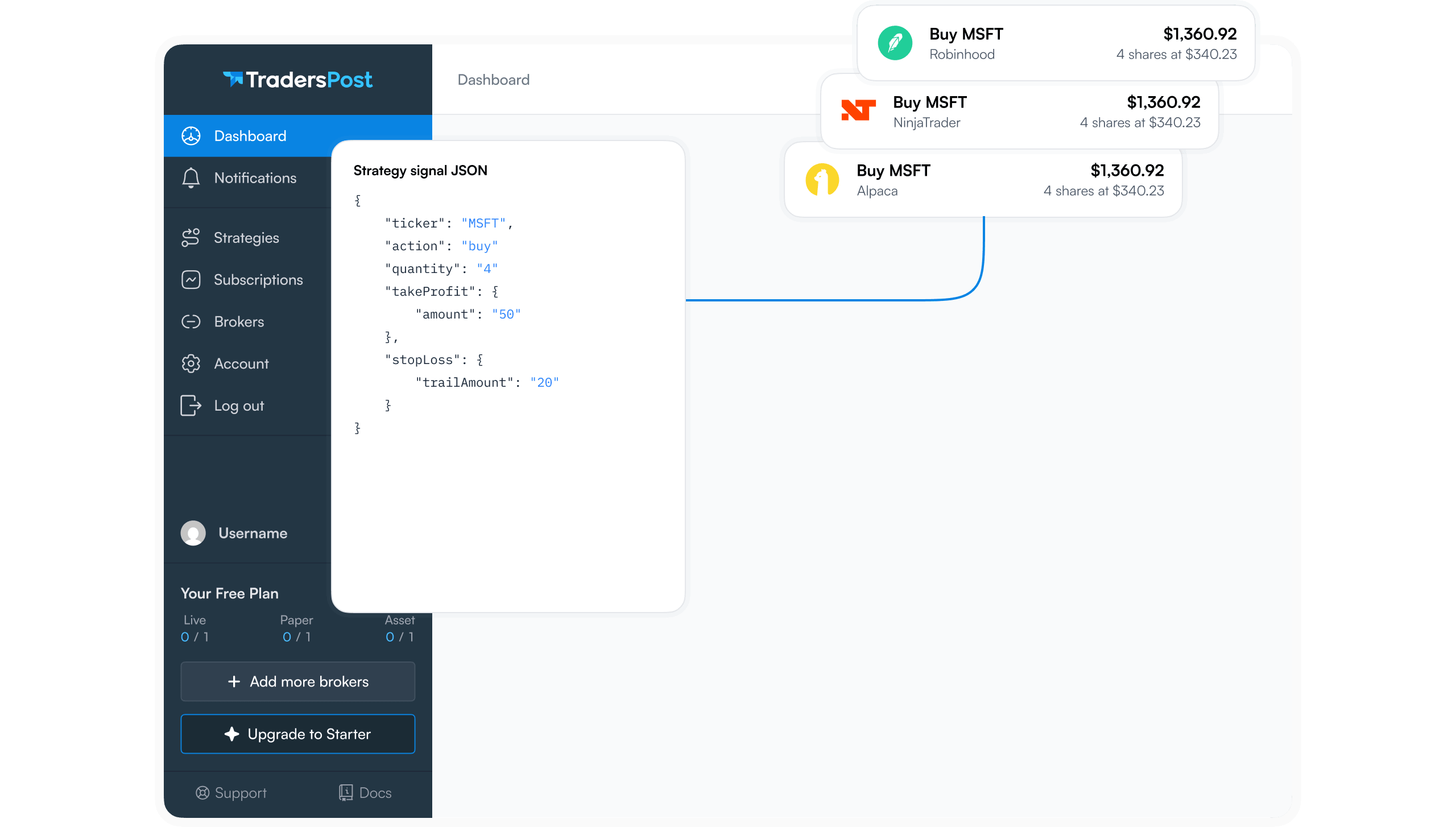
Automated trading platforms like TradersPost enable sophisticated strategies around Fed decisions:
Volatility Spike Capture
Program strategies to enter positions when volatility explodes around FOMC announcements, then exit after volatility normalizes.
Rate-Sensitive Sector Rotation
Automatically rotate into sectors that benefit from rate cuts (like utilities and REITs) when cuts begin, then rotate out when tightening cycle starts.
Bond-Equity Correlation Trades
Monitor correlation between bond and stock prices. When correlations break down during Fed transitions, automated strategies can exploit the dislocation.
Dollar Weakness Plays
When rate cut cycles begin, automatically increase exposure to emerging markets, commodities, and assets that benefit from dollar weakness.
Credit Spread Compression
As the Fed cuts rates, credit spreads typically tighten. Automated systems can trade corporate bond ETFs or credit-sensitive stocks as this occurs.
Current Rate Environment Analysis
As of January 2025, several factors influence the rate outlook:
Recent Rate Path
The Fed has cut rates by 100 basis points total through 25 basis point increments, bringing rates from restrictive territory toward neutral.
Market Expectations
Fed funds futures suggest one or two additional 25 basis point cuts by end of 2025, with a gradual path to 2.25-2.50% by late 2027.
Economic Data Dependency
The Fed emphasizes data-dependent policy, meaning each meeting's decision depends on inflation, employment, and growth data releases.
Inflation Considerations
While inflation has moderated from 2022 peaks, it remains above the Fed's 2% target. This limits how aggressively the Fed can cut rates.
Employment Strength
Labor markets remain relatively robust. The Fed typically needs to see labor market softening before accelerating rate cuts.
Positioning for Different Scenarios
Traders should prepare for multiple rate cut scenarios:
Scenario 1: Gradual Cuts Continue
If economic data supports gradual 25 basis point cuts as currently expected, position for:
- Continued equity market support
- Moderate dollar weakness
- Credit spread stability
- Sector rotation toward cyclicals
Scenario 2: Accelerated Cuts
If data deteriorates and the Fed shifts to 50 basis point cuts, prepare for:
- Initial market volatility
- Flight to quality assets
- Steeper yield curve
- Defensive sector outperformance initially
Scenario 3: Pause or Reversal
If inflation reaccelerates, the Fed might pause cuts or even resume hikes:
- Market correction likely
- Growth stock underperformance
- Dollar strength
- Emerging market pressure
Scenario 4: Emergency Intervention
If financial crisis emerges, expect emergency measures:
- Extreme short-term volatility
- Eventual strong rally
- Broad liquidity injection
- Risk asset recovery
Conclusion
Federal Reserve rate decisions represent the most predictable yet impactful events in trading. While you can't control Fed policy, you can position strategies to benefit from different rate scenarios.
The key insights for traders:
- Rate cut size signals Fed urgency and economic conditions
- Different assets respond distinctly to rate changes
- FOMC announcement days create tradable volatility
- The Fed put provides implicit market support during stress
- Monitoring expectations matters more than reacting to decisions
Automated trading platforms like TradersPost allow you to program sophisticated strategies that adapt to changing rate environments. Rather than manually monitoring Fed speakers and economic data, you can build systems that automatically adjust positioning based on rate expectations and realized changes.
Whether rates continue their gradual decline, pause, or reverse course, having prepared strategies for each scenario keeps you positioned appropriately. The Fed remains the most important player in markets—understanding their playbook gives you a significant edge in your trading.