Automated Trading vs Manual Trading Guide
Compare automated vs manual trading: speed, emotion control, backtesting capabilities, and costs to choose the right strategy.

Marketing

When deciding between automated and manual trading, it's essential to understand the strengths and weaknesses of each approach. This guide will help you determine which method—or combination—best aligns with your trading goals, resources, and risk tolerance. We'll also explore how TradersPost can be an integral part of your trading strategy by seamlessly connecting TradingView to multiple brokers.
Understanding Automated Trading
Automated trading, often referred to as algorithmic or algo trading, involves using computer programs to execute trades based on predefined rules. These systems analyze market data, identify opportunities, and place orders without human intervention. The key advantages of automated trading include:
Emotion-Free Execution
Automated systems strictly follow programmed logic, eliminating emotional influences such as fear and greed that often derail manual traders. This leads to more consistent execution of trades.
Consistency and Efficiency
Automated systems ensure consistency by executing trades according to set rules. They can monitor multiple markets simultaneously and respond immediately to programmed conditions—capabilities that are hard for human traders to match.
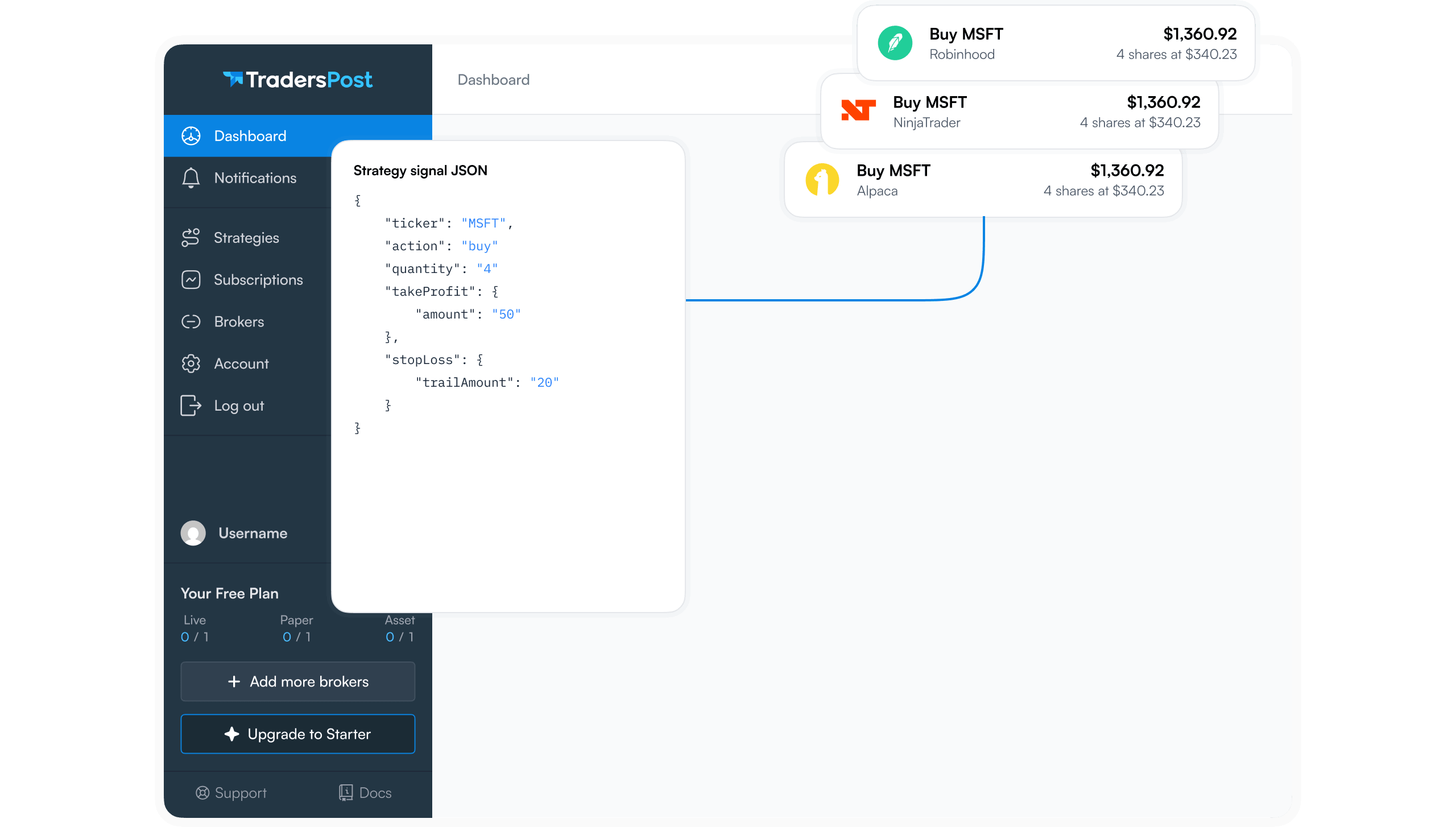
For example, TradersPost can help automate your strategy by integrating with platforms like Alpaca, TradeStation, Tradier, and Interactive Brokers. This allows you to focus on strategy development while ensuring seamless execution across different markets.
Exploring Manual Trading
Manual trading relies on human judgment, experience, and intuition. Here are some core benefits of this traditional approach:
Human Intuition and Flexibility
Manual traders can incorporate qualitative factors such as market sentiment and intuitive insights that algorithms might miss. They have the flexibility to adapt quickly to unexpected market events without needing a reprogramming cycle.
Contextual Analysis
Humans excel in interpreting news, geopolitical events, and anomalies that don't fit historical patterns. For instance, during earnings season or geopolitical tensions, manual traders might better interpret market reactions than automated systems.
Advantages Comparison
Here’s a quick comparison of the advantages each approach offers:
Automated Trading Advantages:
- Speedy execution (microseconds for institutional systems)
- Simultaneous market monitoring
- Consistent rule-based execution
Manual Trading Advantages:
- Ability to pause during uncertain conditions
- Override capability when market context changes
- No dependency on technology infrastructure
In practical terms, TradersPost can act as a bridge between these two methodologies by allowing traders to convert their manual insights into automated executions using webhooks.
Common Challenges in Both Approaches
Both methods have their own challenges that must be managed effectively:
Automated Systems Challenges
- Technical Failures: System downtime or data feed interruptions can lead to missed signals.
- Model Risk: Strategies might overfit historical data and fail under new conditions.
- Operational Risks: Incorrect parameter configurations or software bugs could result in unintended trades.
Manual Trading Challenges
- Emotional Decision Making: Fear and greed can lead to poor timing decisions.
- Human Limitations: Fatigue may affect judgment quality during high-stress periods.
- Scalability Issues: Managing multiple positions simultaneously is difficult without automation.
By utilizing TradersPost’s integration capabilities with TradingView and various brokers, you can mitigate some of these challenges through real-time monitoring and alert systems that keep you informed regardless of your chosen approach.
Cost Considerations
Understanding the cost implications of each approach is crucial for making an informed decision:
Automated Systems Costs:
- Development costs range from $15,000-$150,000+
- VPS hosting fees ($50-$500 monthly)
- Data feeds ($100-$20,000+ monthly)
Manual Trading Costs:
- Trader salaries ($50,000-$200,000+ annually)
- Training costs ($5,000-$20,000 per trader)
- Platform subscriptions ($100-$500 monthly)
While automated systems have higher initial setup costs, they offer lower operational costs through efficiency gains over time. Meanwhile, manual trading incurs ongoing expenses related to human resources but offers flexibility in decision-making processes.
Performance Characteristics
Performance metrics often differ between automated and manual approaches:
Automated Trading:
- Average Monthly Return: 2%
- Volatility: Lower (0.3%)
- Max Drawdown: Typically 5%-15%
Manual Trading:
- Average Monthly Return: 2.5%
- Volatility: Higher (1.2%)
- Max Drawdown: Typically 15%-30%
These figures are illustrative examples; actual performance varies based on strategy specifics and market conditions.
Conclusion
Ultimately, choosing between automated or manual trading—or crafting a hybrid approach—depends on your personal preferences and objectives. Automated trading excels in systematic strategies requiring speed and consistency across global markets. In contrast, manual trading shines where human judgment is critical for interpreting complex information.
TradersPost provides valuable solutions by enabling webhook-based integrations with brokers like Alpaca or Interactive Brokers—facilitating both automation of technical analysis tasks while retaining manual oversight where necessary.
Regardless of your chosen path:
- Ensure disciplined execution.
- Commit to continuous learning.
- Leverage appropriate technology supporting your style—be it fully automated via platforms like TradersPost or a balanced hybrid model incorporating the best features from both worlds.
By thoroughly understanding these approaches' nuances—and leveraging tools like TradersPost—you’ll be well-equipped towards achieving success in today’s dynamic financial markets!