Crypto Trading Strategies Using Options
Learn how to trade crypto volatility using long calls, long puts, and strategic positioning in Bitcoin and altcoins during market cycles.

Marketing

Cryptocurrency markets offer unique opportunities for options traders willing to embrace extreme volatility. With typical bear market drawdowns of 70-83% and explosive bull runs that can generate 100-300% returns in months, crypto options provide leveraged exposure with defined risk. Understanding how to position strategically across market cycles can dramatically improve trading outcomes.
For traders using automated platforms, incorporating options strategies into your crypto trading toolkit opens up sophisticated risk management and profit opportunities that simple spot trading cannot match.
Understanding Crypto Market Cycles
Cryptocurrency markets move in distinct cycles characterized by powerful bull runs followed by severe bear market corrections. Historical data reveals consistent patterns that informed traders can exploit.
Historical Drawdown Patterns
The 2018 crypto bear market saw Bitcoin decline approximately 83% from its peak, marking one of the most severe corrections in cryptocurrency history. This crash followed the 2017 ICO bubble, when initial coin offerings created speculative frenzy that eventually collapsed. The drawdown extended throughout 2018, testing the resolve of even experienced crypto investors.
More recently, the 2022 bear market delivered a 73% decline from Bitcoin's November 2021 all-time high. This correction reflected broader macroeconomic factors including rising interest rates, tightening monetary policy, and the collapse of major crypto institutions like FTX. The combination of macro headwinds and crypto-specific failures created selling pressure that drove prices down for over a year.
These historical examples demonstrate that 60-80% drawdowns represent normal cyclical behavior in cryptocurrency markets. Traders who understand this volatility can position appropriately rather than being caught off guard when corrections arrive.
The November 2017 Rally
November 2017 represents one of the most memorable periods in Bitcoin history, with prices surging 58.9% in a single month to close at $10,233.60 on November 30th. This explosive rally marked the beginning of mainstream cryptocurrency awareness, as Bitcoin broke into five-figure territory for the first time.
The November 2017 surge created extreme volatility that exceeded current bull market conditions. Traders who experienced that period remember dramatic intraday price swings and overwhelming market interest. This historical context matters when evaluating current market volatility, which remains relatively subdued compared to previous bull cycles.
Options Strategies for Crypto Trading
Options provide powerful tools for trading cryptocurrency volatility with defined risk. Unlike spot trading where losses can extend to 100% of capital invested, options strategies allow traders to risk specific premium amounts while maintaining exposure to large price movements.
Long Call Options Strategy
Long call options give buyers the right, but not the obligation, to purchase an asset at a predetermined strike price before expiration. This strategy works well when you expect significant price appreciation but want to limit downside risk.
For cryptocurrency trading, long calls offer leveraged exposure to bull moves without requiring the full capital to purchase Bitcoin or altcoins directly. If Bitcoin trades at $50,000 and you purchase a $55,000 strike call option, you profit if Bitcoin rallies above $55,000 plus the premium paid. If Bitcoin declines instead, your maximum loss is limited to the premium cost.
MicroStrategy as a Bitcoin Proxy
MicroStrategy (MSTR) has emerged as a leveraged proxy for Bitcoin exposure. The company holds over 640,000 Bitcoin with an average acquisition cost near $112,051 per coin, representing approximately 99.5% of its balance sheet. This massive Bitcoin position creates approximately 2.5x volatility relative to Bitcoin itself.
MSTR stock demonstrates a correlation coefficient of approximately 65% with Bitcoin over 12-month periods, with a beta of 1.51 since spot Bitcoin ETFs launched in January 2024. This means for every 1% Bitcoin price move, MSTR stock typically moves 1.51% in the same direction.
For traders bullish on Bitcoin, buying MSTR call options provides amplified upside exposure. The stock benefits from Bitcoin appreciation while adding company-specific dynamics and higher leverage. However, this leverage cuts both ways, as MSTR experiences magnified drawdowns when Bitcoin declines.
Long Put Options Strategy
Long put options give buyers the right, but not the obligation, to sell an asset at a predetermined strike price before expiration. This strategy profits from price declines and provides portfolio protection during bear markets.
Given cryptocurrency's history of 70-83% bear market corrections, long put positions offer attractive asymmetric return profiles. Purchasing deep out-of-the-money puts on Bitcoin or Ethereum during bull market peaks can generate significant returns when the inevitable correction arrives.
For example, if Bitcoin trades at $100,000 during a bull market top, purchasing put options with strike prices 50% lower at $50,000 positions you to profit from the typical bear market drawdown. While these puts might appear extremely bearish during euphoric bull markets, historical patterns show such corrections occur regularly in crypto cycles.
Timing Put Option Entries
The challenge with long put strategies lies in timing. Purchasing protective puts too early means paying premium repeatedly as options expire worthless during continued rallies. Buying too late misses the opportunity for maximum profit.
Professional traders monitor several factors to identify appropriate put buying opportunities:
Volatility Measures: When implied volatility drops to low levels during steady bull markets, put options become cheaper relative to their potential payoff during corrections.
Market Cycle Position: Bull markets that have extended for 12-18 months with significant price appreciation become candidates for protective positioning.
Sentiment Extremes: When mainstream media coverage intensifies and retail investors show excessive enthusiasm, contrarian positioning becomes more attractive.
Technical Breakdown Signals: Initial signs of trend exhaustion, such as failed breakout attempts or declining momentum, can trigger put option purchases.
Current Market Environment Analysis
Understanding current market positioning relative to historical cycles helps inform strategic decisions. As of late 2024, crypto markets have experienced significant rallies but with lower volatility compared to previous bull runs.
Volatility Considerations
Measured volatility in current crypto markets runs lower than previous bull cycles, creating a slow, steady march upward rather than explosive parabolic moves. While price appreciation remains strong, the violent swings characteristic of 2017 have not yet materialized.
Lower volatility environments make options strategies more affordable, as implied volatility directly impacts option pricing. However, subdued volatility also suggests the market may not have reached euphoric exhaustion levels typical of bull market tops.
The Dollar Strength Factor
The relationship between dollar strength and cryptocurrency prices creates important trading considerations. Typically, a weakening dollar provides tailwinds for Bitcoin and altcoins, as these assets benefit from declining dollar purchasing power and increasing global liquidity.
When the dollar breaks down technically, falling through key support levels, it often signals improving conditions for risk assets including cryptocurrencies. Traders should monitor the dollar index alongside crypto positions, as dollar weakness can fuel extended crypto rallies.
Cardano and Altcoin Positioning
While Bitcoin dominates crypto market attention, altcoins like Cardano offer additional trading opportunities during bull markets. Altcoins typically experience more extreme volatility than Bitcoin, with larger percentage moves in both directions.
Long positions in established altcoins during bull markets can generate outsized returns, particularly if Bitcoin continues grinding higher. However, altcoin positions also face greater downside risk during corrections, making position sizing critical.
Automating Crypto Options Strategies
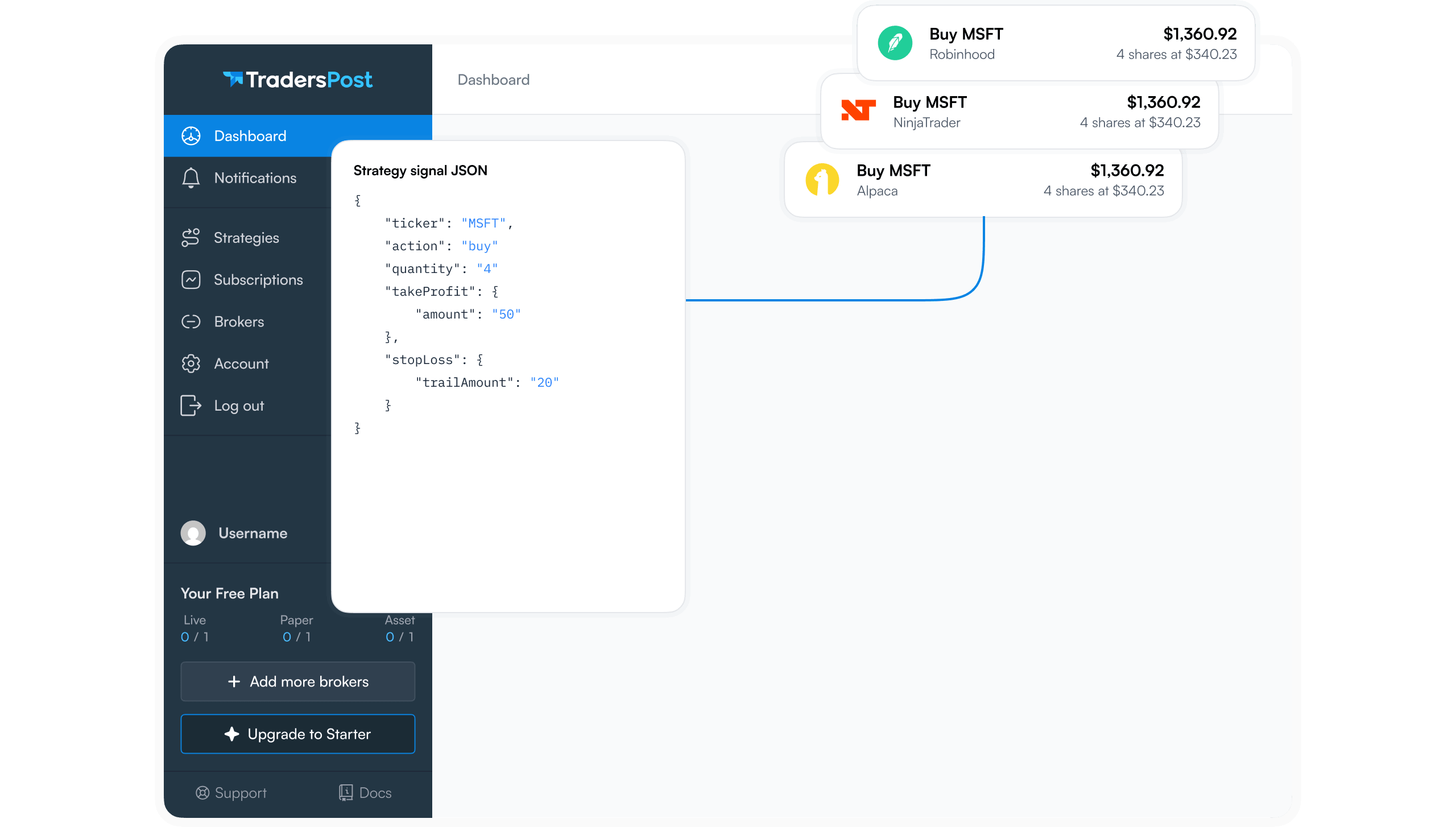
For traders using automated platforms like TradersPost, implementing rules-based options strategies provides systematic exposure while removing emotional decision-making. Automation becomes particularly valuable in cryptocurrency markets where 24/7 trading and extreme volatility can overwhelm manual monitoring.
Building Options Strategy Logic
Automated options strategies require clear entry and exit rules that can be programmed and executed systematically. Consider these framework components:
Entry Signals: Define specific technical conditions, volatility thresholds, or time-based rules that trigger option purchases.
Position Sizing: Set maximum capital allocation per trade and total portfolio exposure limits to control risk.
Exit Management: Program profit targets and maximum loss levels to automatically close positions without constant monitoring.
Volatility Filters: Build logic that adjusts strategy behavior based on implied volatility levels, taking advantage of cheap options premiums.
Crypto-Specific Considerations
Cryptocurrency markets present unique challenges for automation that require special handling:
Exchange Connectivity: Ensure your automation platform supports crypto options exchanges like Deribit or CME Bitcoin options.
24/7 Operation: Unlike traditional markets, crypto trades around the clock. Your automated systems must handle continuous monitoring and execution.
Extreme Volatility: Program wider stop losses and larger safety margins than you would use for traditional assets, as crypto volatility can trigger premature exits.
Liquidity Awareness: Some crypto options have limited liquidity, potentially causing execution issues. Build logic that checks bid-ask spreads before placing orders.
Risk Management in Crypto Options
The extreme volatility that makes crypto options attractive also creates substantial risks. Proper risk management separates profitable traders from those who suffer catastrophic losses.
Fixed Risk Benefits
One primary advantage of long options strategies is fixed, defined risk. When you purchase call or put options, your maximum loss equals the premium paid. This fixed risk structure allows precise position sizing and portfolio risk management.
Unlike selling options, which exposes you to theoretically unlimited losses, buying options caps downside while maintaining unlimited upside potential. This asymmetric risk profile makes long options particularly suitable for volatile assets like cryptocurrencies.
Portfolio Allocation Guidelines
Even with fixed risk, position sizing remains critical. Consider these allocation guidelines:
Single Position Limit: Risk no more than 2-5% of portfolio capital on any individual options trade.
Total Options Exposure: Limit aggregate options positions to 20-30% of total portfolio value to maintain diversification.
Time Horizon Matching: Align option expiration dates with your market view timeframe. Longer-dated options cost more but provide additional time for your thesis to develop.
Premium Management: Only purchase options with premium costs you can afford to lose completely. Never use leverage or borrowed funds for options trading.
Identifying Market Turning Points
Successfully trading crypto options requires identifying market inflection points where probabilities shift in your favor. Both bull market tops and bear market bottoms offer strategic opportunities.
Bull Market Top Signals
Several indicators suggest bull markets may be reaching exhaustion:
Mainstream Media Coverage: When non-financial sources extensively cover cryptocurrencies and Bitcoin appears in casual conversations, euphoria may be peaking.
Retail Investor Influx: Dramatic increases in new wallet creation and exchange signups often mark late-stage bull markets.
Analyst Price Target Extremes: When prominent analysts project increasingly unrealistic price targets, skepticism becomes warranted.
Failed Breakout Attempts: Technical failures at key resistance levels can signal waning momentum even as sentiment remains bullish.
Bear Market Bottom Characteristics
Conversely, bear market bottoms exhibit distinct characteristics:
Prolonged Decline: Bear markets typically last 12-18 months, providing time context for potential bottoms.
Extreme Pessimism: When even long-term believers question crypto's viability, capitulation may be approaching.
Volume Exhaustion: Declining volume during selloffs suggests fewer sellers remain, creating conditions for reversal.
Oversold Technical Conditions: Extended periods at deeply oversold readings on technical indicators often precede major bottoms.
Integrating Options with Spot Trading
Options strategies work most effectively when integrated with spot cryptocurrency holdings rather than used in isolation. This combined approach provides flexibility and risk control.
Protective Put Strategy
If you hold Bitcoin or major altcoins as long-term investments, purchasing protective put options creates portfolio insurance. While this insurance costs premium payments, it limits downside risk during corrections without requiring you to sell spot holdings and potentially trigger taxable events.
Call Options for Aggressive Exposure
If you want leveraged exposure to crypto rallies without committing significant capital, call options provide efficient alternative. You can control larger notional exposure while risking only premium paid, freeing capital for other opportunities.
Spreading Strategies for Income
More advanced traders can implement spread strategies that collect premium income while maintaining defined risk. These strategies combine long and short options positions to create favorable risk-reward scenarios across various market conditions.
Looking Forward: Market Cycle Positioning
Understanding where current markets sit within historical cycles informs strategic positioning. As markets advance through 2025, monitoring key indicators helps identify optimal times for different strategies.
Liquidity Cycle Impact
Cryptocurrency prices closely correlate with global liquidity conditions. When central banks inject liquidity and the dollar weakens, crypto typically rallies. Conversely, tightening monetary policy and dollar strength create headwinds.
Traders should monitor central bank policies, liquidity indicators, and dollar strength alongside crypto-specific metrics to anticipate major trend changes.
Volatility Expansion Anticipation
While current volatility remains relatively subdued, history suggests periods of explosive volatility lie ahead. When volatility expands, options strategies become more profitable but also more expensive. Positioning before volatility spikes offers optimal risk-reward.
Conclusion
Cryptocurrency options trading provides powerful tools for navigating extreme market volatility. Long call options offer leveraged exposure to bull moves with limited risk, while long put options generate asymmetric returns during inevitable bear market corrections.
Understanding historical drawdown patterns, recognizing market cycle positioning, and implementing systematic risk management separates successful options traders from those overwhelmed by crypto volatility. Fixed risk profiles make options particularly suitable for volatile assets, allowing precise portfolio control even during extreme price swings.
For traders using automated platforms like TradersPost, programming rules-based options strategies removes emotional decision-making while providing 24/7 market monitoring. Whether you're trading Bitcoin directly, using MicroStrategy as a leveraged proxy, or positioning in altcoins, options strategies enhance your toolkit with sophisticated risk management and profit potential.
As crypto markets continue evolving through their characteristic boom-bust cycles, traders who master options strategies will be better positioned to protect capital during corrections and capitalize on explosive rallies when they arrive.