Fidelity AI Trading Features
Comprehensive analysis of Interactive Brokers, Alpaca, Tradestation features, automation capabilities, and integration options for traders.

Marketing

-
Fidelity Trader+ now provides advanced active-trading tools and analytics, so the article’s passive-focused characterization has been corrected while its public API limitation still holds.
Fidelity offers AI-enhanced features and advanced active-trading tools, alongside automated portfolio management and passive investment strategies1. While these features are robust in some areas, traders looking for fully automated trading systems might find Fidelity's offerings limited. This article will explore Fidelity's current AI capabilities, highlight the platform's limitations, and discuss how TradersPost can complement these features by enabling seamless integration with brokerage services like Alpaca, TradeStation, Tradier, and Interactive Brokers.
Key Features of Fidelity's AI Offering
Automated Portfolio Management
Fidelity provides automated portfolio management through its robo-advisor service, which includes algorithm-based rebalancing. Investors can benefit from automated investments in Fidelity Flex® mutual funds without advisory fees for accounts under $25,000, while accounts over this threshold incur a 0.35% annual fee.
How It Works
- Risk Assessment: Clients begin by completing a risk assessment questionnaire to determine their investment profile.
- Portfolio Allocation: The AI system uses this data to suggest an optimal portfolio allocation.
- Automatic Investment: Funds are allocated into selected mutual funds.
- Continuous Monitoring: The system automatically rebalances as needed and optimizes for taxes where applicable.
Although this automated portfolio framework does not provide individual stock selection, Fidelity also offers active trading tools, including options trading and order-routing features, through Fidelity Trader+2.
Technical Analysis Tools
Fidelity also integrates advanced technical analysis tools that include pattern recognition algorithms and automated technical indicators to assist investors in generating trade ideas and scanning markets for opportunities. Fidelity Trader+ provides real-time insights, dynamic visual analytics, custom charts, streaming data, and powerful trading tools for active traders2.
What Fidelity Lacks
- Fully automated trading systems
- Machine learning-driven predictions
- Custom AI strategy builders
- Algorithmic trading capabilities
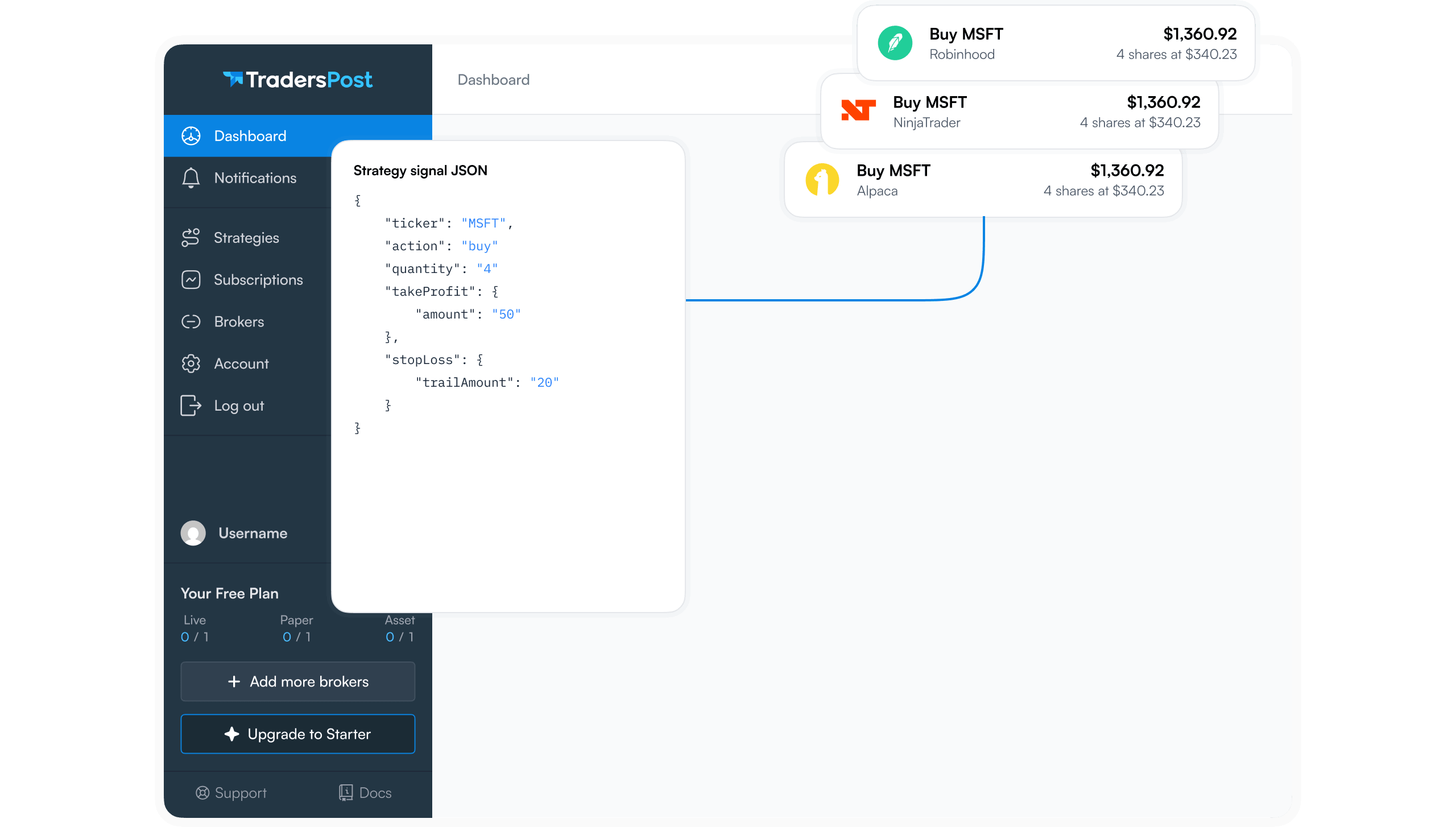
For traders who wish to automate their TradingView strategies fully, integrating with platforms like TradersPost can provide essential functionality by connecting your TradingView alerts directly to brokers that support automation.
Behind the Scenes with AI
Research Applications and Customer Service
Fidelity employs AI in various non-trading capacities such as research applications and customer service enhancements like automated phone routing and FAQ recommendation engines. These applications focus on improving efficiency rather than direct trading capabilities.
Current API Limitations
Currently, Fidelity's API offerings are limited. They do not provide a public trading API or webhook support necessary for third-party integrations crucial for full automation. In contrast, TradersPost facilitates this by bridging TradingView with brokers that offer comprehensive API access.
Comparing Major Brokers' AI Capabilities
When compared to other major brokers like E*TRADE, which provides robo-advisors but lacks advanced AI trading features, Fidelity holds its ground in terms of reliability and cost-effectiveness while expanding its trading tools through Fidelity Trader+3.
Core Principles of Fidelity's Approach
- Risk Management First: Prioritizes asset protection over experimental technology.
- Human Oversight: Ensures professional review alongside any AI assistance.
- Long-term Focus: Emphasizes sustainable investing over rapid trading moves.
These principles guide Fidelity’s conservative approach to adopting new technologies within the realm of retail investing.
Automation Features Available at Fidelity
While Fidelity does not publicly offer full-fledged AI trading automation, its platform also includes advanced active-trading tools and analytics:2
Automatic Investment Plans (AIP)
Clients can set up automatic investments by selecting mutual funds or ETFs, setting contribution amounts, selecting frequency (weekly/monthly), and enabling automatic rebalancing — essentially allowing investors to "set it and forget it."
Dividend Reinvestment Plans (DRIP)
Investors can enroll in automatic DRIP programs to reinvest dividends into fractional shares without commission fees — harnessing compound growth benefits over time.
Asset Allocation Funds
These include target-date funds managed based on age-related factors with professional oversight — providing another layer of passive investment options.
By using tools like TradersPost alongside these offerings from Fidelity, traders can execute more active strategies at different brokerages while maintaining passive investments here.
Conclusion
Fidelity’s current suite of AI features and advanced trading tools serves both long-term investors seeking systematic portfolio management and active traders seeking sophisticated analytics and execution tools2. For those interested in bridging the gap between passive investing at Fidelity and active trading elsewhere, platforms like TradersPost are instrumental as they enable seamless integration between TradingView alerts and execution across brokers equipped for full automation such as Alpaca or Interactive Brokers.
Ultimately whether you are content with passive management solutions offered by Fidelity or seeking more dynamic engagement via external broker connections — understanding both the strengths and constraints of each platform allows better alignment with your financial goals.
References
1 Fidelity Investments® Introduces Fidelity Trader+™, Powerful ...
2 Advanced Trading Tools and Features from Fidelity
3 Q3 2025 business update | About Fidelity