Does Fidelity Have an API?
Does Fidelity Have An Api: fidelity api access explained: availability, documentation, rate limits, and integration requirements for developers.

Marketing

-
Fidelity’s current public replies still say no public retail API exists, while institutional FIX and pilot-program claims lack current confirmation, so the article now qualifies those points while its central conclusion remains unchanged.
Fidelity does not currently offer a public API for retail traders, focusing instead on institutional clients with more advanced needs. In this post, we will explore the reasons behind Fidelity's approach, compare it to other brokers, and discuss how TradersPost can provide a seamless trading experience. We'll also delve into alternative strategies for automation and the potential future of API offerings at Fidelity.
Why Fidelity Does Not Offer Retail API
Fidelity has traditionally catered to long-term investors and wealth management clients, emphasizing risk management and security. Their services are tailored to institutional clients such as hedge funds and large family offices rather than retail traders seeking automation.
Institutional vs. Retail Services
For institutional clients, Fidelity provides sophisticated services like Direct Market Access and Advanced Order Types. These are available only to those who meet specific requirements:
- Hedge funds or proprietary trading firms
- Large family offices
- High account balances
Retail traders face limitations such as:
- No public REST API documentation
- Limited real-time market data access
Fidelity's FIX Connectivity
Fidelity offers FIX (Financial Information Exchange) connectivity for institutions, allowing:
- Order Management: Submit, modify, and cancel orders programmatically
- Execution Reports: Receive real-time trade confirmations
- Market Data Access: Access Level 1 and Level 2 feeds
Accessing these features requires meeting high barriers to entry:
- Institutional account status
- Minimum balances in the millions
- Technical certification processes
Challenges with FIX Connectivity
While powerful, FIX connectivity presents challenges:
- High technical complexity and cost
- Lengthy certification processes
- Ongoing maintenance requiring technical expertise
Comparisons with Other Brokers
Other brokers like Interactive Brokers, TD Ameritrade (now Schwab), Alpaca Markets, and E*TRADE support retail APIs with features that include:
- Real-time data access
- Well-documented RESTful APIs
- Streaming data via WebSockets
These offerings make them attractive to algorithmic traders and developers looking to automate strategies.
TradersPost as a Solution
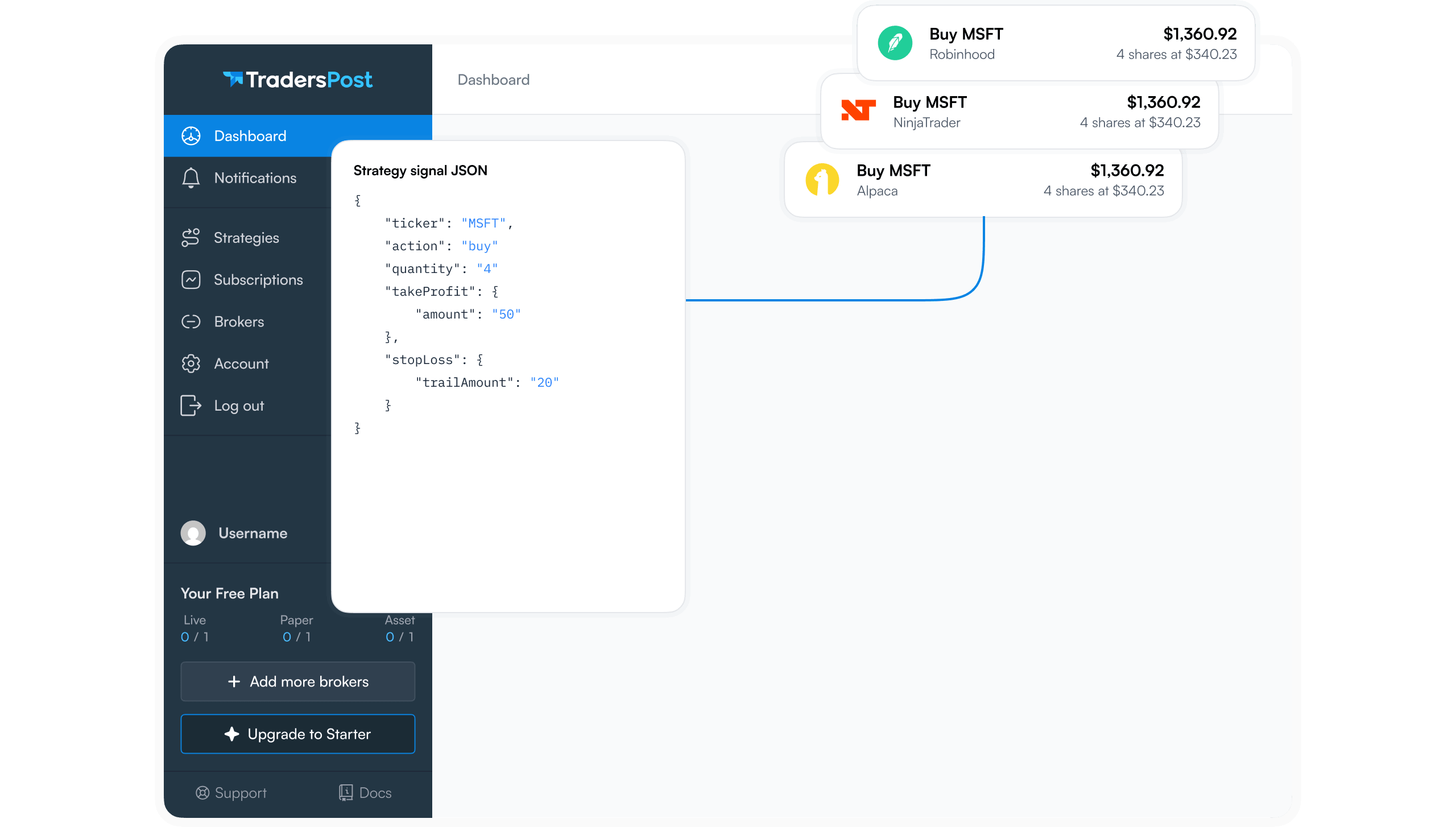
TradersPost bridges the gap by providing legal and compliant automation solutions without the need for direct API access from brokers like Fidelity. It offers:
- Secure connection to your Fidelity account
- Order management capabilities
- Position tracking and analytics
With TradersPost, you can manage your trades across multiple brokers including Alpaca, TradeStation, Tradier, and Interactive Brokers using webhook integrations.
Screen Scraping Risks
Some traders resort to unauthorized screen scraping techniques using tools like Selenium or Puppeteer. While this can technically access web interface features, it poses significant risks:
- Violates Fidelity’s Terms of Service
- Prone to breaking with UI changes
- Slow execution compared to APIs
- Security risks including plain-text password storage
Legal Implications
Screen scraping may lead to severe consequences:
- Account suspension or loss of funds
- Copyright infringement
- Violations of computer crime laws
Instead of risking these penalties, using a compliant solution like TradersPost is advisable.
Future of Fidelity's API Offerings
Industry trends suggest increasing pressure on traditional brokers like Fidelity to offer APIs due to:
- Competitive pressure from other brokers
- The rise of fintech apps needing broker connectivity
- Generational shifts toward API-first experiences
Signs of Progress at Fidelity
While there’s no public API yet, Fidelity shows signs of evolving its technology infrastructure:
- Investments in digital infrastructure
- Improved Active Trader Pro features
- Strategic industry partnerships
Fidelity has not announced pilot programs for a public retail API1.
Conclusion
While Fidelity currently lacks a public retail API, platforms like TradersPost offer viable alternatives for secure trade automation without violating terms of service. By leveraging webhook integrations across multiple brokers such as Alpaca and Interactive Brokers, you can execute sophisticated trading strategies legally and efficiently through TradersPost.
As industry trends continue to evolve, stay informed about potential changes in Fidelity’s offerings by monitoring announcements and providing feedback on your needs. Meanwhile, focus on developing robust trading strategies with comprehensive backtesting and risk management to ensure success in any automated trading endeavor with TradersPost as your reliable partner.