How the Fed Controls Markets Through Expectations
The Federal Reserve's primary tool is managing expectations rather than actual policy, creating predictable patterns traders can exploit.

Marketing

The Federal Reserve wields enormous influence over financial markets, but its most powerful tool is not interest rates or quantitative easing. Instead, the Fed's greatest power lies in managing expectations about future economic conditions and policy actions. Understanding this expectations game is crucial for traders seeking to anticipate market movements and position portfolios strategically.
The Expectations Management Framework
The Federal Reserve actively manages economic expectations as a core tool for influencing actual economic outcomes. Through official statements, press conferences, congressional testimony, and published forecasts, the Fed shapes how businesses, households, and financial markets anticipate future inflation, employment, and interest rates.
This transparency and guidance help anchor inflation expectations, which are critical for price stability. If firms and consumers expect stable prices, they are less likely to demand rapid wage increases or raise prices preemptively. This psychological anchoring supports the Fed's dual mandate of maximum employment and stable prices without requiring aggressive policy actions.
Forward Guidance as a Policy Tool
The Fed's communication strategy allows it to signal future policy moves, helping markets adjust gradually rather than react abruptly to surprises. This "forward guidance" can reinforce or amplify the effects of interest rate changes by influencing long-term rates and financial conditions even before actual policy adjustments occur.
When the Fed indicates it will keep rates lower for longer, long-term interest rates often decline as markets price in this expectation. Conversely, hawkish guidance suggesting future rate increases can tighten financial conditions immediately as markets reprice risk assets downward. The actual policy change becomes almost secondary to the expectation of that change.
The Herd Mentality in Markets
As long as the Federal Reserve can convince the majority of market participants to move in a particular direction, the herd follows that path. This creates a self-reinforcing dynamic where expectations shape behavior, which in turn validates those expectations. If the Fed succeeds in convincing markets that inflation will remain controlled, market participants behave in ways that help keep inflation controlled.
However, if confidence in the Fed's narrative breaks down and the herd begins to scatter, the Fed's control over market outcomes diminishes rapidly. This represents the central bank's greatest vulnerability: its power is ultimately based on credibility and trust rather than direct control over economic variables.
Supply Shocks and the Fed's Dilemma
Supply shocks present unique challenges for the Federal Reserve's expectations management framework. Unlike demand-driven inflation, which responds predictably to interest rate adjustments, supply-driven price increases stem from factors outside the Fed's direct control.
The Nature of Supply Shocks
Supply shocks increase the cost of goods and services by disrupting production or distribution. Tariffs, for example, directly raise the cost of imported goods while also disrupting established supply chains. This "cost-push" inflation differs fundamentally from "demand-pull" inflation, where excess demand bids up prices.
When inflation originates from supply constraints, raising interest rates to cool demand may not address the root cause. In fact, aggressive rate hikes in response to supply shocks can unnecessarily suppress economic activity without meaningfully reducing inflation. This creates a difficult tradeoff for the Fed between its inflation and employment mandates.
The Transitory Inflation Narrative
The 2021-2022 period provides a clear case study in the risks of expectations management when underlying conditions diverge from the Fed's narrative. In 2021, the Fed characterized rising inflation as "transitory," expecting pandemic-related supply bottlenecks and pent-up demand would ease naturally.
The Initial Rationale
The transitory narrative made logical sense given the circumstances. The COVID-19 pandemic had created unprecedented supply chain disruptions. Semiconductor shortages prevented car manufacturing. Shipping container costs skyrocketed. Port congestion created massive backlogs. These were clearly temporary factors that would resolve as the pandemic receded.
By labeling inflation transitory, the Fed hoped to prevent market overreaction and give supply chains time to normalize without aggressive policy tightening. This was a deliberate attempt to manage expectations and prevent a self-fulfilling inflation spiral driven by fear rather than fundamentals.
When the Narrative Broke Down
However, inflation proved broader and more persistent than the Fed anticipated. What began as isolated supply chain issues expanded into widespread price increases across multiple categories. The combination of supply disruptions and robust demand, fueled by massive fiscal stimulus, created inflation that would not resolve quickly.
By late 2021 and into 2022, the Fed faced a credibility crisis. Markets began questioning whether the Fed understood the true nature of the inflation challenge. The longer inflation persisted, the greater the risk that expectations would become unanchored. Workers began demanding larger wage increases. Businesses began building inflation assumptions into their pricing strategies.
The Policy Pivot
Forced to act, the Fed pivoted to aggressive rate hikes beginning in March 2022. This represented one of the fastest tightening cycles in modern history, with the Fed raising rates by 75 basis points in multiple consecutive meetings. The rapid shift from dismissing inflation concerns to aggressively fighting inflation highlighted the risks of expectations management when the underlying narrative proves incorrect.
Tariffs and Current Inflation Concerns
The question of how tariffs might affect inflation expectations remains highly relevant in 2024-2025. With ongoing discussions about reshoring manufacturing and adjusting trade relationships, the potential for supply shocks looms large.
The Supply Chain Reshoring Challenge
When production moves from established international supply chains back to domestic facilities, significant transition costs arise. New factories must be built, workers trained, and logistics networks reconfigured. During this transition period, supply constraints can drive prices higher even if the long-term outcome is more stable supply.
This creates exactly the type of supply shock the Fed struggles to address through traditional monetary policy. If companies cannot import necessary components due to tariffs or trade restrictions, raising interest rates does not solve their procurement problems. It simply makes it more expensive to finance alternative solutions.
The Risk of Persistent Supply Disruptions
The Federal Reserve must assess whether tariff-related supply disruptions will be temporary or persistent. If disruptions prove temporary, the Fed can afford to look through the resulting inflation spike, maintaining policy aimed at supporting employment and growth. However, if disruptions persist, the risk increases that temporary price increases will become embedded in expectations and behavior.
This distinction between temporary and persistent supply shocks was central to the Fed's analysis during the pandemic. The failure to correctly assess the persistence of supply chain issues contributed to the policy error of maintaining extremely accommodative policy too long.
Trading Implications of Fed Expectations
Understanding the Fed's expectations management framework creates opportunities for informed traders to position ahead of policy shifts and market reactions.
Monitoring Fed Communications
Close attention to Fed communications provides valuable insight into likely policy trajectories. Changes in language around inflation, particularly the introduction or removal of qualifiers like "transitory," signal important shifts in the Fed's assessment of economic conditions.
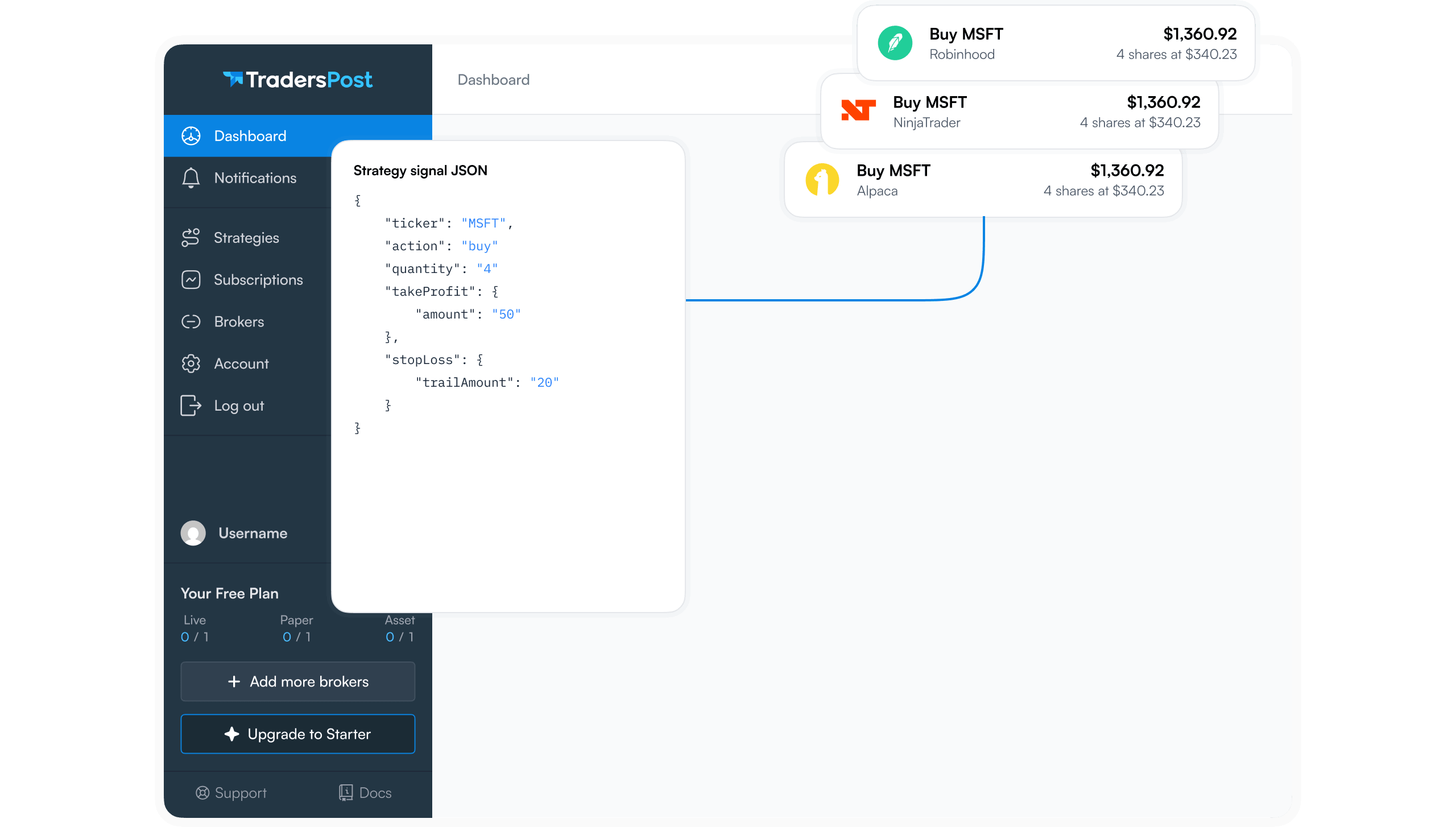
Traders can use automated systems through platforms like TradersPost to monitor Fed communications and execute predetermined strategies when key phrases or policy shifts occur. This removes emotion from trading decisions and ensures consistent execution based on fundamental drivers.
Front-Running Policy Expectations
Markets typically move in anticipation of Fed actions rather than in response to them. By the time the Fed actually adjusts rates, markets have usually already priced in the expected change. This creates opportunities to position ahead of widely telegraphed policy moves.
For example, if Fed communications clearly indicate rate cuts are coming within a specific timeframe, risk assets typically rally in anticipation. Traders who wait for the actual rate cut may miss substantial gains that occur as expectations shift.
Fading Extreme Positioning
When market positioning becomes extremely one-sided based on Fed expectations, opportunities often arise to take contrarian positions. If everyone is positioned for one outcome, a relatively small shift in Fed communication can trigger violent repricing.
This is particularly true around key Fed meetings and communications. Setting up automated strategies to capitalize on volatility spikes or rapid sentiment shifts can generate substantial returns when positioning becomes crowded.
The CEO Uncertainty Survey
A telling indicator of current expectations comes from business leaders themselves. Recent surveys of CEOs and company directors reveal significant uncertainty about tariffs and imported components. This uncertainty is particularly acute for companies whose products depend on complex international supply chains.
If companies cannot reliably source the components they need due to tariff uncertainty, they face difficult choices. They can attempt to build inventory ahead of potential disruptions, driving up carrying costs. They can seek alternative suppliers, which may be more expensive or lower quality. Or they can pass costs on to customers, contributing to inflation.
This corporate uncertainty feeds into broader economic uncertainty, which can become self-fulfilling. If companies postpone investment decisions due to uncertainty, economic growth slows. This slowdown can then necessitate Fed action to support the economy, creating the very conditions that triggered the uncertainty.
The Semiconductor Shortage Case Study
The semiconductor shortage during the pandemic provides an instructive example of how supply shocks can create persistent inflation. Initially dismissed as a temporary disruption, the chip shortage lasted for years and had cascading effects throughout the economy.
Initial Shortage Development
At the height of pandemic demand for electronics, semiconductor production could not keep pace. Simultaneously, demand for automobiles rebounded faster than manufacturers anticipated. Because modern vehicles require hundreds of chips, the shortage created a bottleneck in auto production.
This seemed like a classic temporary supply shock. Once chip production expanded and demand normalized, the shortage would resolve. However, the resolution took far longer than expected, and the inflation it created spread throughout the economy.
Extended Economic Impact
The extended semiconductor shortage led to a prolonged shortage of cars. This occurred precisely when demand for personal transportation was extremely high due to pandemic concerns about public transit. The combination of limited supply and elevated demand drove used car prices to unprecedented levels.
Because transportation is such a fundamental component of the economy, these elevated costs flowed through to other goods and services. Delivery costs increased. Ride-sharing became more expensive. The inflation that began as a focused supply shock in semiconductors metastasized into broad-based price increases.
Fed Response Timing
The Fed's initial assessment that this inflation would be transitory was reasonable given the apparent supply-side origin. However, the persistence of the shortage and its spillover effects meant the inflation was far more durable than expected. By the time the Fed recognized this and adjusted policy, inflation expectations had already begun to drift higher.
Creating Trading Strategies Around Fed Policy
Successful trading strategies must incorporate understanding of Fed policy expectations and potential shifts in those expectations. Several approaches can generate consistent returns.
Volatility Trading Around Fed Events
Federal Reserve meetings and major communications create predictable volatility patterns. Implied volatility typically rises ahead of Fed decisions and then contracts afterward. Trading strategies that profit from either elevated volatility (through options strategies) or volatility compression (through selling options premium) can be systematically applied around these events.
Automated trading systems can be programmed to adjust position sizing and strategy selection based on proximity to Fed events, allowing traders to capitalize on these patterns without manual intervention.
Yield Curve Positioning
The shape of the Treasury yield curve reflects market expectations about future Fed policy. When the Fed is expected to raise rates aggressively, the curve typically inverts with short-term rates exceeding long-term rates. Conversely, expectations of rate cuts steepen the curve.
Trading strategies that respond to yield curve changes can profit from shifts in policy expectations. These might involve direct Treasury positions or relative value trades between different maturity points. The key is understanding what yield curve shapes imply about market expectations and positioning accordingly.
Risk Asset Allocation
Fed policy expectations drive risk asset performance. When the Fed is expected to maintain accommodative policy or cut rates, risk assets like stocks and cryptocurrencies typically perform well. When policy is expected to tighten, these assets usually struggle.
Dynamic allocation strategies that adjust exposure to risk assets based on Fed policy expectations can significantly enhance risk-adjusted returns. Rather than maintaining static allocations, traders can lean into risk when conditions are supportive and reduce exposure when policy headwinds are increasing.
The Importance of Independent Analysis
While understanding the Fed's expectations framework is valuable, traders must also maintain independent analysis of economic conditions. The transitory inflation episode demonstrated that the Fed can misread economic conditions despite access to vast resources and expertise.
Traders who blindly follow Fed guidance without independent confirmation risk being caught wrong-footed when the Fed's narrative shifts. The most successful approach involves understanding what the Fed is trying to achieve while maintaining skepticism about whether conditions actually match the Fed's assessment.
Key Economic Indicators to Monitor
Beyond Fed communications, several economic indicators provide direct insight into inflation dynamics and policy effectiveness:
Labor Market Conditions
Wage growth and employment trends reveal whether inflation is becoming embedded in labor costs. If workers successfully demand and receive substantial wage increases, inflation becomes more persistent even if initial causes were supply-side.
Supply Chain Metrics
Shipping costs, inventory levels, and delivery times indicate whether supply chains are normalizing or remain stressed. Persistent supply chain issues suggest inflation may prove more durable than the Fed expects.
Inflation Expectations Surveys
Various surveys measure consumer and business expectations about future inflation. Rising inflation expectations are self-fulfilling to some degree, making them a critical variable for Fed policy decisions.
Automating Response to Fed Policy
Modern trading platforms like TradersPost enable sophisticated automated responses to Fed policy shifts. Strategies can be programmed to monitor Fed communications, parse key language, and execute trades based on predetermined criteria.
Setting Up Fed-Responsive Strategies
Effective automation requires clearly defining trigger conditions and corresponding actions. For example, a strategy might specify that if the Fed removes the word "transitory" from its inflation assessment, reduce exposure to long-duration bonds and increase allocation to inflation-protected securities.
These conditional strategies remove emotion from trading decisions and ensure consistent execution based on fundamental policy shifts. They also allow traders to respond immediately to Fed communications rather than deliberating on appropriate actions.
Backtesting Policy-Based Strategies
Before deploying capital, policy-based strategies should be backtested against historical data. How would a particular approach have performed during previous Fed tightening or easing cycles? What drawdowns would have been experienced? What risk-adjusted returns would have been generated?
Backtesting reveals whether a strategy has genuine predictive power or simply looks good in hindsight. Robust strategies should work across multiple market environments and Fed policy regimes, not just during specific periods.
Conclusion
The Federal Reserve's primary mechanism for influencing economic outcomes is managing market expectations rather than directly controlling economic variables. As long as the Fed maintains credibility and market participants believe its narrative, this expectations management is extraordinarily powerful.
However, when underlying economic conditions diverge from the Fed's narrative, as occurred with the transitory inflation assessment in 2021, the Fed's control erodes rapidly. Markets begin to question Fed credibility, expectations become unanchored, and policy must shift dramatically to regain control.
For traders, understanding this expectations game is crucial. Success comes not from blindly following Fed guidance but from independently assessing whether market expectations align with economic reality. When gaps emerge between expectations and reality, substantial trading opportunities arise.
By combining Fed policy awareness with automated execution through platforms like TradersPost, traders can systematically capitalize on shifts in expectations while maintaining discipline during volatile periods. The key is recognizing that the Fed's game is fundamentally about convincing the herd to move in a particular direction, and understanding when that conviction is justified versus when it is built on increasingly shaky foundations.