How to Backtest Trading Strategy
Complete guide with step-by-step instructions, practical examples, and expert insights for successful implementation.

Marketing

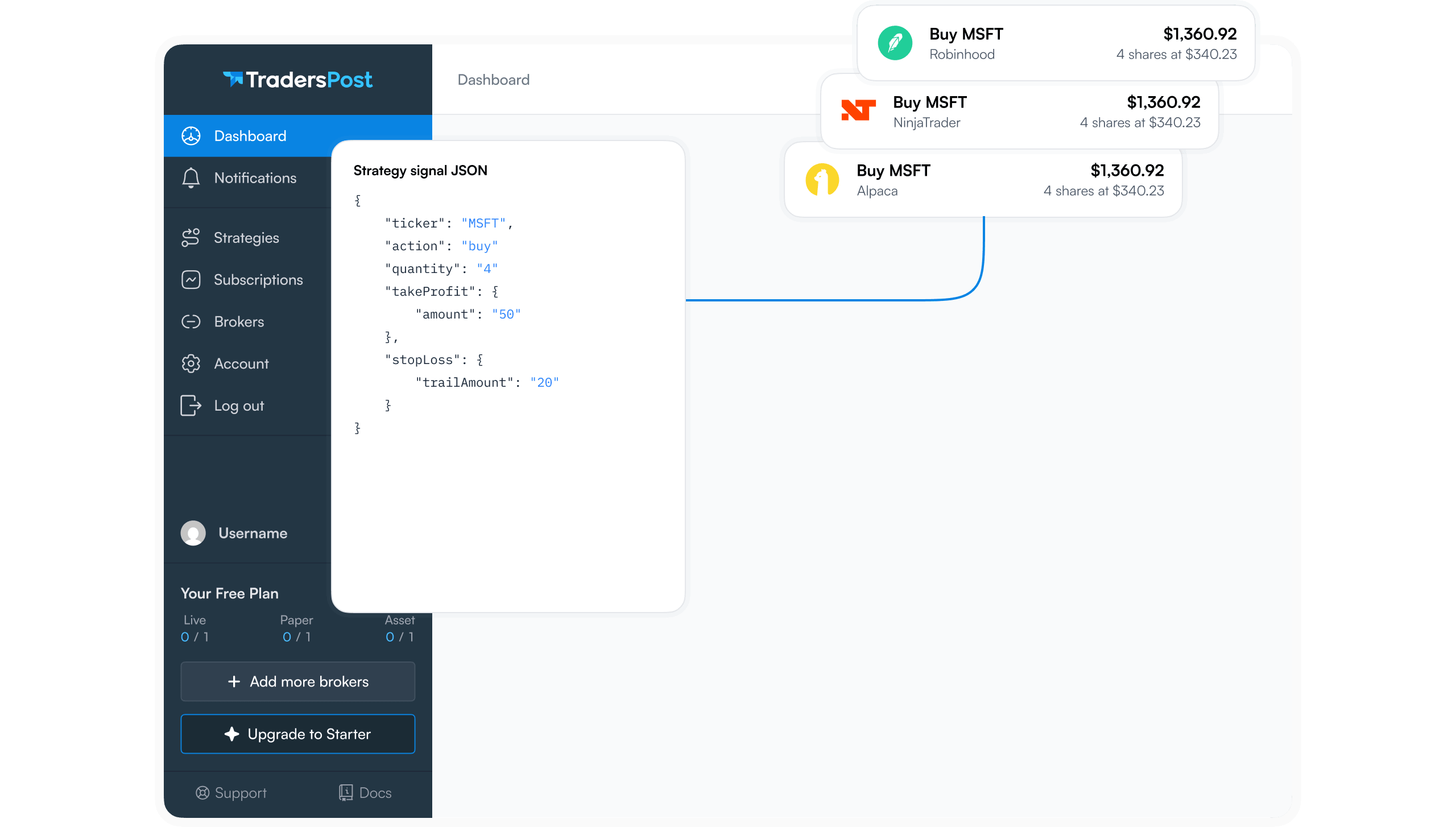
Backtesting transforms your trading ideas into quantifiable results, allowing you to assess potential performance before committing real capital. This process involves meticulous attention to detail, a well-defined methodology, and realistic assumptions about market dynamics. In this guide, you'll learn how to effectively backtest your trading strategies with precision. We'll also explore how TradersPost can seamlessly integrate these strategies with various brokers for automated execution.
Define Your Trading Strategy
Before backtesting any strategy, every component of your trading approach must be clearly defined. This ensures that the backtest accurately reflects the conditions under which you would trade live.
Entry Rules
Your entry rules should be specific and measurable. Instead of vague criteria like "buy when price is trending up," use precise conditions such as:
- Price closes above the 20-day moving average
- RSI is between 40-60
- Volume exceeds 1.5x average daily volume
- No earnings announcement within 5 days
Each condition should be based on available market data at the time of the potential trade.
Exit Rules
Define both profit-taking and risk-management exits:
Profit Exits:
- Take profit at a 2:1 risk-reward ratio
- Close position when RSI exceeds 70
Loss Exits:
- Stop loss at 2% below entry price
- Maximum loss per trade: 1% of account value
Capital Allocation
Determine how much capital to allocate to each trade:
- Fixed dollar amount per trade
- Percentage of total account value
- Risk-based sizing (e.g., 1% risk per trade)
- Volatility-adjusted position sizing
With TradersPost, these allocations can be automatically executed across multiple brokers like Alpaca and Interactive Brokers, ensuring consistent application of your strategy.
Gather Quality Data
The reliability of your backtesting results hinges on the quality of your historical data. Accurate, comprehensive data forms the foundation for a valid strategy evaluation.
Data Collection
Collect comprehensive market data, including:
- Price data: Open, high, low, close values
- Dividend data: Dividend payments and dates
- Split data: Stock split adjustments
- Market hours: Trading session information
Choose reliable data providers that offer extensive coverage:
Free Sources:
- Yahoo Finance API
- Alpha Vantage
- Quandl free tier
Premium Sources:
- Bloomberg Terminal
- Refinitiv Eikon
- Polygon.io
For seamless integration with TradingView and automated execution through platforms like TradeStation via TradersPost, ensure your data sources are compatible.
Select a Backtesting Platform
Select a platform that matches your technical skills and strategy complexity requirements. Here are some popular options:
Python Libraries & R Packages
Python offers several powerful libraries for backtesting:
- Backtrader: Comprehensive framework suitable for complex strategies.
- Zipline: Commonly used in algorithmic trading.
R users might explore:
- quantstrat: A quantitative strategy framework.
For those using TradersPost as their bridge to automation, these tools provide robust environments to develop and refine strategies before live deployment.
TradingView & MetaTrader
For traders seeking user-friendly interfaces:
TradingView :
Offers Pine Script language for scripting indicators with built-in historical data access.
MetaTrader :
Supports Expert Advisors for automated trading with visual backtesting capabilities.
Both platforms can connect through TradersPost for executing trades automatically across brokers like Tradier or Interactive Brokers.
Validate Your Backtest Implementation
Convert your written strategy rules into executable code or platform-specific logic. Before running full backtests, ensure validation by:
* Verifying indicator calculations.
* Checking position sizing logic.
* Confirming entry/exit timing accuracy.
Including all trading-related expenses is crucial for realistic results:
* Commission structures (fixed vs. percentage-based fees).
* Spread costs (bid/ask spread impact).
TradersPost can help simulate these costs accurately during live trading scenarios with broker integrations.
Execute Robust Backtests
Test your strategy across various time periods and market conditions to ensure robustness. Choose testing periods that include bull markets, bear markets, and different volatility environments. Aim for at least 2–3 years of diverse market data.
Implement rolling backtests:
- Test on initial periods (e.g., two-year spans).
- Roll forward every six months.
- Analyze results across periods to identify performance trends or degradation.
With TradersPost's webhook integration from TradingView alerts directly into broker accounts, these insights can inform real-time adjustments in live trades.
Analyze Backtest Results Comprehensively
Beyond profit/loss calculations, understand your strategy's behavior through detailed analysis:
* Profitability Measures :
- Total return vs. annualized return.
- Maximum drawdown insights.
* Risk Metrics :
- Sharpe ratio evaluations.
- Value at Risk (VaR) assessments.
Use this analysis to visualize equity curve progression or monthly returns trends effectively—essential steps before deploying any strategy live via platforms connected by TradersPost.
Conclusion
Backtesting is an iterative process aimed at refining strategies based on historical performance insights rather than achieving perfection upfront—a principle that TradersPost embraces fully by providing seamless connectivity between TradingView setups and real-world executions through leading brokers like Alpaca or TradeStation without manual intervention required! By investing time into proper methodology now alongside utilizing tools such as TradersPost’s automation capabilities later down-the-line will undoubtedly pay dividends towards improved decision-making confidence overall!