How to Choose an Asset Class
Choosing the right asset class can make or break your trading success. Discover how to match your personality, capital, and goals with the ideal market.
Marketing

Most traders stumble into their first asset class by accident. A friend mentions crypto, a YouTube video showcases futures trading, or a family member invests in stocks. Before long, you're committed to that market without ever considering whether it's actually the right fit for your personality, capital, or goals.
This decision matters far more than most beginners realize. Trading the wrong asset class is like trying to win a chess tournament when you're built for basketball. You might eventually succeed, but you'll struggle unnecessarily when better alternatives exist.
The right asset class aligns with your volatility tolerance, capital requirements, time availability, information edge, and trading style. When these factors match up, trading becomes significantly easier and more profitable.
Why Asset Class Selection Matters
Before diving into position sizing, entry signals, or risk management, you need to be trading the right instrument. This fundamental decision affects everything that comes after.
The Anchoring Problem
Traders often anchor to whatever asset class they first encounter. If you learned about trading from a futures trader, you'll likely trade futures. If your first exposure was through penny stocks, that becomes your default market.
This anchoring can be costly. You might spend years losing money in an asset class that doesn't match your strengths, concluding you're simply "not cut out for trading" when the real problem is you're playing the wrong game.
Asset Class Characteristics
Different asset classes have fundamentally different characteristics that appeal to different trader profiles. Stocks offer ownership in companies with relatively predictable behavior. Futures provide leveraged exposure to commodities, currencies, and indices. Options allow for complex strategy construction with defined risk. Crypto operates 24/7 with high volatility and emerging technology narratives.
None of these is inherently better or worse. Each serves different purposes and suits different traders.
Seven Key Factors for Asset Class Selection
When evaluating which asset class to trade, consider these seven characteristics and how they align with your personal situation.
Volatility Tolerance
Volatility represents how much an asset's price fluctuates over time. High volatility means larger price swings, both up and down. Low volatility means steadier, more predictable price action.
Your volatility tolerance isn't just about stomach for risk. It's about how volatility affects your decision-making. Some traders thrive in fast-moving markets where things happen quickly. Others make better decisions when they have time to think and prices move more gradually.
High Volatility Markets
Crypto and futures, particularly instruments like NQ (Nasdaq futures), offer high volatility. These markets can move 2-5% or more in a single session. For traders who enjoy fast action and can remain disciplined during rapid price movements, high volatility provides more opportunities.
The advantage of volatile markets is clear signals. When trends develop, they develop decisively. You don't need to squint to see if something is happening. The disadvantage is that whipsaws hurt more, and position sizing becomes critical.
Low Volatility Markets
Index ETFs like SPY, large-cap stocks, and certain currency pairs offer lower volatility. These instruments might move 0.5-1.5% in a typical day. For traders who prefer to make measured decisions and avoid heart-pounding price action, low volatility markets provide a more comfortable environment.
The trade-off is that opportunities develop more slowly. You need more patience and longer time frames to see meaningful moves. Position sizes often need to be larger to achieve the same absolute dollar gains.
Managing Volatility Through Position Size
You can trade any volatility level if you adjust position size appropriately. Trading one contract of a volatile instrument like NQ with a small account provides plenty of action. Trading 100 shares of a stable large-cap stock with a large account might produce similar stress levels.
However, if you find yourself constantly anxious about positions or unable to step away from your screen, you're probably trading either too volatile an instrument or too large a position size for your comfort level.
Liquidity and Access
Liquidity measures how easily you can enter and exit positions without affecting price. High liquidity means tight bid-ask spreads, deep order books, and the ability to trade size without slippage.
High Liquidity Assets
Major index futures (ES, NQ, RTY), large-cap stocks (AAPL, MSFT, GOOGL), major forex pairs (EUR/USD, GBP/USD), and primary cryptocurrencies (BTC, ETH) all offer excellent liquidity. You can enter and exit positions quickly with minimal slippage.
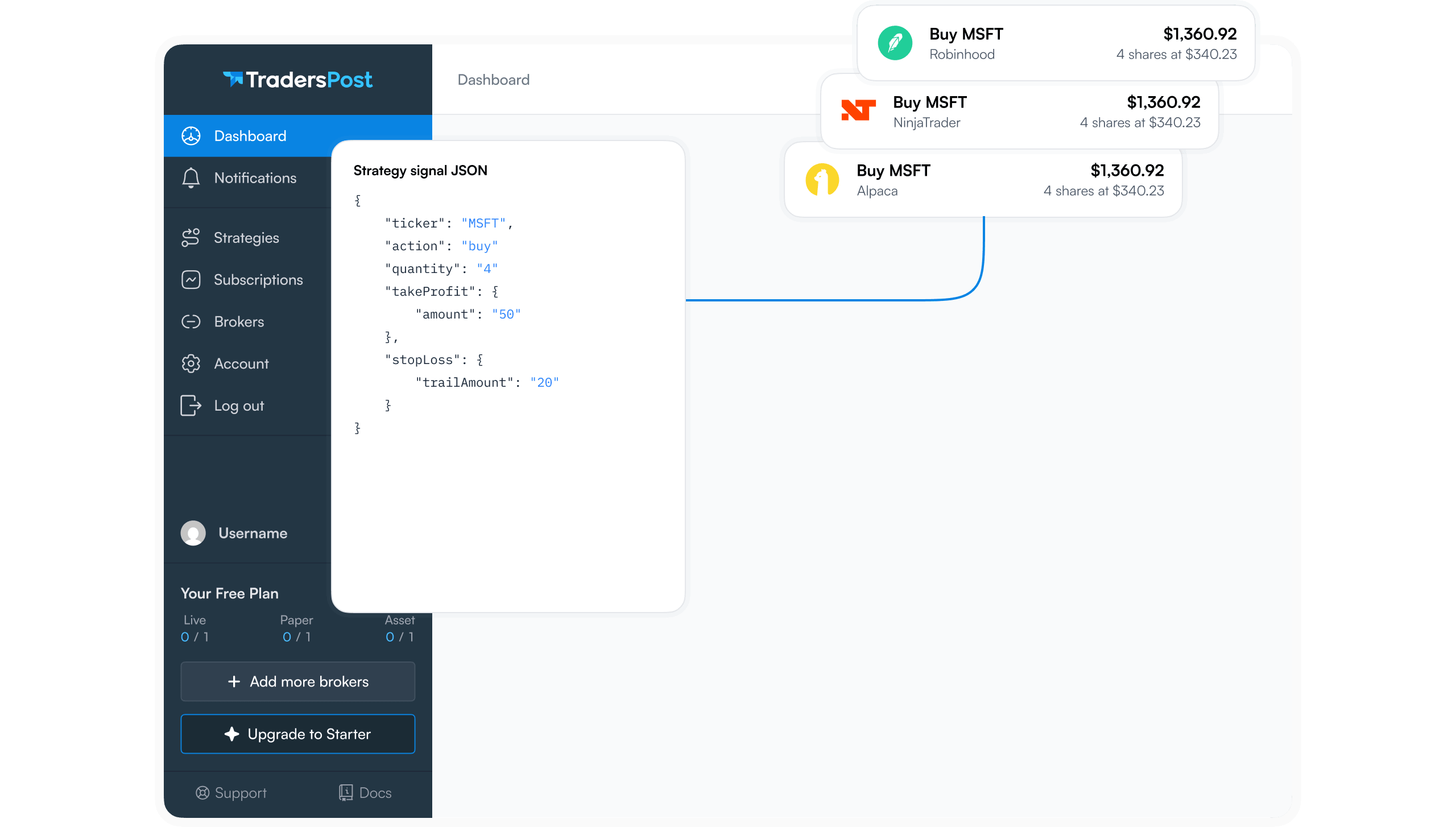
For automated trading through platforms like TradersPost, high liquidity is particularly important. Your algorithms need to execute at predictable prices without getting caught in illiquid markets where orders move prices significantly.
Low Liquidity Challenges
Penny stocks, small-cap cryptocurrencies, far out-of-the-money options, and exotic currency pairs often suffer from poor liquidity. Wide bid-ask spreads eat into profits. Large orders can't be filled at desired prices. You might find yourself trapped in positions with no buyers when you want to exit.
A useful rule of thumb: if the bid-ask spread represents more than 0.1-0.2% of the instrument's price, you're dealing with liquidity challenges that will impact performance.
Trading Hours and Availability
Different asset classes trade during different hours, which needs to align with when you can actively trade or monitor positions.
Stock Market Hours
U.S. stocks trade 9:30 AM to 4:00 PM Eastern Time, with extended hours from 4:00 AM to 8:00 PM. This concentrated volume during regular hours creates predictable patterns. The opening hour and closing hour typically see the most volume and volatility.
If you work a 9-to-5 job, stock market hours might conflict with your availability. However, if you can trade during the first hour or last hour of the session, stocks might be ideal.
Futures Market Hours
Futures markets operate nearly 24 hours, with brief maintenance windows. E-mini futures trade Sunday evening through Friday afternoon with only short breaks. This extended availability means you can trade before work, after work, or even during lunch.
The caveat is that volume concentrates during U.S. market hours. Trading overnight futures sessions can mean lower liquidity and less reliable price action.
Cryptocurrency 24/7 Trading
Crypto never closes. Markets operate continuously, seven days a week. For traders who want to act on ideas outside traditional market hours or those in different time zones, crypto provides unmatched availability.
The downside is that significant moves can happen anytime, including weekends. You might wake up to find your positions significantly changed. For some traders, this constant market action is liberating. For others, it's stressful.
TradersPost Trading Windows
If you want to trade a 24/7 asset but limit yourself to specific hours, TradersPost subscription settings allow you to define trading windows. You can automate strategies in crypto or futures but restrict order execution to times when you're available to monitor positions.
Capital Requirements
Different asset classes require different minimum capital levels to trade effectively.
Stock Trading Capital
U.S. pattern day trading rules require $25,000 to make more than three day trades per week. While there's discussion of reducing this to $2,000, the current rule remains in place for most brokers.
If you're trading stocks without pattern day trading, you can start with any amount, but each position might need to be held overnight. Share prices for major stocks range from $50 to $500+, meaning even small positions require several thousand dollars to diversify properly.
Futures Margin Requirements
Futures operate on margin, typically requiring $500 to $10,000 per contract depending on the instrument. One NQ contract might require $15,000 in margin, while one MES (micro E-mini S&P) contract might require only $1,200.
The leverage inherent in futures means you can gain or lose money quickly relative to your account size. This makes futures capital-efficient but also risky if you don't manage position sizing carefully.
Cryptocurrency Accessibility
Crypto offers the lowest barrier to entry. You can trade fractional amounts, meaning you could start with $100 or even less. Most exchanges allow you to buy $10 worth of Bitcoin or any other cryptocurrency.
This accessibility makes crypto ideal for beginning traders who want to learn without committing significant capital. However, the same accessibility leads many beginners to underestimate the risk and overtrade.
Options Strategies
Options can require anywhere from $100 for simple long positions to tens of thousands for complex spreads or selling strategies. Naked option selling requires substantial capital and margin approval.
The flexibility of options means traders at many capital levels can participate, but you need enough capital to properly diversify and manage risk.
Information Edge
Different asset classes reward different types of analysis and information. Choose markets where you can develop an edge based on the information you enjoy researching.
Fundamental Analysis
Stocks reward fundamental analysis: understanding revenue growth, profit margins, competitive positioning, management quality, and industry trends. If you enjoy analyzing businesses, reading earnings reports, and thinking about long-term value, stocks provide endless material.
Value investors, growth investors, and dividend investors all operate primarily in stock markets because that's where fundamental analysis matters most.
Macro Analysis
Currency futures, bond futures, and index futures respond strongly to macroeconomic factors. Interest rate decisions, GDP reports, inflation data, geopolitical events, and central bank policy drive these markets.
If you find yourself naturally drawn to understanding economic cycles, Federal Reserve policy, and global trade dynamics, futures markets on currencies and indices might be your natural home.
Technical and Momentum Analysis
All asset classes respond to technical analysis, but some more reliably than others. Futures and forex markets often respect technical levels because so many participants use similar technical frameworks.
Crypto markets are heavily driven by momentum and sentiment. Technical patterns can work well in crypto, especially when combined with understanding of market psychology and narrative cycles.
On-Chain and Network Analysis
Cryptocurrency uniquely offers on-chain data: wallet balances, transaction volumes, exchange inflows and outflows, long-term holder behavior, and leverage metrics. If you enjoy data analysis and have programming skills, crypto on-chain analysis provides edge opportunities that don't exist in traditional markets.
For traders building automated systems with TradersPost, incorporating alternative data sources can provide meaningful edge. The platform's flexibility allows you to trigger trades based on any data you can process, not just price action.
Trading Style Alignment
Your natural trading style should influence your asset class selection.
Day Trading and Scalping
Futures and forex excel for day trading and scalping because of high liquidity, low commissions, and tight spreads. The leverage allows meaningful profits from small price movements.
Crypto also supports active day trading given 24/7 availability and high volatility. However, exchange fees can be higher than futures commissions.
Stocks are possible for day trading if you have the $25,000 minimum, but commissions and wider spreads make very short-term scalping less attractive than in futures markets.
Swing Trading
Stocks work well for swing trading because company-specific news and earnings create multi-day moves. You can hold positions for days or weeks, riding trends as they develop.
Crypto swing trading capitalizes on narrative cycles and sentiment shifts that play out over days or weeks. Bitcoin and major altcoins trend well on the daily timeframe.
Futures can be swing traded but require more attention to contract rollover dates and overnight margin requirements.
Position Trading and Investing
Stocks are the natural choice for position trading and long-term investing. Buy-and-hold strategies, dividend investing, and long-term value investing all operate primarily in stock markets.
Crypto offers position trading opportunities for those comfortable with high volatility and willing to ride through 50%+ drawdowns. Long-term Bitcoin and Ethereum holders have been rewarded, but the journey is psychologically challenging.
Futures are generally unsuitable for very long-term position trading because of rollover costs and margin requirements, though some traders maintain long-term futures positions in specific commodity markets.
Learning Curve and Complexity
Different asset classes have different learning curves and complexity levels.
Stocks for Foundation Building
Many traders benefit from starting with stocks because the concepts are straightforward. You buy shares, the price goes up or down, you sell when ready. Stock price movements are often tied to understandable business fundamentals.
The stock market also has the most educational resources, the longest track record, and the most established best practices. Starting with stocks builds a foundation that transfers to other markets.
Futures for Leverage and Efficiency
Futures add complexity through margin requirements, contract specifications, expiration dates, and settlement procedures. The leverage can amplify both gains and losses, requiring better risk management.
However, once you understand these mechanics, futures offer capital efficiency and tax advantages that appeal to professional traders.
Options for Advanced Strategies
Options introduce multiple dimensions: strike price, expiration date, implied volatility, the Greeks, and various spread strategies. The learning curve is steep, but options provide capabilities unavailable in other asset classes.
Most successful options traders master stocks or futures first, then add options for specific purposes like hedging, income generation, or defined-risk speculation.
Crypto for Technology Integration
Crypto requires understanding blockchain technology, wallet security, exchange risks, and a rapidly evolving regulatory landscape. The technology barrier deters some traders but attracts others.
For traders comfortable with technology and willing to navigate the Wild West aspects of crypto markets, the opportunities can be substantial. The market's relative youth means inefficiencies still exist.
Matching Asset Classes to Your Profile
Let's consider several trader profiles and which asset classes might suit them best.
The 9-to-5 Professional
You work full-time and can only trade before work, during lunch, or after work. You have $10,000-$50,000 to dedicate to trading.
Best Options
- Swing trading stocks: Research in the evening, place orders outside market hours, let positions develop over days
- Crypto: Trade any time given 24/7 availability, though consider using TradersPost trading windows to prevent overtrading
- Futures: Trade during pre-market or post-market sessions, though be aware of lower liquidity
The Full-Time Day Trader
You can dedicate market hours to active trading. You have $25,000+ capital and want to generate consistent daily income.
Best Options
- Futures: High liquidity, low commissions, favorable tax treatment, excellent for active trading
- Stocks: With pattern day trader status, stocks offer unlimited opportunities during market hours
- Options: Day trading options can work but requires sophisticated understanding of Greeks and implied volatility
The Small Account Trader
You're starting with $500-$5,000 and want to learn without excessive risk.
Best Options
- Crypto: Low barriers to entry, fractional trading, 24/7 availability
- Micro futures: Micro E-mini contracts offer futures exposure with smaller capital requirements
- Stocks: Can work for swing trading without pattern day trading if you're patient and selective
The Technology-Oriented Analyst
You have programming skills, enjoy data analysis, and want to build sophisticated automated systems.
Best Options
- Crypto: Rich data sources including on-chain metrics, API availability, algorithmic opportunities
- Futures: Clean data, consistent market structure, well-suited to systematic strategies
- Stocks: Good for quantitative strategies, though more instruments to manage than futures
The Risk-Averse Learner
You want to learn trading but are very concerned about losing money. You value stability and predictability.
Best Options
- Large-cap stocks or index ETFs: Lower volatility, established companies, predictable behavior
- Start with paper trading: Use TradersPost paper accounts to practice without risking capital
- Conservative position sizing in any asset class: Even volatile assets become manageable with tiny position sizes
Testing Multiple Asset Classes
You don't need to marry your first asset class. In fact, exploring multiple markets helps you discover where you have natural aptitude.
Paper Trading Different Markets
Use TradersPost's paper trading capabilities to test strategies across stocks, futures, and crypto simultaneously. Run parallel strategies in different asset classes to see which produces better results and feels more comfortable.
Paper trading lets you experience the emotional aspects of different markets without financial risk. You'll quickly discover whether you prefer the steady grind of stock trading or the rapid action of crypto markets.
Track Your Performance by Asset Class
As you gain experience, track your win rate, average profit, maximum drawdown, and emotional state separately for each asset class. You might discover you're naturally better at trading one type of instrument.
Many traders find they perform well in one asset class but struggle in another, even using similar strategies. This isn't failure; it's valuable information about where to focus your energy.
Specialization vs Diversification
Professional traders often specialize deeply in one or two markets rather than spreading themselves across everything. A specialist in crude oil futures knows that market's personality better than a generalist trading twenty different instruments.
However, some traders benefit from diversification across asset classes, especially if different markets suit different strategies or market conditions. There's no single right answer.
Automation Considerations
When trading through automation platforms like TradersPost, certain asset class considerations become more or less important.
Execution Speed Requirements
Futures and stocks on liquid exchanges generally offer faster execution than crypto on some exchanges. If your strategy requires very tight timing, futures might be preferable.
For most retail automated strategies, execution speed differences are negligible. TradersPost handles the technical details, allowing you to focus on strategy rather than plumbing.
Data and Signal Sources
TradingView, one of TradersPost's primary integration partners, provides data for all major asset classes. Your indicator and strategy development workflow remains consistent whether you're trading stocks, futures, or crypto.
This consistency means you can develop a strategy in one asset class and adapt it to another relatively easily, testing which market treats your logic best.
Risk Management Tools
Different brokers connected to TradersPost offer different risk management capabilities. Some excel at options strategies, others at futures, others at crypto. Consider which brokers you'll use and what asset classes they support best.
TradersPost's subscription-level controls work consistently across asset classes, allowing you to set position limits, trading windows, and other parameters regardless of what you're trading.
Common Mistakes in Asset Class Selection
Avoid these common pitfalls when choosing what to trade.
Following the Hype
Just because crypto is having a massive run doesn't mean you should abandon stocks to chase it. Just because a friend is making money in penny stocks doesn't mean that's your path.
Trade what matches your skills and personality, not what's currently exciting everyone else.
Ignoring Capital Requirements
Starting futures trading with a $2,000 account might technically be possible, but you'll be so underc capitalized that you can't withstand normal market volatility.
Choose asset classes appropriate for your capital level. Be patient and build your account before moving to instruments that require more capital.
Overcomplicating Too Soon
Don't start with complex option spreads or exotic crypto pairs. Master simple long and short positions in liquid instruments before adding complexity.
The traders who succeed long-term usually have deep expertise in straightforward strategies, not superficial knowledge of many complex ones.
Neglecting Personal Schedule
If you work nights, don't force yourself to trade U.S. market hours just because that's when most traders are active. Choose markets that fit your schedule.
Similarly, if you need to sleep peacefully without worrying about overnight gaps, don't trade instruments that move while you're sleeping.
Making Your Decision
Choosing an asset class isn't permanent, but it deserves thoughtful consideration. Consider these final recommendations.
Start Where You Have Interest
If you're genuinely interested in technology and blockchain, crypto will keep you engaged through the learning curve. If you enjoy following companies and industries, stocks will hold your attention.
Sustained interest matters more than you might think. The grind of learning to trade lasts months or years. You're more likely to persist if the underlying market interests you.
Match Capital to Opportunity
Be honest about your capital situation. Don't try to day trade stocks with $5,000. Don't trade NQ futures with a $3,000 account. Choose markets where your capital allows proper risk management.
As your account grows, you can migrate to other asset classes that become more suitable.
Consider Your Goals
Are you trying to build wealth over decades? Stocks might be your foundation. Want to generate daily income? Futures or forex might suit you. Interested in emerging technology with asymmetric upside? Crypto deserves consideration.
Your goals should inform your asset class choice as much as your personality and capital.
Use TradersPost to Experiment
Connect multiple strategies to TradersPost, each focusing on different asset classes. Run them simultaneously in paper trading. Let data guide your decision about where to commit real capital.
The platform's flexibility means your infrastructure works across all asset classes. You're not locked into technical limitations based on what you choose to trade.
Conclusion
Choosing the right asset class is one of the most important decisions in your trading journey. The market you trade affects everything: your risk exposure, capital requirements, available trading hours, information sources, and psychological experience.
Don't let accidents of history determine what you trade. Don't anchor to your first exposure or follow others into markets that don't suit you. Take time to evaluate volatility tolerance, liquidity needs, time availability, capital constraints, information edges, trading style, and learning curve across stocks, futures, options, and crypto.
Test multiple markets through paper trading before committing capital. Track your emotional state and performance separately by asset class. Specialize where you find natural aptitude, and don't be afraid to switch if something isn't working.
With TradersPost providing the automation infrastructure across asset classes, you're free to trade what suits you best rather than what's technically easiest to automate. Choose wisely, test thoroughly, and focus your energy where you have the greatest advantage.