Create Trading Bot TradingView
TradingView integration guide: setup, features, automation options, and broker connectivity for enhanced trading.

Marketing

Creating a trading bot with TradingView is an exciting venture into automated trading that can potentially streamline your investment strategy and enhance decision-making speed. This guide will walk you through the essential steps of developing a trading bot using TradingView, covering everything from scripting in Pine Script to executing trades automatically via platforms like TradersPost. By the end of this article, you'll have a clear understanding of how to plan, develop, and deploy a functional trading bot.
Understanding Trading Bot Components
Trading bots are composed of several critical components that ensure smooth operation and effective trade execution. These components are:
Strategy Layer
This is where your trading logic resides. Using Pine Script, TradingView's native programming language, you create strategies based on technical indicators and predefined rules. Whether you're a seasoned programmer or new to scripting, focusing on the logic first will guide your learning process. For instance, you might write a script that triggers buy signals when the moving average crosses over.
Alert Layer
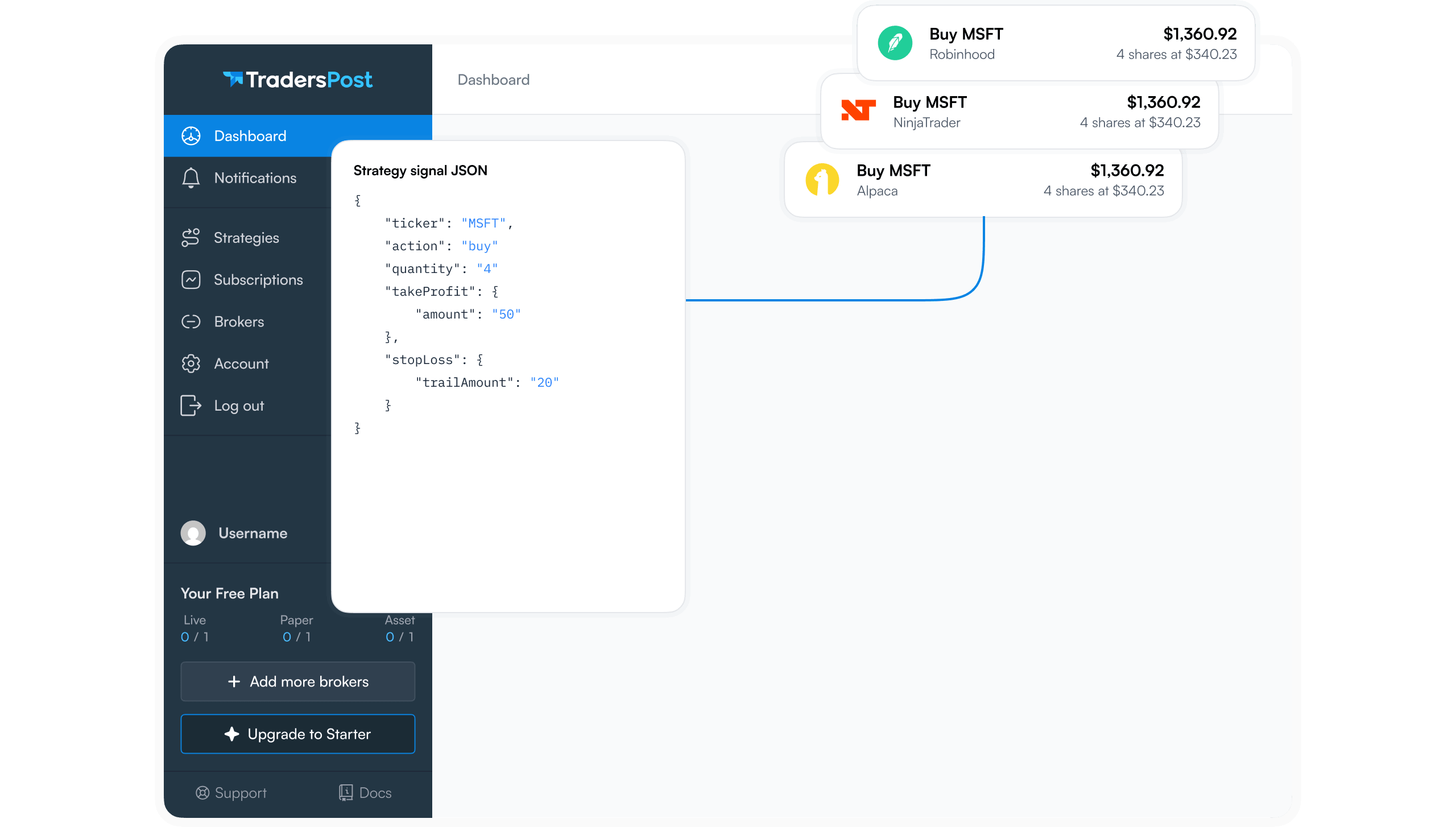
Alerts are crucial for ensuring your strategy's signals are communicated in real-time. Here, webhook configurations come into play. Webhooks allow your alerts to be sent automatically to external platforms like TradersPost, which can then execute trades based on these signals.
Execution Layer
The execution layer manages order placement and position tracking across brokerage accounts. This is where TradersPost becomes invaluable as it acts as a bridge between TradingView and brokers such as Alpaca, TradeStation, Tradier, and Interactive Brokers. It ensures your orders are placed swiftly and accurately according to your defined strategy.
Monitoring Layer
Continuous monitoring helps track performance metrics and handle any errors promptly. This layer is vital for maintaining the efficacy of your bot over time by allowing adjustments based on market conditions or strategy performance metrics.
Planning Your Trading Bot
Before diving into coding, comprehensive planning is crucial. Start by defining the core aspects of your strategy:
Strategy Requirements
Define what type of strategy you wish to implement (e.g., trend-following or mean-reversion), the timeframes you'll operate within (e.g., daily or hourly charts), and the financial instruments involved (e.g., stocks or forex).
Risk Management
Establish risk parameters such as position sizing rules, stop-loss levels, and daily drawdown limits. Sound risk management is non-negotiable for sustainable trading success.
Execution Details
Consider which broker you'll connect with through TradersPost for seamless trade execution. Decide on order types (market or limit orders) and any specific automation services required.
Testing Your Bot
Testing is an integral step before deployment:
- Backtesting: Use historical data in TradingView to simulate how your strategy would have performed in past market conditions.
- Paper Trading: Implement your bot in a simulated environment without risking real money.
- Live Monitoring: Once satisfied with backtesting results, initiate live testing with minimal capital to observe real-world performance.
These testing phases help identify potential issues early on and refine strategy parameters before committing larger sums of capital.
Deploying Your Bot with TradersPost
Once thoroughly tested, deploy your bot using TradersPost's automation service:
- Set Up Webhook Alerts: Configure alerts on TradingView that communicate directly with TradersPost via webhooks.
- Broker Integration: Ensure seamless connectivity between TradersPost and brokers like Alpaca or Interactive Brokers for automatic order execution.
- Track Performance: Utilize performance metrics within both TradingView and TradersPost to continually assess strategy effectiveness.
Continuous Monitoring and Maintenance
Even after deployment, continuous supervision is necessary:
- Monitor Strategy Performance: Regularly review performance metrics to ensure the strategy meets desired objectives.
- Adjust Parameters: Be prepared to tweak settings in response to changing market conditions.
- Ensure System Reliability: Check for any system errors or connectivity issues between TradingView and TradersPost.
Conclusion
Developing a trading bot with TradingView involves strategic planning, detailed scripting in Pine Script, rigorous testing procedures, and robust integration with tools like TradersPost for automated execution. By following these steps meticulously, you can create a reliable trading bot capable of operating autonomously while aligning with your investment goals. Remember that building a profitable bot takes time; patience coupled with methodical refinement will yield results over time. With TradersPost facilitating broker connections through webhooks seamlessly bridging gaps between platforms, you're well-equipped to transform strategic ideas into actionable trades effortlessly.