How to Find an Edge in Automated Trading
Finding an edge is crucial for trading success. An edge represents the unique advantages that traders can leverage to try to outperform the market. What exactly do we mean by an edge? And how do we find it?

Co-Founder / CSO

-
Traders ask whether TradersPost is free, so the guidance now says its 7-day trial automates paper trading and automated live trading needs a paid plan.
What is an Edge in Automated Trading?
In the realm of automated trading, an "edge" refers to any advantage a trader has that helps predict or respond to market movements more accurately than the general market consensus. This edge can be derived from a variety of sources, including superior technology, exclusive data, advanced algorithms, or innovative execution strategies. Essentially, it's about having access to, or being able to develop, insights and tools that not everyone else has, allowing traders to make more profitable decisions more often than not.
For example, a trader using sophisticated machine learning models to analyze market sentiment might gain an edge by predicting short-term movements in stock prices based on real-time news updates and social media trends. This technological and analytical advantage allows them to execute trades before the majority of the market has reacted, capturing profits from these movements. Let's dive into several other variations of trading edges, exploring how each can be identified, developed, and utilized in automated trading strategies to consistently stay ahead of the curve.
Technological Edge: Harnessing Superior Tech
In automated trading, a technological edge can be profoundly impactful, allowing traders to utilize superior technology to outperform competitors. This edge is often achieved through faster data processing, advanced algorithms, and seamless integration with trading platforms, enabling quicker and more accurate decision-making. One of the key benefits of leveraging such technology is the significant reduction in latency; the time it takes to receive, process, and act on market data can be the difference between profit and loss. Advanced trading platforms are specifically designed to handle these tasks with high efficiency and reliability.
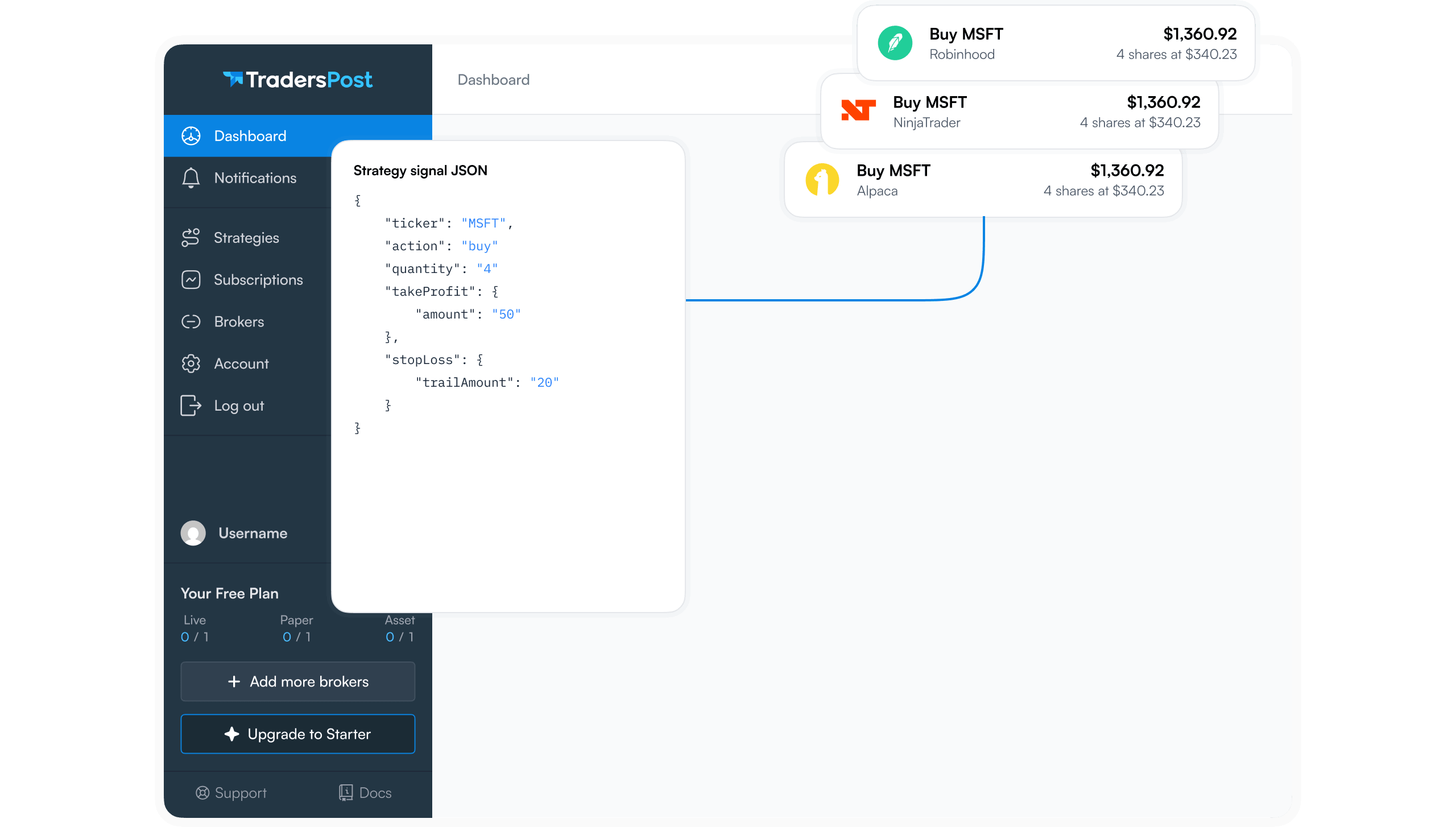
A prime example of harnessing this technological edge is the use of TradersPost, a sophisticated platform that streamlines multiple aspects of trading. With TradersPost, traders can automatically calculate the correct position size, ensure that each trade complies with predefined rules, and execute transactions directly with their broker. All this can happen in response to buy or sell signals from platforms like TradingView, and once a signal arrives, TradersPost's own steps typically take 300 to 500 milliseconds1. This not only minimizes the risk of slippage but also maximizes the potential for capturing favorable movements in the market, giving traders a significant edge over those using less integrated and slower technologies or manual traders. You can try this on paper first: TradersPost's free 7-day trial automates trading in paper accounts, and automated live trading needs a paid plan2.
Systematic Edge: Developing Robust Trading Systems
Systematic trading strategies often revolve around the concept of factor investing, a methodology rooted in modern portfolio theory that targets specific drivers of returns across assets. These factors are quantifiable characteristics that explain differences in investment returns, and they are typically identified through statistical methods applied to historical data. Common factors in equity markets include value (stocks with lower price-to-earnings ratios have historically outperformed), size (small-cap stocks have historically outperformed large-cap stocks), momentum (stocks that have performed well have historically continued to do so), and volatility (stocks with lower volatility have historically outperformed). These factors are integrated into a portfolio to systematically capture risk-premiums associated with them.
Building on this foundation, systematic portfolio construction leverages these well-known factors to create diversified portfolios that aim to maximize returns for a given level of risk. This involves sophisticated optimization techniques to weigh each factor according to its expected return and risk, continually adjusting the portfolio as new data becomes available and as market conditions change. The goal is to construct a portfolio that is not overly reliant on any single factor but instead benefits from the independent performance of multiple factors, reducing overall risk and enhancing potential returns.
However, a significant systematic edge can be found in the discovery of new factors that the market has yet to fully recognize or price in. This involves innovative research and data analysis, looking for patterns that have not been widely exploited. For example, with the advent of big data and machine learning, traders can analyze vast datasets, from satellite images predicting agricultural yields to real-time consumer behavior data, to identify unique predictors of asset returns that aren't yet mainstream. The process of discovering, validating, and deploying new factors can be complex and requires a deep understanding of both data science and market dynamics.
The continuous exploration for new factors underscores a critical aspect of maintaining a systematic edge: it is not static but dynamic. As more participants recognize and start exploiting a factor, its ability to generate excess returns diminishes. Therefore, the quest for new factors, coupled with a rigorous approach to portfolio construction and risk management, is essential for sustaining a competitive edge in systematic trading. This advanced strategy not only requires a robust operational framework to handle data and execute trades but also a keen insight into how market forces and investor behavior might evolve, revealing new opportunities for those with the foresight and tools to capitalize on them.
Statistical Edge: Leveraging Advanced Mathematics
A statistical edge in automated trading is achieved through the application of advanced mathematical models and machine learning algorithms that enable traders to forecast price movements with greater accuracy than conventional approaches. This edge is rooted in the ability to process and analyze vast amounts of data, ranging from price and volume data to economic indicators and sentiment analysis, to uncover patterns and trends that are not readily visible. For example, statistical arbitrage utilizes complex mathematical models to identify short-term trading opportunities between correlated securities. By employing techniques like cointegration and correlation analysis, traders can detect and exploit pricing inefficiencies before they are corrected by the market.
Further enhancing the statistical edge, machine learning algorithms offer the ability to adapt and improve over time. These algorithms can learn from market data and continuously refine their predictions based on new information, thus remaining effective even as market dynamics change. Deep learning models, for instance, can analyze layers of data for predictive features at a depth impossible for human traders or simpler algorithms. This might include parsing global news feeds in real-time to predict impact on stock prices or using reinforcement learning to optimize trading strategies based on the reward feedback of trading outcomes. By leveraging these sophisticated mathematical tools, traders equip themselves with a dynamic and robust framework for making informed trading decisions, securing a significant advantage over those relying on more static or traditional analysis techniques.
References
1 docs.traderspost.io, Signal Speed
2 docs.traderspost.io, Frequently Asked Questions