How to Optimize TradingView Strategy
Comprehensive analysis of Tradestation, Alpaca, Interactive Brokers features, automation capabilities, and integration options for traders.

Marketing

-
Current TradersPost documentation places strategy logic in TradingView and uses alerts or webhooks for execution, so the platform workflow has been qualified while the core optimization guidance remains sound.
Optimizing a TradingView strategy requires a systematic approach to improve performance metrics such as win rate, drawdown, and risk-adjusted returns. By focusing on these key areas, you can enhance your strategy's robustness across varying market conditions. TradersPost uses TradingView alerts or webhooks to automate and execute optimized strategies through brokers like Alpaca, TradeStation, Tradier, and Interactive Brokers1.
Setting the Foundations for Optimization
Understanding Core Objectives
Before diving into technical adjustments, it's essential to clarify your optimization goals:
- Improve Win Rate: Aim for a higher percentage of successful trades without compromising profitability.
- Reduce Maximum Drawdown: Ensure declines from peak equity levels remain within acceptable thresholds.
- Optimize Risk-Adjusted Returns: Use metrics like the Sharpe ratio to balance risks against returns.
- Ensure Robustness: Test your strategy against different market conditions to ensure stability.
These objectives guide the optimization process and ensure that you maintain a balanced approach rather than chasing unattainable perfection.
Initial Steps in TradingView
- Apply Your Strategy: Begin by applying your selected trading strategy to a chart in TradingView.
- Open the Strategy Tester: Access this feature at the bottom of the interface to evaluate performance metrics.
- Navigate to Settings: Make necessary adjustments based on initial results.
These steps provide a baseline understanding of how your current strategy performs before making any optimizations.
Parameter Optimization Techniques
Focus on Key Parameters
Start by optimizing one parameter at a time for clarity:
- For instance, if using moving averages, systematically test different lengths (e.g., 5, 10, 15, 20) to find an optimal balance between signal frequency and accuracy.
- Look at entry signals such as price crossing above or below moving averages for actionable insights.
Implementing Walk-Forward Analysis
Walk-forward analysis is crucial for testing strategy robustness:
- Simulate real-world trading by periodically recalibrating parameters based on recent data while maintaining other settings constant.
This method helps in identifying strategies likely to perform well in future market conditions.
Advanced Performance Metrics
Monitor these crucial metrics during optimization:
- Profit Factor: The ratio of gross profit to gross loss indicates overall profitability.
- Maximum Drawdown: Highlights largest peak-to-trough declines.
- Win Rate: The percentage of trades resulting in profits.
These indicators provide a deeper understanding of your strategy's potential success and risk areas.
Enhancing Strategy Execution with TradersPost
Webhook Integration
Integrate webhooks into your optimized TradingView strategy:
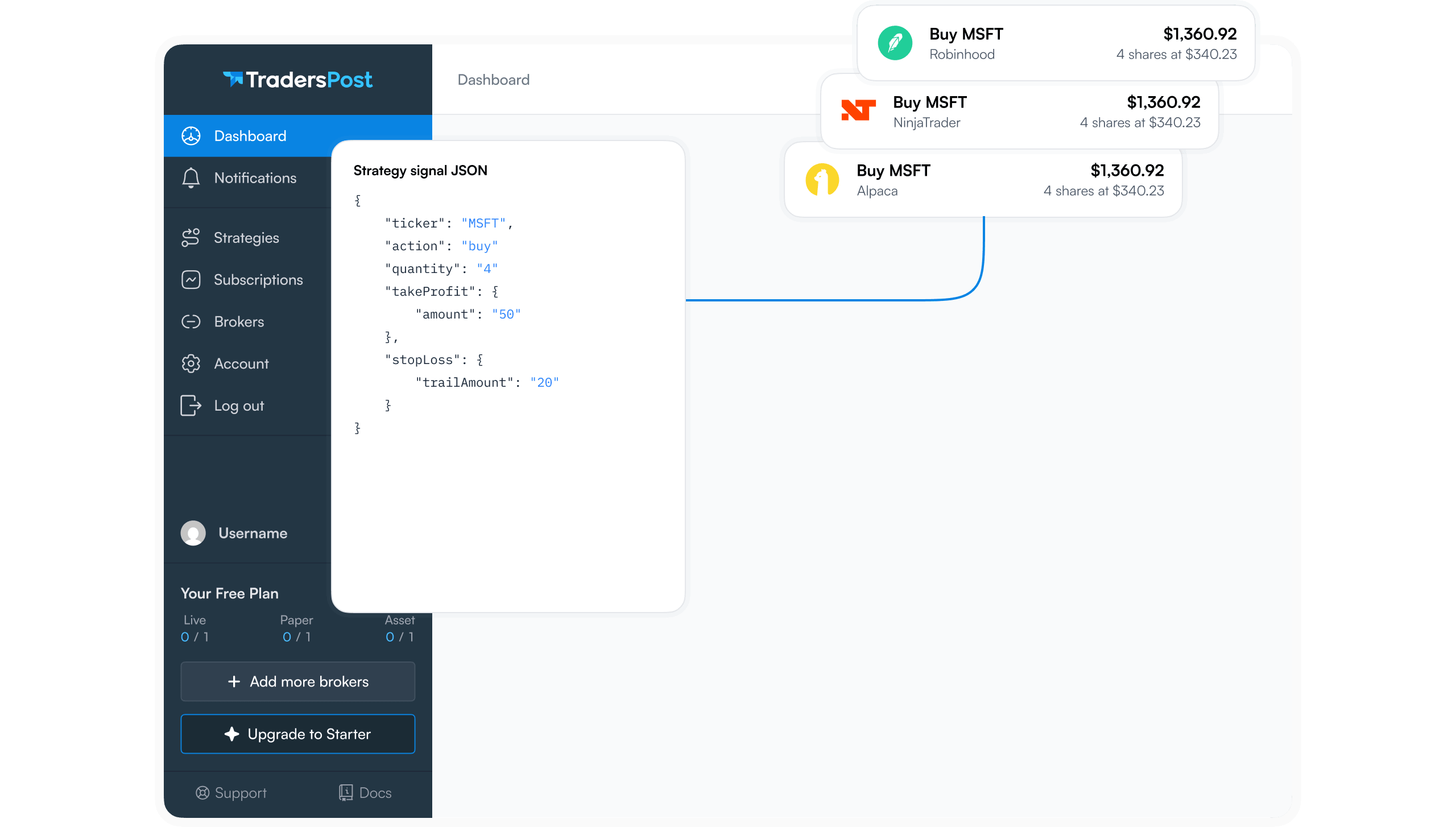
- Webhooks facilitate automated communication between platforms, ensuring seamless execution of trades through TradersPost.
Configuring TradersPost for Automation
Set up TradersPost to receive and execute signals:
- Create a Strategy: Configure TradersPost to route signals from your TradingView strategy based on optimization outcomes1.
- Set Position Sizing: Base this on backtesting results to manage risk effectively.
This integration allows for real-time execution across connected brokers such as Alpaca and Interactive Brokers, ensuring that optimized strategies are not just theoretical but practically actionable.
Monitoring and Adjusting Strategies
Live Performance Tracking
Monitor how live executions compare with backtested results:
- Track deviations caused by slippage or market impact.
- Adjust parameters as needed based on ongoing performance assessments.
Understanding these dynamics helps refine strategies continuously for better alignment with actual market behavior.
Avoiding Over-Optimization Pitfalls
Be wary of common mistakes such as:
- Too Many Parameters: Focus on critical elements only; simplicity often yields better generalization.
- Excessive Precision: Avoid unnecessary decimal-level optimizations that may not translate well into live markets.
- Ignoring Transaction Costs: Always account for realistic commission rates and slippage scenarios.
Adopting these precautions can prevent skewed expectations and fragile strategies prone to failure outside controlled testing environments.
Ensuring Robustness Through Testing
Prevent Look-Ahead Bias
Utilize Pine Script code effectively:
- Include delisted stocks where data permits for comprehensive testing.
- Validate strategies across multiple assets and time periods.
- Consider shifts in market regimes when assessing performance validity.
Systematic Optimization Approach
Implement a structured review process:
- Conduct regular performance reviews monthly or quarterly.
- Adjust parameters proactively based on evolving market conditions rather than reactive measures post-failure.
This disciplined approach ensures that strategies remain relevant and competitive over time.
Conclusion
Optimizing a TradingView strategy involves more than tweaking numbers; it's about crafting robust systems capable of thriving in diverse markets. By following structured optimization techniques and leveraging the power of TradersPost integration, you can automate execution across various brokers effectively. Begin by setting clear objectives, engage in meticulous parameter testing, avoid overfitting pitfalls, and regularly review performance metrics. With TradersPost acting as your bridge from TradingView's analytical prowess to real-world execution efficiency, you're well-equipped to elevate your trading game systematically.