How to Use TradingView Webhooks
TradingView integration guide: setup, features, automation options, and broker connectivity for enhanced trading.

Marketing

-
TradingView still requires a paid plan and limits webhook ports to 80 or 443 rather than universally requiring HTTPS, so the plan examples and endpoint guidance have been corrected while the core setup remains accurate.
Effectively using TradingView webhooks can significantly enhance your trading strategy by automating trade execution based on real-time alerts. To achieve this, you need the right setup and a clear understanding of how to implement webhooks in your trading environment. This guide will walk you through the process, from setting up the necessary components to connecting with brokers like those supported by TradersPost. You'll learn how to unleash the full potential of TradingView's webhook functionality.
Setting Up for Webhook Success
Essential Components
To begin with TradingView webhooks, you'll need several key components:
- TradingView Paid Account: Access to webhooks requires a paid TradingView subscription, such as an Essential, Plus, or Premium plan1. Free accounts do not support webhook functionality.
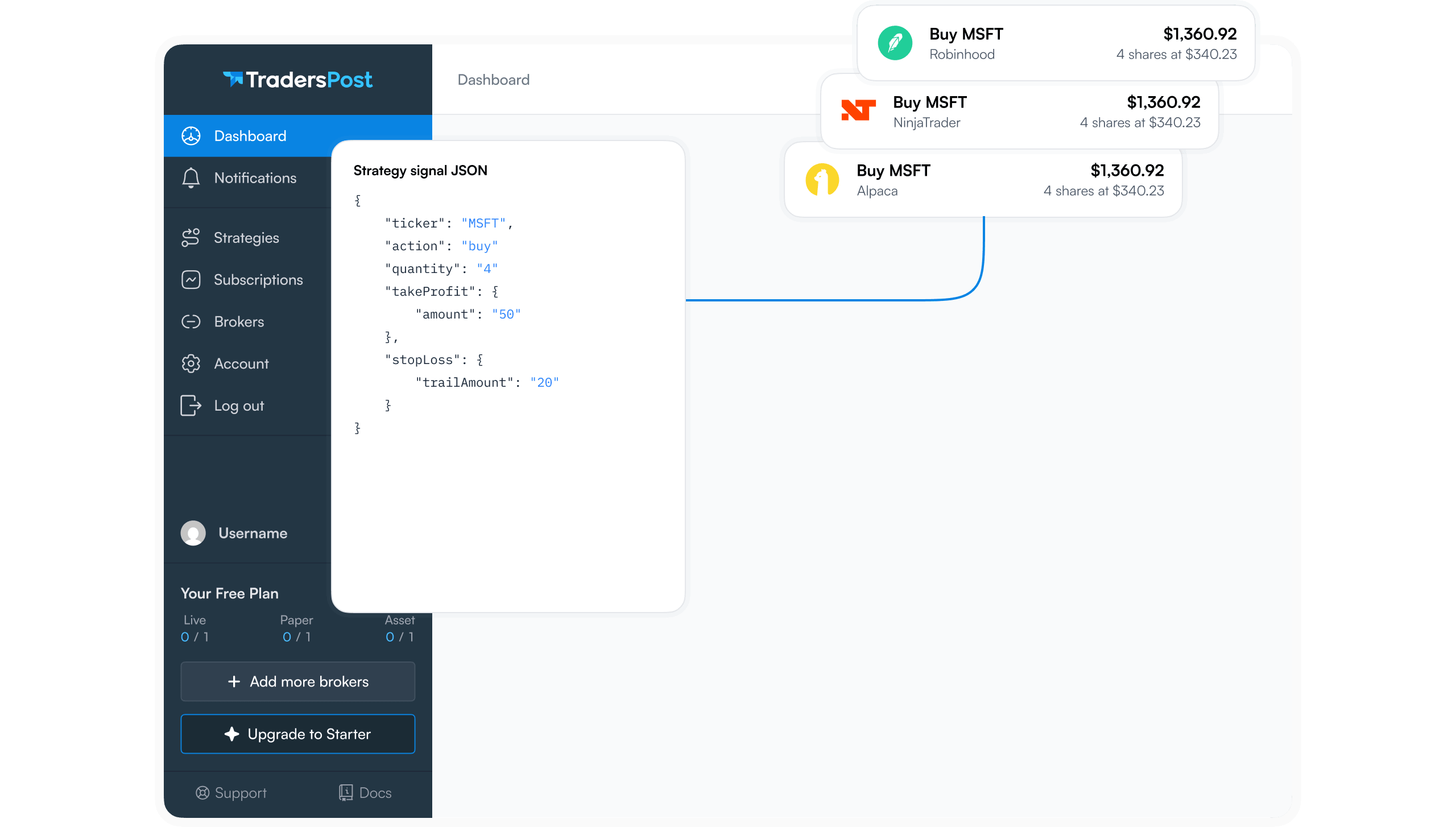
- Webhook Receiving Endpoint: You must have an endpoint capable of receiving HTTP POST requests. This could be a custom server, cloud-based service, or a platform like TradersPost that specializes in handling trading webhooks seamlessly.
- Endpoint Access: Ensure your webhook endpoint can receive HTTP POST requests on port 80 or 443, as TradingView restricts webhook destinations to these ports2.
- Basic Technical Knowledge: While not mandatory, understanding HTTP requests and JSON formatting is beneficial for configuring and troubleshooting webhooks effectively.
Goal Definition
Before creating your first webhook, clarify what you aim to accomplish:
- Asset Classes: Determine which markets and instruments you're interested in trading.
- Broker Integration: Decide how you'll connect your webhooks to real trade execution through brokers like Alpaca, TradeStation, Tradier, or Interactive Brokers via TradersPost.
Creating Your First Webhook
Configuring Your Endpoint
Your webhook endpoint is crucial as it receives alert messages from TradingView. Here are some options:
- Cloud Functions: Services such as AWS Lambda or Google Cloud Functions offer serverless solutions where you don't manage servers directly.
- Custom Servers: For greater control, you can deploy a personal server using languages like Python or Node.js.
Setting Up Alerts in TradingView
Once your endpoint is ready, proceed with setting up alerts in TradingView:
- Open Your Chart: Navigate to the chart and timeframe you wish to monitor.
- Set Alert Conditions: Define specific conditions that trigger your webhook.
- Configure Alert Settings: Adjust expiration, frequency, and other alert parameters.
- Add Webhook URL: Input your endpoint URL into the webhook URL field.
- Design Your Message: Craft the message that will be sent upon alert activation.
Ensure your message includes:
- Action Type (buy/sell/exit)
- Symbol Information (trading symbol and exchange)
- Price Information (current price or order details)
- Context Data (market context information)
Testing and Validation
Verifying Functionality
Test thoroughly before going live:
- Manual Triggering: Create conditions you can activate manually for testing.
- Message Verification: Ensure your endpoint correctly receives messages.
- Data Parsing: Verify accurate data interpretation by your system.
- Action Execution: Test if intended actions execute correctly upon receiving alerts.
- Error Handling: Check how your system responds to invalid data inputs.
Advanced Webhook Usage
Dynamic Content in Messages
Leverage dynamic content in webhook messages using template variables from TradingView:
- Price Variables (current price details)
- Indicator Values
- Time Information (timestamp and timeframe)
- Symbol Data
Integrating with TradersPost
Using TradersPost greatly simplifies connecting webhooks directly to broker services:
- Set up is straightforward—just direct TradingView alerts to TradersPost’s webhook URLs.
- Benefit from built-in risk management tools and portfolio coordination across multiple strategies and accounts.
Enhancing Security and Reliability
Implementing Security Measures
Secure your automated trading systems by:
- Employing message signatures for verifying integrity.
System Optimization
Maintain reliable operation through regular monitoring and optimization:
- Track metrics such as latency between alert generation and execution.
- Analyze success rates of executed trades versus planned ones.
- Monitor system uptime for reliability assessment.
Regular security audits ensure ongoing protection against vulnerabilities.
Conclusion
Successfully harnessing TradingView webhooks can revolutionize how you approach trading automation—bridging the gap between signal generation on TradingView and execution via brokers like those connected through TradersPost. By carefully setting up each component, testing thoroughly, and continuously optimizing performance, you can create a robust automated trading system that executes trades efficiently while managing risk effectively. With platforms like TradersPost simplifying broker connections and handling complex integrations effortlessly, you're equipped to tackle even sophisticated trading strategies confidently.
References
1 blog.pickmytrade.io, TradingView Webhook Alerts: Documentation & Setup (2026)
2 tradingview.com, How to configure webhook alerts