What is Grid Trading Bot
Comprehensive analysis of Tradestation, Alpaca, Interactive Brokers features, automation capabilities, and integration options for traders.

Marketing

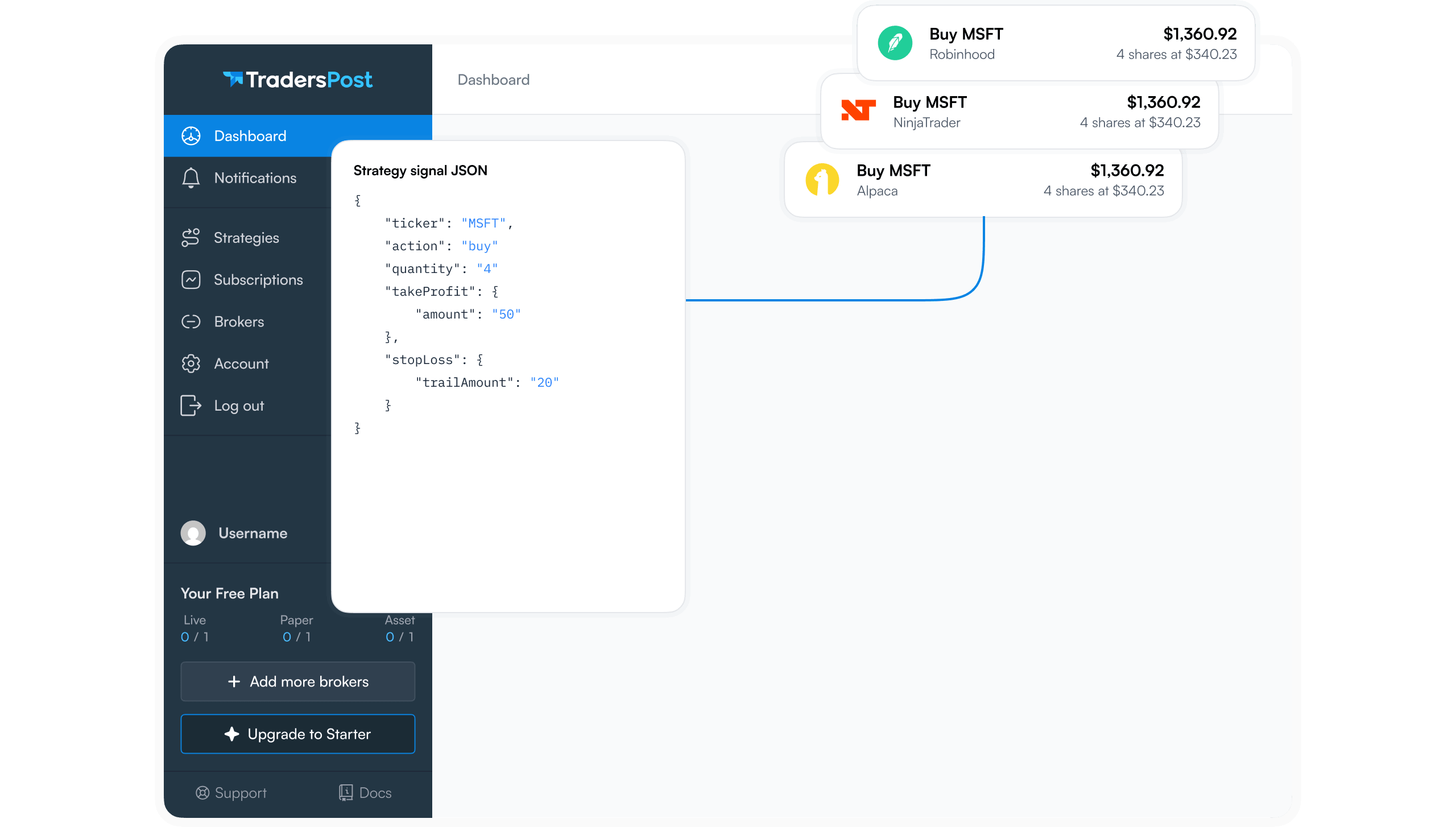
Grid trading bots offer a strategic method for capturing profits in range-bound or sideways markets by buying low and selling high as prices oscillate within a defined grid. This strategy involves placing buy and sell orders at set intervals around the current market price, allowing traders to capitalize on market fluctuations without needing to predict directional trends. With platforms like TradersPost, you can seamlessly integrate such strategies with brokers like Alpaca, TradeStation, Tradier, and Interactive Brokers, automating your trades from TradingView alerts for efficient execution.
Understanding Grid Trading
Order Placement Logic
To implement a grid trading strategy, you start by identifying the current market price as the central point. Then, you systematically place buy orders at intervals below this price and sell orders above it. The key is maintaining consistent spacing between these levels and defining how many grid levels you're comfortable with based on your risk tolerance.
Example Setup:
- Current price: $100
- Grid spacing: $2
- Buy orders at $98, $96, $94
- Sell orders at $102, $104, $106
Execution Process
The execution involves a reactive approach:
- When a buy order is filled, a corresponding sell order is automatically placed at a higher level.
- Conversely, when a sell order is filled, a corresponding buy order is set at a lower level.
This ensures that the grid structure remains intact and continues benefiting from market movements.
Spread Capture and Volatility Harvesting
Grid trading thrives on market volatility. Each price swing offers multiple opportunities to execute trades:
- Spread Capture: You profit from buying low and selling high across your grid levels.
- Volatility Harvesting: More volatile markets mean more frequent trade executions without needing to forecast direction.
Tailoring Grid Trading Strategies
Different approaches may suit various market conditions:
Fixed Interval Grids
Fixed interval grids use equal dollar spacings between levels:
- Characteristics: Simple setup, consistent risk/reward per level.
- Optimal Conditions: Stable markets with low volatility.
*Example:*
Grid levels at $95, $100, $105 with spacing of $5 each.
Percentage-Based Grids
Here, intervals are percentage-based:
- Characteristics: Adapts to different price levels; useful in managing higher dollar risks at elevated prices.
- Optimal Conditions: High-volatility assets or long-term trends.
*Example:*
10% interval grid would place levels at $90, $99, $109 for an initial price of $100.
Fibonacci-Based Grids
This method uses Fibonacci ratios for spacing:
- Characteristics: Integrates technical analysis; suitable for assets adhering to Fibonacci levels.
- Applications: Trend reversals or complex setups.
*Example:*
Fibonacci sequences might define varying intervals like 1.618 or 0.618 between grid lines.
Managing Risks in Grid Trading
Effective risk management is crucial:
Strategy Components
A successful grid strategy identifies clear range boundaries and sets grid density accordingly:
- Place denser grids where price action is frequent.
- Use stop-loss settings below support or above resistance levels to mitigate losses.
Risk Management Techniques
It’s vital to continuously monitor the validity of trading ranges and limit exposure:
- Maintain an upper limit on position sizes.
- Regularly review strategy performance against historical patterns.
Adapting to Market Trends
Grid strategies require dynamic adjustments based on market conditions:
Trending Markets Adaptation
In trending markets:
- For uptrends: Increase buy-side orders and trail grids upward.
- For downtrends: Focus more on sell-side orders while trailing grids downward.
Regular analysis helps confirm trends and adjust positions dynamically using platforms like TradersPost for real-time execution adjustments.
Conclusion
Grid trading bots provide an automated approach to exploit market ranges effectively but require careful planning and continuous adaptation. They are particularly advantageous in volatile environments where prices exhibit predictable oscillations. Platforms like TradersPost enhance this strategy by linking TradingView signals directly to brokers such as Alpaca and Interactive Brokers for seamless trade automation. Success hinges on robust risk management practices, appropriate market selection, and ongoing performance optimization. As you engage in grid trading, ensure you leverage advanced technological tools to monitor conditions actively and adapt strategies promptly for sustained profitability.