Automating Long and Short Strategies
Automated trading provides an enormous benefit to traders that are looking to remove emotion from a bullish or bearish sentiment they may have on the market. Allowing your strategy to be market neutral and going long and short can provide a much more flexible approach to trading.

Co-Founder / CSO

The Power of Automation in Long/Short Strategies
Imagine the market as a vast ocean, with waves constantly ebbing and flowing under the influence of the moon, the wind, and the earth's rotation. Just as surfers seek the perfect wave to ride, traders search for movements in the market to capitalize on. Market volatility, much like the unpredictable waves, represents the rapid and significant price movements within these financial oceans. It can be daunting for the uninitiated, but for the savvy trader, volatility is synonymous with opportunity. There are many traders out there that aren't even interested in the market unless the VIX is over 20, which is a measure of the markets sentiment on future volatility.
Traders, akin to skilled surfers, use their expertise, tools, and intuition to ride the waves of market volatility. When prices soar, the long traders are there, riding the wave upwards with the wind at their backs, their portfolios swelling as they aim to sell at the peak. Conversely, when prices plummet, the short traders dive in, navigating the downward spiral, betting against the market to emerge with gains from the downturn. This constant motion and the ability to pivot quickly between going long and short are what make trading not just a battle of wits, but a dance with the market's ever-changing rhythms. Understanding and adapting to this volatility is not just beneficial; it's essential for survival and success in the trading world.
Enough wave and surfing analogies, how does this actually work in practice?
The Essence of Long and Short Positions
Long and Short in Stocks
Going Long in the stock market is like picking a team you believe will win the game. If you've ever cheered for a sports team and felt the thrill of their victory, you understand the essence of going long. For instance, imagine you believe a company like Tesla will do well because of innovations in electric vehicles. Buying Tesla stock means you're "going long," betting on its price to rise. If the stock price climbs, your investment grows in value, much like celebrating your team's win.
Going Short, however, is like predicting a team will lose and being able to profit if you're right. It's a bit more complex; you borrow shares of a stock you believe will drop in price (say, a company facing significant challenges), sell them at the current market price, and aim to buy them back cheaper in the future. If the stock price falls as you predicted, you return the borrowed shares and pocket the difference. It's a strategy that profits from decline, akin to winning a bet against a faltering team.
Long and Short in Options
Long in Options involves buying options contracts, which give you the right but not the obligation to buy (call option) or sell (put option) a stock at a set price. It's like paying for a reservation at an exclusive restaurant (the stock) at today's price, betting the place will be so popular in the future that even a reservation has its premium. If the stock's price moves as you anticipate (up for calls, down for puts), the value of your option contract can increase significantly, offering the potential for profit.
Short in Options, on the other hand, means you're the one selling the options contract. Imagine you're the restaurant owner selling reservations, betting that the hype will die down. If the stock doesn't move as the buyers of the options hoped, the options can expire worthless, allowing you to keep the price paid for the reservation as profit. This strategy requires a solid understanding of market sentiment and the willingness to take on significant risk.
Long and Short in Futures
Going Long in Futures is like agreeing today to buy something in the future at a set price, betting its value will increase. Imagine you're a coffee shop owner agreeing to buy coffee beans at today's price, expecting that a future shortage will make them more expensive. If the price goes up, you can buy the beans cheaper than the market rate, selling them on for a profit.
Going Short in Futures involves agreeing to sell an asset at a future date, anticipating a drop in price. It's akin to you, the coffee shop owner, expecting an oversupply of beans to lower prices. By locking in a price now, you aim to sell high and then buy back low, profiting from the price difference.
In all these scenarios, whether stocks, options, or futures, going long means betting on growth, while going short means anticipating a decline. Both strategies have their places in a trader's arsenal, depending on their market outlook, risk tolerance, and investment goals.
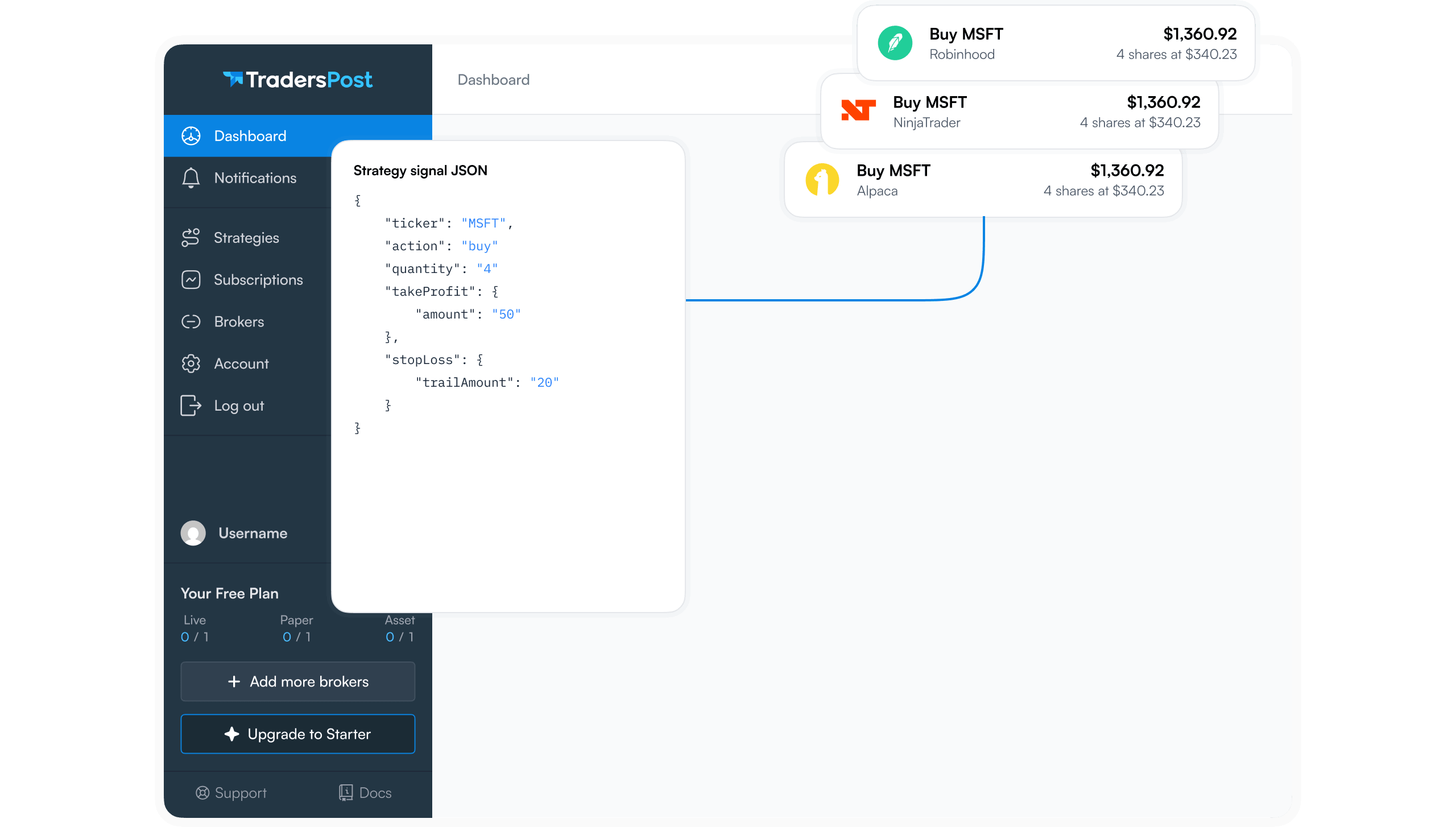
How TradersPost can Automated Long/Short Strategies
Automated Side Swapping
Now that we have short