Best Platforms For Algo Trading
TradingView integration guide: setup, features, automation options, and broker connectivity for enhanced trading.

Marketing

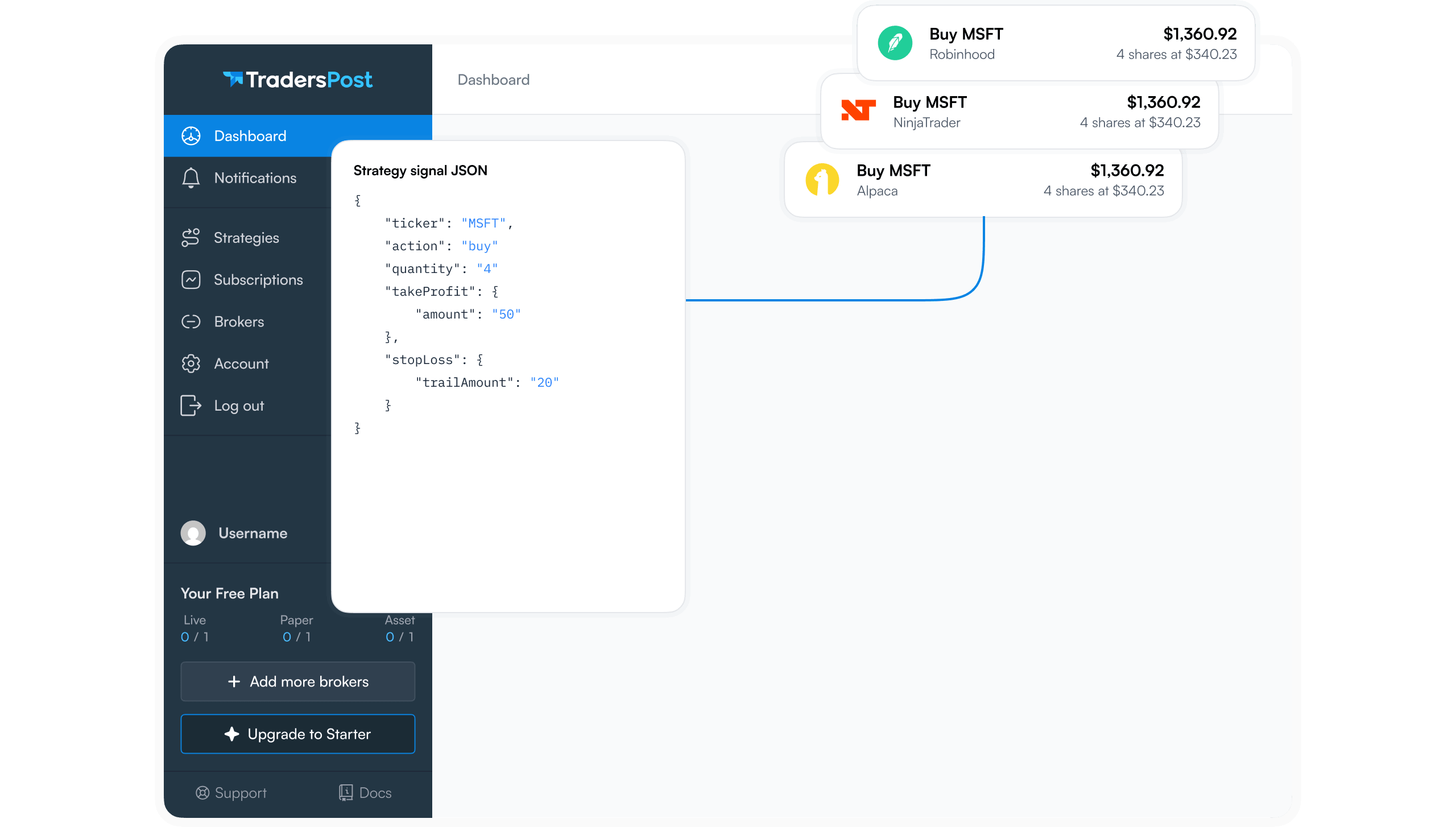
Algorithmic trading platforms are essential tools for transforming mathematical strategies into profitable automated systems. Selecting the right platform involves evaluating its backtesting power, execution reliability, and market access comprehensiveness. This post provides a detailed comparison of leading algorithmic trading platforms in 2025, catering to different trading styles and complexity levels. TradersPost plays a vital role in this ecosystem by seamlessly connecting TradingView to multiple brokers, enabling efficient automated execution.
Types of Algorithmic Trading Platforms
Cloud-Based Quantitative Platforms
Cloud-based solutions offer scalability and accessibility, allowing traders to execute strategies without heavy infrastructure investments. These platforms often provide robust backtesting and data analysis tools directly accessible from any internet-connected device.
Desktop Trading Applications
Desktop applications deliver rich functionality with dedicated resources on your machine. They often support more complex and computationally intensive strategies with lower latency execution due to local processing.
Institutional-Grade Solutions
For professional traders or firms, institutional-grade platforms offer comprehensive features including extensive broker connectivity and real-time risk management, tailored to handle large-scale operations with regulatory compliance.
Broker-Integrated Platforms
Broker-integrated platforms streamline the process by combining strategy development and execution within the broker’s ecosystem. This can simplify aspects such as order routing and account management.
Open-Source Frameworks
Open-source frameworks like Zipline allow traders to customize their trading systems extensively. While Quantopian's original Zipline is no longer maintained, community-driven forks still thrive, offering Python-based algorithmic structures for DIY enthusiasts.
Low-Code Automation Tools
These tools are designed for users who prefer visual interfaces over traditional coding environments. They enable strategy creation through drag-and-drop modules, making algorithmic trading accessible without deep programming knowledge.
Key Features of Algorithmic Platforms
Successful algorithmic trading relies heavily on certain core features:
- Historical Data Access:
Platforms that offer over 20 years of historical data across major assets allow traders to perform thorough backtesting.
- Backtesting Accuracy:
Tick-level accuracy ensures your strategy is tested under realistic conditions before deploying live trades.
- Community Support:
Access to a marketplace or community like Alpha Streams can enhance your strategy development with shared insights and scripts.
TradersPost enhances these functionalities by facilitating webhook integrations between TradingView alerts and various brokers such as Alpaca, TradeStation, Tradier, and Interactive Brokers.
Subscription Tiers and Costs
Understanding subscription tiers is crucial when selecting a platform:
- Free Tier: Offers basic backtesting capabilities but may limit data access.
- Live Trading ($20/month): Enables real money deployment.
- Research ($50/month): Provides full data access for faster backtesting.
- Enterprise: Custom pricing for institutional needs with extensive support and features.
When considering total ownership costs, factor in not only subscription fees but also data feed costs, transaction commissions, infrastructure expenses, and the time investment required for development and maintenance.
Technical Specifications
Platforms vary significantly in their technical foundations:
Programming Languages
Choosing a language compatible with your expertise is essential. For example:
- MQL4/MQL5: Popular in MetaTrader environments.
- Pine Script: Used in TradingView for strategy scripting.
- Python/C++/Java: Commonly used in more flexible or bespoke platforms.
Infrastructure Requirements
Some platforms require specific server setups (Linux/Windows) or database systems (PostgreSQL/SQL Server), which should align with your operational capabilities.
Connectivity Options
FIX protocol connectivity ensures seamless communication between systems for real-time data feeds and order executions.
TradersPost simplifies this by providing multi-broker order routing capabilities directly from TradingView alerts through its innovative webhook system.
Development Tools and Features
Advanced development tools make or break an algorithmic platform:
- Strategy Builders: Visual tools allow you to construct strategies without deep coding knowledge.
- Debugging Tools: Comprehensive debugging aids in resolving issues during strategy development stages efficiently.
- Optimization Engines: Facilities like walk-forward optimizers help refine strategies against varied market conditions for robustness testing.
TradersPost’s integration capability ensures these strategies are executed timely across connected brokers once developed in platforms like TradingView.
Execution Benefits
Execution reliability is critical:
- Direct Market Access (DMA): Ensures low latency trades.
- Order Management Systems (OMS): Streamlines order placement across various asset classes.
- Risk Management Integration: Protects portfolios through automated stop-losses or dynamic position sizing algorithms.
Platforms differ here; for instance, TradeStation offers advanced order types but lacks native forex trading as of 2025—a gap TradersPost can bridge via its brokerage connections.
Conclusion
In summary, selecting an algorithmic trading platform requires careful consideration of features such as historical data access, programming environment suitability, cost implications, and technical specifications. TradersPost enhances these choices by bridging the gap between strategy design on TradingView and automated execution across multiple brokers like Alpaca or Interactive Brokers through its robust integration capabilities. As you evaluate potential platforms based on your unique requirements—whether simple moving average crossovers or sophisticated machine learning models—ensure they align well with your technical skills and trading objectives for optimal performance in 2025's dynamic markets.