Does Fidelity Allow Trading Bots?
Does Fidelity Allow Trading Bots: comprehensive analysis of fidelity features, automation capabilities, and integration options for traders.

Marketing

-
Current TradersPost documentation presents Fidelity as an automated-trading connection without confirming the described direct bridge or setup flow, so those details have been qualified while Fidelity’s lack of an open bot platform still stands.
If you're wondering whether Fidelity allows trading bots, the short answer is that while direct integration with trading bots is limited, Fidelity offers a variety of automation features that can enhance your trading workflow. In this post, you'll learn about the automation options available through Fidelity, explore how TradersPost can bridge the gap for more comprehensive automated trading, and discover actionable steps to optimize your trading strategies.
Fidelity's Automation Features
Fidelity provides several built-in tools for automating parts of your trading process, even though it doesn't support full-fledged trading bots.
Conditional Order Types
Fidelity offers conditional order types that allow for a degree of automation in executing trades:
- One-Cancels-Other (OCO) Orders: This feature lets you place two orders simultaneously. When one order executes, the other is automatically canceled.
- One-Triggers-Other (OTO) Orders: With OTO orders, you can set up trades that trigger additional orders when specific conditions are met.
- Multi-Contingent Orders: These allow the creation of complex sequences based on multiple market conditions.
These tools provide flexibility but require manual input to set parameters each time. They don't replace a fully automated trading bot but offer useful functionality for traders seeking some automation.
Active Trader Pro and Basket Trading
For those using Fidelity's Active Trader Pro, basket trading capabilities are available:
- You can create custom stock baskets and execute trades on them simultaneously.
- This feature helps in rebalancing portfolios and managing multiple positions at once.
Alert Systems
Fidelity also includes comprehensive alert systems to keep you informed:
- Receive notifications based on technical indicators or account balance changes.
- Stay updated with news and earnings alerts relevant to your holdings.
These alerts can guide timely manual interventions and help inform automated strategies when connected through platforms like TradersPost.
Bridging Automation Gaps with TradersPost
While Fidelity's platform offers substantial resources, connecting it to an automated strategy requires bridging solutions. This is where TradersPost comes into play.
Connecting Strategies via TradersPost
TradersPost can connect TradingView webhooks to its current supported broker connections for automated execution across platforms1. Here's how you can leverage TradersPost:
- Create an Account: Start by signing up on TradersPost.
- Connect Your Broker: Securely link a supported broker account using the platform’s current connection process1.
- Configure Strategies: Set up your trading strategies or signals within TradersPost.
- Monitor Execution: Use the TradersPost dashboard to oversee real-time trade execution.
By using TradersPost, traders can explore its current supported connection options alongside Fidelity's native tools1.
Webhook Integration
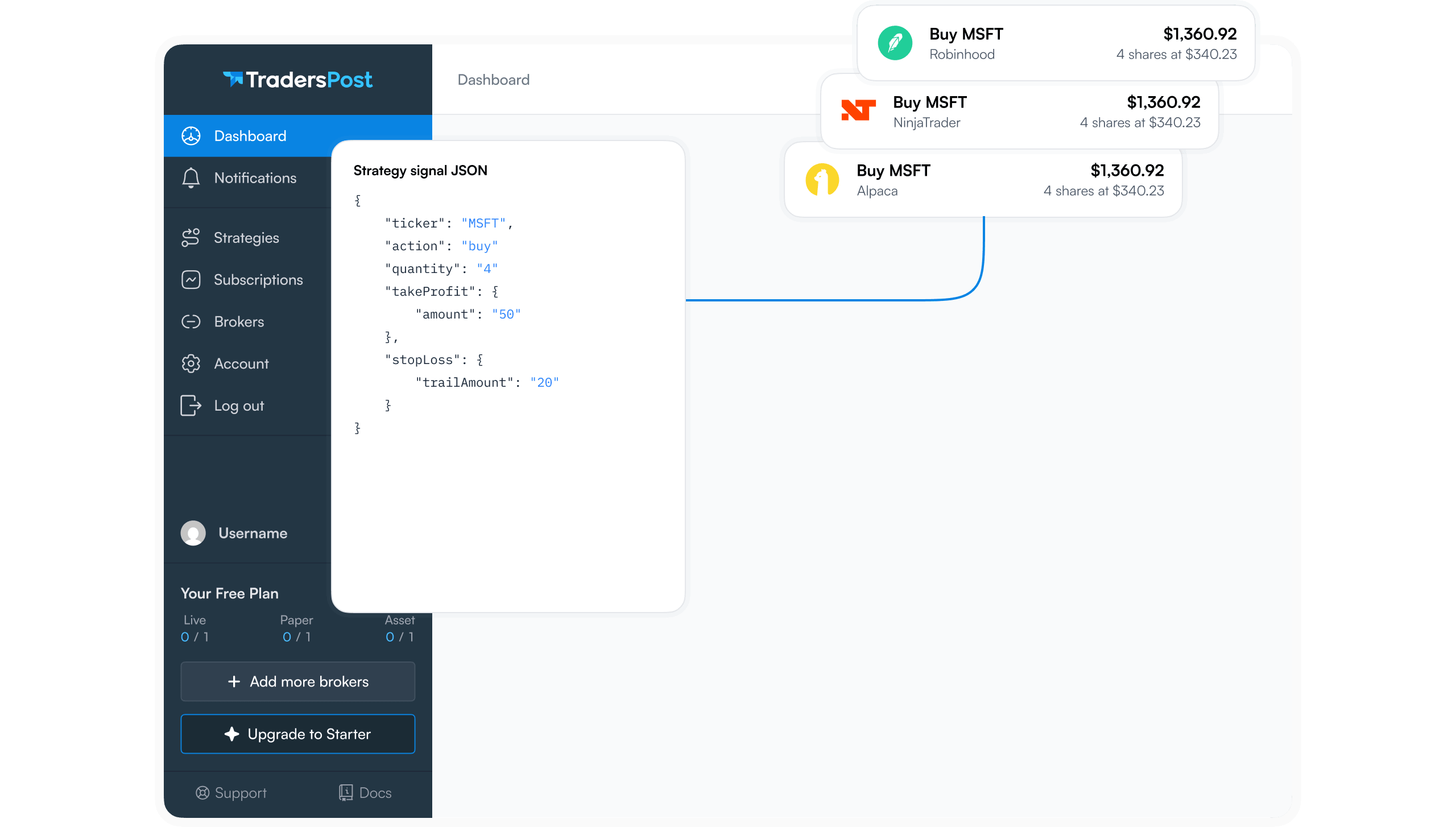
With webhook integration via TradingView, you can send signals directly to TradersPost when specific conditions are met:
- Connect TradingView strategies with webhooks.
- Process JSON payloads for real-time signal reception.
This enables you to automate strategies initially developed in TradingView without needing to build a direct API integration yourself1.
Enhancing Your Automated Strategy
To implement effective automated strategies using these tools, consider these practical steps:
Develop Robust Strategies
Begin with strong foundations by:
- Backtesting across diverse market conditions to ensure reliability.
- Regularly reviewing performance metrics and making necessary adjustments.
This approach helps in fine-tuning strategies for optimal results over time.
Implement Risk Controls
Risk management is crucial in automated trading:
* Set maximum position sizes and daily loss limits.
* Utilize stop-loss orders on all positions to minimize potential losses.
* Diversify across multiple strategies to spread risk.
These controls protect against significant losses and maintain portfolio stability even during volatile markets.
Practical Execution Tips
Avoid common pitfalls by:
* Ensuring secure storage of credentials and enabling two-factor authentication on all accounts.
* Creating backup plans for manual intervention should automated systems fail temporarily.
These measures ensure that your trading remains secure and resilient against unexpected challenges.
Conclusion
In summary, while Fidelity doesn’t offer direct support for full-scale trading bots, its platform provides useful automation features that can be significantly enhanced through integration with services like TradersPost. By leveraging conditional orders, basket trading features, and alert systems, traders can add useful automation to their Fidelity workflow; TradersPost's webhook integrations can be used with its current supported connections1.
To get started with integrating automated strategies into your workflow:
- Explore the capabilities of both Fidelity’s tools and those offered by TradersPost.
- Begin small—test thoroughly before scaling up your operations.
- Regularly review performance metrics to continuously refine your approach.
TradersPost not only acts as a bridge between TradingView and major brokers like Alpaca, TradeStation, Tradier, Interactive Brokers but also empowers you with comprehensive tools needed for successful automated execution—turning traditional limitations into new opportunities for growth in your trading journey.