TradingView AI Research Tools Explained
TradingView's AI-powered documents and AI-powered news tools give traders instant summaries of SEC filings and real-time corporate event alerts, turning hours of research into minutes.

Marketing

Bottom Line
- TradingView launched AI-powered document summaries on March 26, 2026, covering 10-K, 10-Q, 8-K, Form 4, Schedule 13D, S-1, earnings transcripts, and investor presentations for US companies
- AI-powered corporate news launched March 27, 2026, monitoring SEC filings in real time and generating fact-based summaries within minutes of filing across seven event categories
- AI document summaries only cover filings from June 2024 onward, and coverage is limited to US companies with SEC filings
- Custom news filters let traders combine watchlists with specific event types and enable push notification alerts for matching stories
- Traders using TradersPost can pair these AI research tools with automated execution to act on earnings surprises and filing events faster than manual workflows allow
TradingView expanded its fundamental analysis toolkit in late March 2026 with two AI-powered features that change how traders interact with corporate filings and regulatory news. AI-powered document summaries, launched March 26, 2026, rebuild the Documents tab with instant AI-generated overviews of SEC filings.1 AI-powered corporate news, launched the following day, monitors regulatory filings in real time and produces fact-based summaries within minutes of publication.2
Together, these tools address a persistent problem: the sheer volume of corporate disclosures makes it nearly impossible to stay informed across a diversified watchlist using traditional methods. Reading a single 10-K can take hours. Scanning earnings transcripts for multiple companies during reporting season can consume an entire day. TradingView's AI research tools compress that work into minutes.
AI-Powered Document Summaries
The rebuilt Documents tab is the centerpiece of TradingView's push into AI-driven fundamental analysis. Previously, the Documents section on any stock's symbol page was a flat chronological list of filings. To understand what a filing contained, you had to open it and read the full text. Now, every qualifying document gets an AI-generated summary that surfaces the key information without requiring you to leave the document list.1
Quick Insights in Document Lists
The most immediately useful addition is what TradingView calls "quick insights." These are concise summaries that appear directly alongside each document in the filing list, showing the core message at a glance.1 Instead of seeing a generic label like "10-Q Quarterly Report" with a filing date, you now see a brief description of what the filing actually says, such as whether revenue increased, whether the company issued forward guidance, or whether a material event was disclosed.
This changes the research workflow significantly. Rather than opening every filing to determine relevance, you can scan the quick insights to identify which documents deserve deeper attention. For traders monitoring multiple positions, this filtering alone can save hours during earnings season.
Comprehensive Summaries
When you open a specific document, a more detailed AI-generated summary appears at the top. These comprehensive summaries highlight the key financial figures, notable changes from prior periods, management commentary, and any material disclosures.1 Each summary includes the ability to jump directly to the corresponding section of the original filing text, so you can verify any detail the AI surfaces without searching through the full document manually.
This two-layer approach, quick insights for scanning and comprehensive summaries for depth, mirrors how professional analysts work. The difference is that the initial summarization step, which typically requires reading the filing yourself, is now handled by AI.
Filing Types Covered
The AI document summaries cover the full range of SEC filings that public US companies submit:1
- 10-K annual reports containing full-year financial performance, risk factors, and forward-looking statements
- 10-Q quarterly reports with interim financial data and management discussion and analysis
- 8-K current reports disclosing material events such as leadership changes, acquisitions, or bankruptcy filings
- Form 4 insider trading disclosures showing purchases and sales by corporate officers, directors, and significant shareholders
- Schedule 13D filings from investors acquiring more than five percent of a company's shares, often signaling activist involvement
- S-1 registration statements filed by companies preparing for an IPO or public offering
- Earnings call transcripts with analyst questions and management responses
- Investor presentations used at conferences and shareholder meetings
This coverage means you can use a single interface to research everything from a company's annual financial health to the most recent insider transactions, all with AI-generated context that highlights what matters.
Reorganized Document Navigation
Alongside the AI summaries, TradingView reorganized how documents are categorized. Earnings reports, including quarterly and annual filings plus transcripts, are now separated from corporate events like M&A announcements and investor presentations.1 Single-click filters let you narrow the view by document type, so you can quickly isolate just the 10-Q filings or just the Form 4 insider disclosures.
This is a meaningful improvement for traders who focus on specific types of information. If you primarily track insider buying activity, you no longer need to scroll past earnings transcripts and annual reports to find Form 4 filings. If you are researching a company ahead of earnings season, you can filter to see only the earnings-related documents in sequence.
Coverage Scope and Limitations
AI document summaries are available for US companies with SEC filings. TradingView highlights major companies like Nvidia, Meta, Netflix, Amazon, Tesla, Apple, and Microsoft as examples, though the feature extends across publicly traded US stocks that file with the SEC.1
The most significant limitation is temporal: AI summaries only cover documents filed from June 2024 onward.1 For most active trading use cases this is not a major constraint, since traders typically focus on recent filings. But for longer-term fundamental analysis comparing multi-year trends, you will still need to read pre-June 2024 filings manually. No specific plan restrictions have been mentioned for this feature.
AI-Powered Corporate News
While AI document summaries help with deliberate research into specific filings, the AI-powered corporate news feature solves a different problem: staying informed about market-moving corporate events as they happen. Launched on March 27, 2026, this feature uses AI to monitor SEC and regulatory filings in real time and generates instant summaries of critical corporate information.2
Speed Advantage Over Traditional News
The core value proposition is speed. When a company files an 8-K with the SEC disclosing a material event, traditional financial news coverage follows a predictable but slow path. A journalist reads the filing, analyzes its significance, writes an article, passes it through editorial review, and publishes it. This process typically takes hours.2
TradingView's AI news bypasses that entire workflow. The system monitors filing databases, detects new submissions, and generates a fact-based summary within minutes of the filing becoming publicly available.2 For traders who react to earnings surprises, insider buying spikes, or activist investor disclosures, getting that information minutes after filing rather than hours later represents a tangible edge.
Each AI-generated news summary includes direct links to the original filing, so you can verify any detail without relying solely on the AI's interpretation.
Seven Event Categories
The AI news system organizes corporate events into seven categories, each covering specific types of regulatory filings:2
- Earnings: Revenue, EPS, and business highlights extracted from quarterly and annual reports
- M&A: Deal structures, financing details, counterparties, and regulatory approvals from merger and acquisition filings
- Management Changes: Personnel appointments and departures with roles, effective dates, and stated reasons
- Insider Trading: Transactions exceeding $500,000 with full details on who bought or sold, how many shares, and at what price
- IPOs: Offering terms, business descriptions, and key financial figures from S-1 registration statements
- Ownership Changes: Stake sizes and declared intent from Schedule 13D filings by activist investors and large shareholders
- General Reports: Strategic initiatives, stock buyback programs, and other corporate actions from 8-K and related filings
The SEC form types that feed into these categories include 8-K, 10-K, 10-Q, Form 4, Schedule 13D, and S-1 filings.2 This means the AI news system is effectively summarizing the same filings that appear in the Documents tab, but doing so in real time as a news feed rather than as an on-demand research tool.
Custom Filtering and Watchlist Integration
One of the most practical features of AI-powered news is the filtering system. You can combine multiple filter criteria to build a custom news feed that shows only the events relevant to your trading:2
- Filter by watchlist to see news only for companies you actively track
- Filter by event type to focus on specific categories like earnings or insider trading
- Filter by news provider to prioritize certain sources
- Combine all three filters simultaneously for a highly targeted feed
Push notification alerts add another layer. You can configure alerts for stories matching your filter criteria, which means you do not need to keep TradingView open or continuously check the news feed.2 When a filing matches your criteria, you receive a notification, review the AI summary, and decide whether to act.
For traders running multiple strategies across different sectors or watchlists, this filtering system eliminates the noise that makes general financial news feeds overwhelming. You see only what matters to your specific positions and watch items.
Bloomberg-Level Research at Lower Cost
The combination of real-time filing monitoring, instant AI summaries, and custom filtering positions TradingView as a lower-cost alternative to professional terminals like Bloomberg for fundamental research.2 A Bloomberg Terminal costs approximately $24,000 per year. TradingView's premium plans range from roughly $150 to $600 per year depending on tier. While TradingView does not match Bloomberg's breadth of fixed income data or institutional-grade execution tools, the AI features cover the core use case many active equity traders need: fast, structured access to corporate filings filtered by relevance.
How AI Documents and AI News Work Together
These two features serve complementary roles. AI-powered news is your real-time alerting layer: it tells you when something important happens, such as an earnings beat, an insider purchase, or an activist filing. AI-powered documents are your deep research layer: when the news feed flags an interesting event, you navigate to the Documents tab for the comprehensive summary and original filing text.
Consider a scenario during earnings season. Your AI news feed sends a push notification that a company on your watchlist just filed its 10-Q, and the summary indicates revenue came in above expectations with raised guidance. You open the Documents tab, read the comprehensive AI summary for detail on segment performance and margin trends, and jump to the original filing to verify the figures. The entire process takes ten minutes instead of the hour or more required to discover the filing through traditional news, download the 10-Q from EDGAR, and read through it manually.
The documents feature also shines when comparing filings over time. Scanning AI summaries of the last four quarterly reports takes minutes rather than hours. You can quickly identify trends in revenue growth, margin changes, or management commentary themes without getting lost in the dense language of SEC filings.
Connecting AI Research to Automated Trading
AI-powered research tools generate insights, but acting on those insights still requires execution. This is where connecting TradingView's AI features with an automation platform like TradersPost creates a complete workflow from discovery to trade.
Event-Driven Strategy Execution
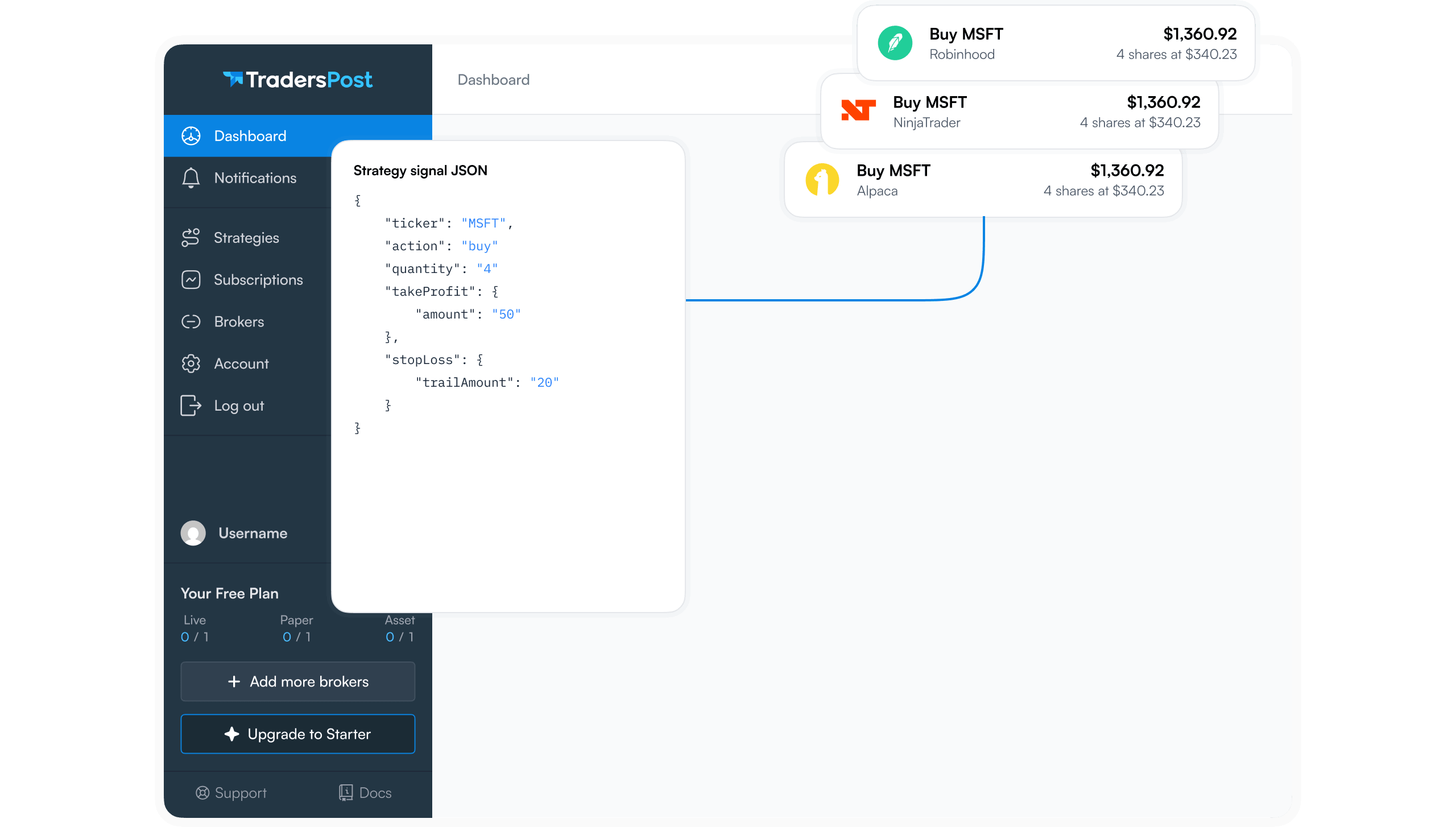
The speed advantage of AI news is most valuable when paired with automated execution. When an earnings surprise surfaces within minutes of filing, traders using TradersPost can have pre-built strategies ready to execute. Rather than manually logging into a brokerage, sizing a position, and placing an order, the trader reviews the AI summary, confirms the signal aligns with their strategy criteria, and lets automation handle the execution.
This matters because earnings-driven price moves often happen fast. The first fifteen minutes after a significant earnings surprise can determine whether you enter at a favorable price or chase the move. AI news compresses the information gathering step, and TradersPost compresses the execution step.
Building Conviction for Longer-Term Positions
Not every trade is event-driven. For swing traders and position traders who hold for weeks or months, the AI document summaries serve a different role. They help you build conviction in a thesis by making it practical to review multiple filings across multiple companies without spending entire weekends reading SEC documents.
A trader evaluating whether to add a semiconductor position could scan AI summaries of recent 10-Q filings from Nvidia, AMD, Intel, and Broadcom in under an hour. Identifying which companies showed accelerating revenue growth or expanding margins becomes straightforward when the AI extracts those data points. That research then informs the parameters of an automated strategy executed through TradersPost.
Insider Trading Signal Integration
The AI news category for insider trading transactions above $500,000 is particularly interesting for traders who follow insider activity as a signal. Insider purchases, especially cluster buying by multiple officers, tend to precede positive stock performance. With AI news delivering Form 4 summaries in real time, traders can incorporate insider activity into their screening and use automated strategies to act on the patterns they identify.
Practical Tips for Using AI Research
Getting the most from these tools requires intentional setup. Here are specific recommendations for active traders.
Set up targeted news filters. Do not use the AI news feed unfiltered. Create filters that combine your active watchlist with the event types most relevant to your strategy. If you trade earnings momentum, filter for earnings events on your watchlist. If you follow activist investors, filter for ownership changes.
Enable push notifications selectively. Earnings surprises and insider trading events on your core positions warrant real-time alerts. General corporate reports on peripheral watchlist items probably do not. Keep notifications focused on situations where you need to act quickly.
Use quick insights for screening. When researching a new company, start with the Documents tab and scan the quick insights before opening any individual filing. If recent filings show a consistent pattern of revenue growth, margin expansion, or strategic investment, you know the deeper research is worth your time.
Verify AI summaries against originals. Before acting on specific numerical claims from an AI summary, click through to the original filing text. The summaries are designed to be accurate, but AI systems can occasionally misinterpret or oversimplify complex disclosures.
Remember the June 2024 cutoff. AI summaries are only available for documents filed from June 2024 onward.1 For anything earlier, you will need to read the full filing text manually.
The Bigger Picture for AI in Trading Research
TradingView's AI-powered documents and news features represent a broader shift in how retail traders access fundamental analysis. Historically, the speed and depth of corporate filing analysis was gated by the resources available to institutional investors: teams of analysts, expensive data terminals, and proprietary software. AI collapses that advantage by making it possible for a single trader to scan and summarize the same filings in minutes.3
This does not mean AI replaces fundamental analysis skill. Understanding what a revenue miss means in context or how an activist investor's stated intent might play out still requires human judgment. What AI does is remove the bottleneck of information gathering, so traders spend more time on analysis and less time on reading.
For traders who combine AI-driven research with automated execution through platforms like TradersPost, the workflow becomes genuinely efficient. AI handles the information layer, automation handles the execution layer, and the trader focuses on strategy and risk management.
As TradingView continues expanding its AI capabilities across charting, documents, and news, these tools will likely become standard expectations rather than competitive advantages.3 Traders who adopt them early and build effective workflows around them gain a head start in adapting to the new baseline for market research.
References
1 TradingView Blog — Smarter, faster, and AI-powered documents
2 TradingView Blog — Instant AI-powered corporate news on TradingView
3 TradingView Blog — TradingView AI Chart Copilot: public beta is available now