Automate Normalized T3 Indicator Strategy
Learn how to convert the Normalized T3 oscillator into a fully automated trading strategy using AI tools and TradersPost automation.

Marketing

Converting popular trading indicators into automated strategies has never been more accessible. In this comprehensive guide, you'll learn the complete workflow for taking a YouTube strategy and transforming it into a fully automated trading system using modern AI development tools.
Understanding the Normalized T3 Oscillator
What Makes T3 Special
The Normalized T3 oscillator stands out from traditional momentum indicators through its foundation in Tim Tilsen's T3 moving average, considered one of the smoothest and most responsive moving averages available. Unlike fixed-calculation indicators that struggle with changing market volatility, the Normalized T3 automatically adapts to current conditions.
The Normalization Advantage
Traditional momentum indicators often generate false signals during trending markets. When an asset becomes overbought early in an uptrend, standard oscillators might signal to sell even as the trend continues higher. The normalization process in the T3 oscillator accounts for broader market context, reducing these false signals.
By calculating the highest and lowest T3 values over a defined period and scaling everything between specific bounds, the oscillator provides more reliable overbought and oversold readings that work across different market conditions and asset classes.
Setting Up Your Development Environment
AI-Assisted Development Tools
Modern AI tools like Cursor with Gemini 2.5 Pro can dramatically accelerate strategy development. These tools understand PineScript syntax, can debug errors, and help implement complex trading logic that would otherwise require extensive manual coding.
Project Organization
Start by creating a clean project structure. Keep your instructions clear and maintain a scratchpad file where the AI can track its planning and execution stages. This systematic approach ensures the AI maintains context throughout the development process.
Instruction Files for AI
Create instruction files that guide the AI through planning and execution modes. These instructions help the AI break down complex tasks into manageable stages, reducing errors and producing more maintainable code.
Converting Indicators to Strategies
Stage One: Basic Strategy Conversion
The first stage involves converting the indicator from an overlay display to a strategy that can execute trades. This includes:
- Changing from indicator to strategy mode in PineScript
- Updating default settings based on optimal parameters
- Implementing basic entry logic
- Adding initial risk management
Entry Signal Logic
For the Normalized T3, proper entry signals require three conditions:
- The histogram must reach oversold or overbought territory
- The histogram must cross the signal line
- The histogram must change color, confirming momentum shift
Missing any of these conditions leads to premature or delayed entries that reduce strategy performance.
Avoiding Common Pitfalls
When converting indicators, watch for inefficient code patterns. For example, the ta.valuewhen function in PineScript looks backward through all bars repeatedly, creating performance issues. Instead, store values as they occur using variables that update with each bar.
Risk Management Implementation
Stop Loss Placement
Rather than using fixed percentage stops, consider using pivot-based stop losses. Store recent swing highs and lows as they occur, then use these levels for stop placement. This approach adapts stop distances to market volatility automatically.
Position Sizing Logic
Implement dynamic position sizing based on stop loss distance. Calculate the position size that risks a specific percentage of capital based on the actual stop loss distance for each trade. This ensures consistent risk across different stop widths.
Take Profit Strategy
Set take profit levels using a risk-reward ratio. If your stop loss is set at a recent swing low, calculate your take profit distance as a multiple of that stop distance, maintaining a consistent risk-reward profile.
Alert System Integration
Creating Customizable Alert Messages
Instead of hardcoding alert messages, use input text areas that allow users to customize messages without modifying code. This makes strategies more flexible and easier to adapt to different automation platforms.
Alert Function Implementation
Use PineScript's alert function to trigger notifications when specific conditions are met. Structure your alerts to fire on both entry and exit conditions, providing complete automation coverage.
TradersPost JSON Format
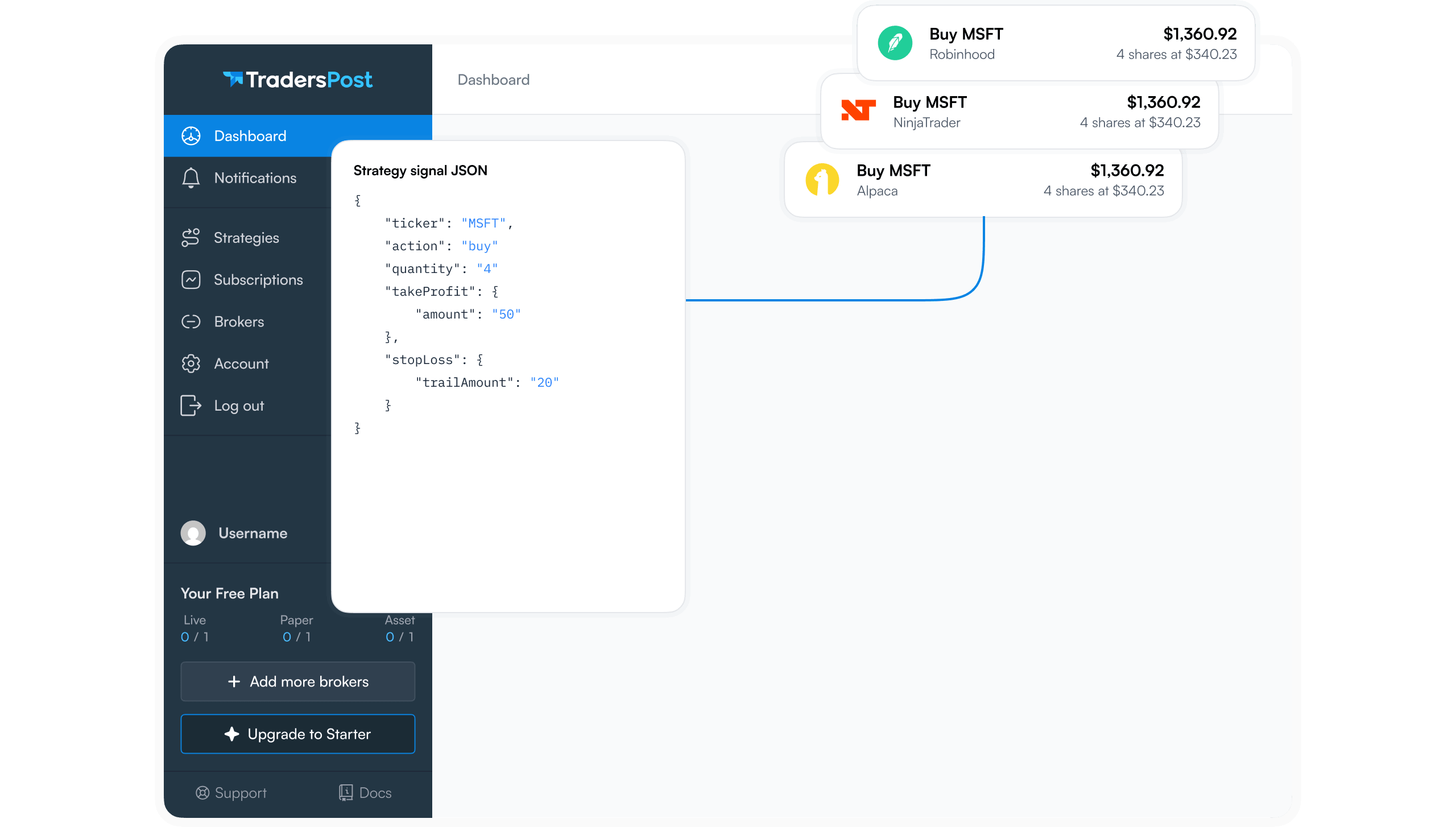
Format your alert messages to match TradersPost's expected JSON structure:
` { "ticker": "{{ticker}}", "action": "{{strategy.position_size > 0 ? 'buy' : 'sell'}}", "sentiment": "{{strategy.position_size > 0 ? 'bullish' : 'bearish'}}" } `
This structure automatically adapts based on whether the strategy is going long or short.
Testing and Validation
Comparing with Original Indicator
Keep the original indicator on your chart alongside your strategy version. Verify that signals align between the two, ensuring your strategy accurately implements the intended logic.
Backtesting Process
Run comprehensive backtests across multiple timeframes and assets. The Normalized T3 should work across different market conditions due to its adaptive nature, but always verify performance on your specific trading instruments.
Forward Testing Requirements
Before deploying real capital, run the strategy on a paper trading account for at least several weeks. This validates that live execution matches backtested expectations and reveals any issues with broker integration or order execution.
AI Debugging Workflow
Error Resolution
When the AI generates code with errors, provide clear error messages and screenshots. The AI can usually resolve issues quickly when given specific feedback about what's not working.
Iterative Refinement
Work through strategy development in stages, validating each stage before moving to the next. If the AI tries to skip stages, redirect it back to the current focus area. This prevents compounding errors from unvalidated earlier stages.
Model Selection Considerations
Different AI models offer different tradeoffs. More powerful models like Claude 4 handle complex multi-step requests better but cost more. Mid-tier models like Gemini 2.5 Pro require more guidance but deliver good results at lower cost.
Automation Setup in TradersPost
Strategy Configuration
Create a new strategy in TradersPost, specifying your target broker and account. Configure position sizing, risk parameters, and any broker-specific settings needed for your trading approach.
Alert Creation in TradingView
Set up alerts in TradingView using the strategy alert function. Point the webhook URL to your TradersPost strategy webhook, and configure the alert to trigger on every strategy execution.
Webhook Integration
Copy your TradersPost webhook URL and paste it into your TradingView alert settings. Use the placeholder message format that references your strategy's alert messages, ensuring all necessary trade information passes through.
Advanced Features
Multi-Timeframe Analysis
Enhance the strategy by incorporating higher timeframe confirmations. While this adds complexity around repainting concerns, it can significantly improve trade quality by ensuring alignment with larger trends.
Market-Specific Optimization
Different assets may benefit from different T3 periods or normalization lengths. Test various parameter combinations on your target markets to find optimal settings for your trading universe.
Exit Strategy Refinement
Beyond simple take profit and stop loss, consider implementing trailing stops that lock in profits as trades move favorably. The T3 indicator itself can provide dynamic exit signals when momentum reverses.
Key Takeaways
Automating indicator-based strategies becomes manageable with AI-assisted development tools and platforms like TradersPost. The key is working systematically through each stage: strategy conversion, risk management implementation, alert system integration, and thorough testing.
Start with proven indicators like the Normalized T3, use AI to accelerate development while maintaining control over the process, and validate everything through comprehensive testing before deploying live capital. This methodical approach produces robust automated strategies that can trade consistently without constant manual oversight.