How to Backtest Strategy in TradingView
Comprehensive analysis of Tradestation, Alpaca, Interactive Brokers features, automation capabilities, and integration options for traders.

Marketing

-
Current Pine Script documentation uses the ta. namespace and current strategy syntax, so the moving-average crossover example has been corrected while its underlying guidance remains accurate.
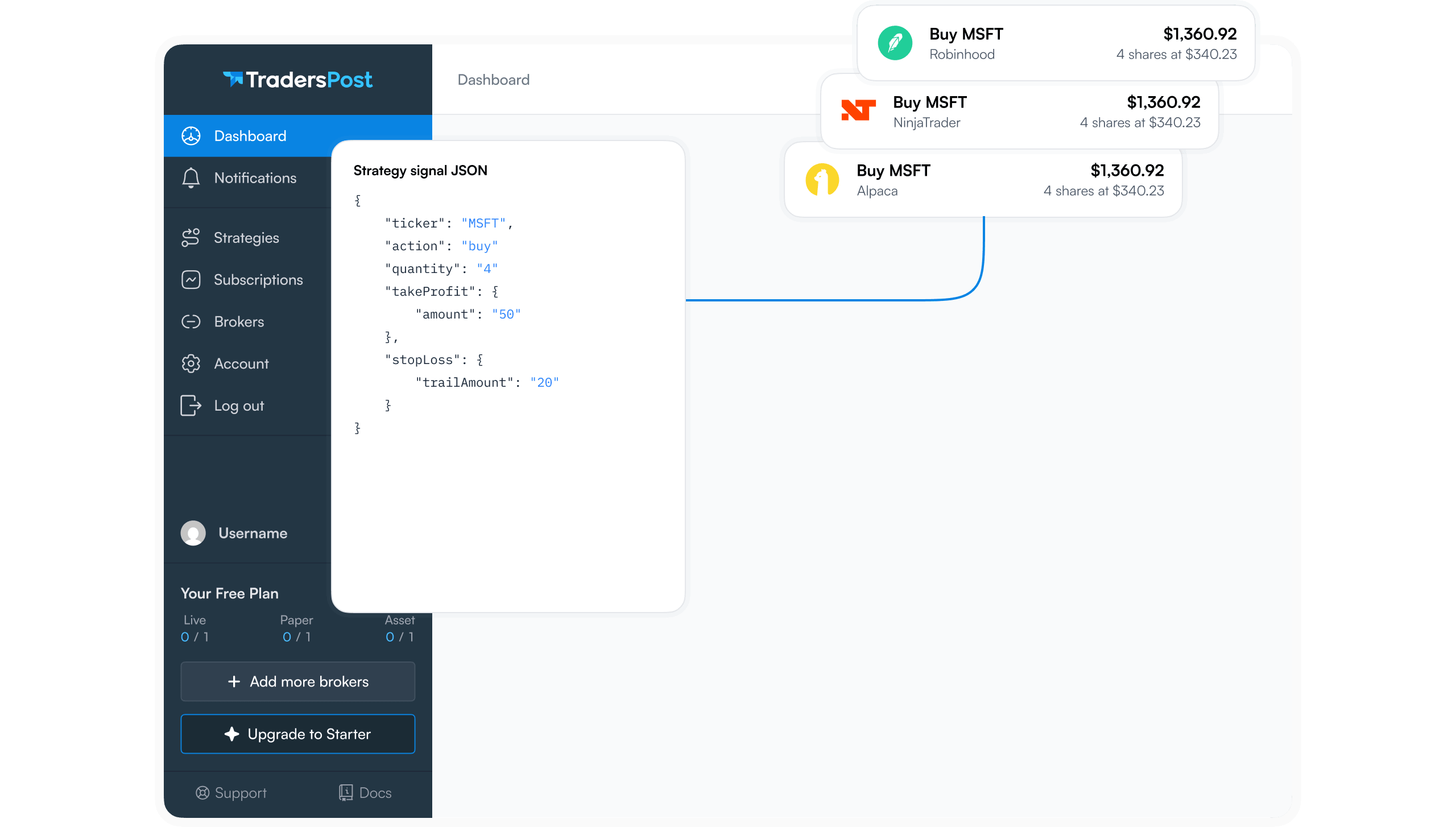
Backtesting is a crucial step in the development of any trading strategy, as it allows you to test your ideas against historical data before risking real capital. By validating your strategies through backtesting, you can identify potential weaknesses and optimize your approach for better outcomes. In this guide, you'll learn how to effectively backtest a trading strategy using TradingView's powerful tools and Pine Script. We'll also explore how TradersPost integrates with TradingView to automate execution across multiple brokers, including Alpaca, TradeStation, Tradier, and Interactive Brokers.
Why Backtesting Matters
Risk Management
Backtesting provides a risk-free environment to test strategies by simulating trades based on historical market data. This process helps you understand the potential risks and rewards of your strategy without financial exposure. With TradersPost, you can seamlessly transition from backtested ideas to live trading while maintaining robust risk management controls.
Performance Validation
It's essential to verify that your trading ideas work not just in theory but in practice as well. Many strategies that appear sound on paper fail when tested with actual market data. Backtesting with TradingView helps validate these ideas, while TradersPost ensures that successful strategies are executed accurately in real-time.
Confidence Building
Knowing that a strategy has historically worked can boost your confidence during challenging market periods. Statistical validation through backtesting helps reinforce your commitment to your trading plan. TradersPost enhances this confidence by automating the execution process, reducing emotional decision-making.
Setting Up a Strategy in TradingView
Understanding Pine Script Basics
Before tackling complex strategies, familiarize yourself with the basic structure of a Pine Script strategy and how TradingView's backtesting engine operates. When you create a strategy script in TradingView, it automatically provides:
- Trade execution simulation
- Performance metrics calculation
- Equity curve visualization
- Detailed trade history
- Drawdown analysis
These features are essential for developing and refining effective trading strategies.
Key Components of an Effective Strategy
Every successful strategy includes several key components:
Entry Logic: Define clear rules for entering long or short positions based on objective criteria such as technical indicators or price patterns.
Risk Management: Incorporate position sizing rules, stop losses, take profits, and maximum drawdown limits. These elements protect your capital and ensure longevity in the markets.
Market Filters: Implement additional conditions to avoid trading during unfavorable periods like low volume or high volatility events.
With these components in place, you can utilize TradersPost to automate signal execution directly from TradingView alerts across multiple broker platforms.
Creating a Backtesting Strategy Step-by-Step
Initial Setup
Begin by setting your initial capital to reflect what you plan to trade with realistically. Configure default quantity types—such as fixed contracts or percentage of equity—and match commission and slippage settings with your broker's costs for accurate results.
Organizing Inputs
Logical organization of inputs makes strategies easier to manage. Group similar parameters together—for example, moving average settings or risk management parameters—to enhance clarity and usability.
Implementing Strategy Logic
Carefully implement your trading rules using Pine Script. Ensure that entry and exit conditions are based on quantifiable criteria with clear logic flow. For instance:
```pine
// Example Entry Condition
if (ta.crossover(ta.sma(close, 50), ta1.sma(close, 200)))
strategy.entry("Long", strategy.long)
```
Integrate risk management rules throughout the logic to maintain discipline across trades.
Visual Enhancements
Enhance understanding by adding visual elements like plotting indicators and marking entry/exit points within the TradingView platform. These visuals help verify expected behavior during live market conditions.
Advanced Backtesting Techniques
Combining Multiple Conditions
Advanced strategies often integrate multiple conditions—such as trend filters and volume confirmations—to refine signal quality. Use momentum indicators and volatility measures for more sophisticated analyses.
Dynamic Exit Strategies
Static exits can be limiting; instead, use dynamic approaches that adapt based on market conditions or trade behavior:
- Trailing stops adjusted by Average True Range (ATR)
- Profit targets scaling out positions progressively
- Time-based exits closing trades after predetermined durations
By employing such techniques alongside TradersPost’s automation capabilities, traders can achieve more nuanced control over their portfolio management.
Evaluating Strategy Performance
TradingView offers comprehensive performance statistics vital for assessing strategy success:
Total Return: Compare overall gain/loss against buy-and-hold benchmarks or risk-free rates.
Win Rate: Assess alongside average win/loss ratios for deeper insights into performance consistency.
Analyze equity curves for understanding account value changes over time; look out for volatile growth suggesting higher risks versus flat periods indicating non-performing phases under specific conditions.
Avoiding Common Pitfalls in Backtesting
It's crucial to recognize common mistakes during backtesting:
Look-Ahead Bias: Ensure all signals are based on confirmed historical data without relying on future information unavailable at decision points.
Survivorship Bias: Include delisted securities when possible or acknowledge limitations if only surviving assets are tested over long periods.
By avoiding these pitfalls through careful preparation and analysis techniques supported by platforms like TradersPost’s execution automation services integrated with TradingView alerts—you'll develop more reliable systems ready for live application under diverse scenarios encountered daily within dynamic marketplaces worldwide today!
Conclusion
Backtesting is an iterative process requiring attention-to-detail; however—with disciplined effort—it becomes invaluable preparation before engaging real-world financial markets head-on! Use high-quality data reflecting actual conditions combined intelligently structured scripts leveraging both basic principles advanced methodologies alike! With traders post providing seamless integration between backtested concepts executing them automatically via connected brokers—traders gain unparalleled convenience efficiency ensuring optimal outcomes every step along journey towards becoming successful profitable investors capable navigating complexities inherent modern-day finance industry landscape confidently securely ultimately achieving goals aspirations set forth initially embarked upon venture into exciting realm algorithmic systematic investing endeavors undertaken professionally personally alike!