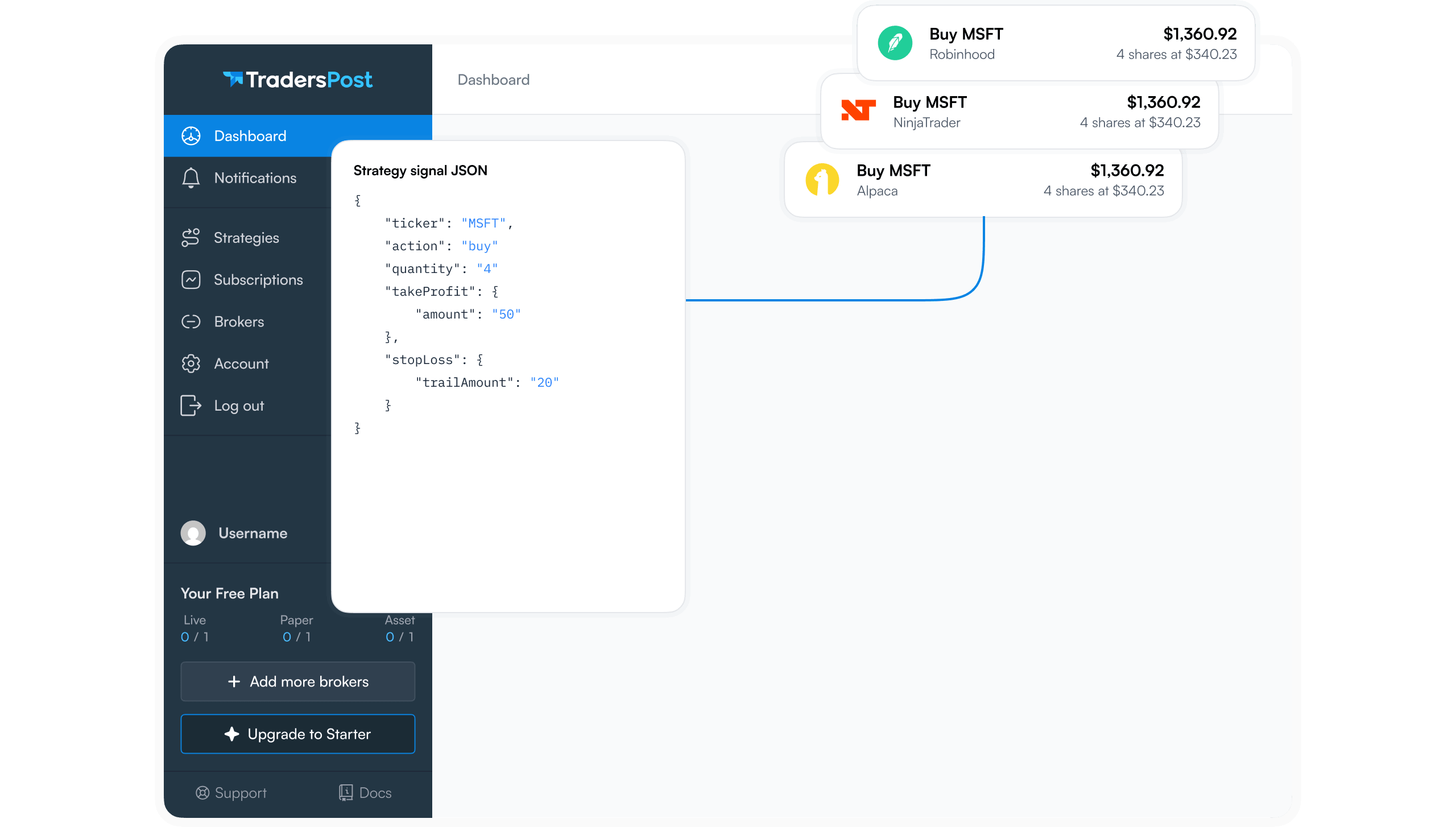
XSP Options for Smaller Accounts
Learn how XSP options offer 1/10th SPX exposure, cash settlement, and defined-risk flexibility for smaller accounts versus SPY.

Marketing

Bottom Line
- XSP options track the S&P 500 at one-tenth the value of SPX, making them more accessible for smaller accounts while being cash-settled and using European-style exercise.
- The contract multiplier for XSP is $100, meaning a premium quoted at $2.50 equates to approximately $250 per contract before commissions and fees.
- XSP options are cash-settled, meaning no stock or ETF shares are delivered or assigned, and they cannot be exercised early due to their European-style exercise.
- A single XSP contract represents approximately $50,000 of notional index exposure, compared to $500,000 for an SPX contract, due to the one-tenth scale of XSP.
- XSP options are particularly useful for defined-risk strategies in smaller accounts, allowing traders to manage risk without the early assignment risk associated with SPY options.
A single SPX contract can be too large for a smaller portfolio, while 100-share SPY options can introduce assignment risk and share-delivery mechanics you may not want. XSP options sit between those choices: they track the S&P 500 at one-tenth the value of SPX, are cash-settled, and use European-style exercise, meaning no early assignment before expiration.
That structure can make defined-risk index strategies more accessible without forcing a trader to choose between oversized SPX exposure and ETF-based options. XSP is not automatically “better” than SPY, liquidity, spreads, expiration selection, and position sizing still matter, but its contract design solves several practical problems for accounts that need more controlled exposure.
In this guide, you’ll learn how XSP compares with SPX and SPY, how its cash settlement changes expiration risk, where its smaller notional value helps, and which defined-risk strategies may fit a modest-sized account. You’ll also see the trade-offs to evaluate before placing an XSP position.
What Are XSP Options?
XSP Is the Mini Version of SPX
XSP is the Mini-SPX Index option: a cash-settled index option based on one-tenth the value of the S&P 500 Index (SPX).1 If the SPX Index is trading near 5,000, XSP will generally be near 500. This scaling reduces the dollar exposure represented by each contract while preserving the same broad S&P 500 index reference.
XSP is an index option, not an ETF option. It does not represent shares of an investable fund, does not deliver SPY shares at expiration, and cannot be exercised into stock. Its value is based on the reported XSP index level, with settlement handled in cash. For automated strategies, this distinction matters: order logic, expiration handling, and settlement assumptions should be built around index-option rules rather than equity or ETF-option assignment workflows.
Key XSP Contract Specifications at a Glance
| Specification | XSP Convention | Practical Effect |
|---|---|---|
| Index value | Approximately 1/10th of SPX | SPX near 5,000 corresponds to XSP near 500. |
| Contract multiplier | $100 | Premium quoted at $2.50 is approximately $250 per contract before commissions and fees. |
| Settlement | Cash settled | No stock or ETF shares are delivered or assigned. |
| Exercise style | European | Long holders cannot exercise early; short positions cannot be assigned early. |
| Expiration settlement | PM settled | Final settlement is based on the closing index value on expiration day. |
| Minimum tick | $0.01 for all series | A one-cent option-price move equals $1 per contract. |
The $100 multiplier should be embedded directly into automated premium and risk calculations. A bot evaluating a $1.20 debit spread should treat the maximum loss as roughly $120 per spread, not $1.20. Likewise, a $5-wide vertical spread has a maximum settlement value of $500 per contract. Trading rules, available strikes, and minimum price increments can vary by expiration and market conditions, so production systems should verify current exchange specifications and broker-supported order increments before submitting orders.
Why XSP Appeals to Smaller Options Accounts
XSP allows traders to express S&P 500 index views with smaller notional exposure than SPX. This can improve position sizing when an SPX contract would consume too much premium budget or create excessive concentration in a single trade. For example, a trader targeting a maximum defined risk of $300 may be able to structure an XSP vertical spread near that limit rather than using a substantially larger SPX spread.
The smaller scale is especially useful for systematic strategies that allocate risk across multiple entries, expirations, or signal types. An automated trader can define limits such as maximum premium per position, maximum portfolio delta, maximum loss per spread, and maximum contracts per expiration without forcing each signal into oversized SPX exposure.
Smaller does not mean low risk. A long XSP option can still lose 100% of its premium, and a defined-risk spread can still lose its full width less the credit received. Position sizing should be based on the actual dollar risk after applying the $100 multiplier, not on the lower-looking XSP index level or option quote.
How XSP Options Differ From SPX and SPY
XSP vs. SPX: Same Index Exposure, Smaller Scale
XSP and SPX are both cash-settled options linked to the S&P 500 Index. The primary difference is scale: XSP is designed at approximately one-tenth of the SPX index level, with the same $100 multiplier. As a result, one XSP contract represents roughly one-tenth of the notional index exposure of one SPX contract.
For example, if SPX is trading at 5,000, XSP will trade near 500:
- One SPX contract: 5,000 × $100 = approximately $500,000 of notional index exposure.
- One XSP contract: 500 × $100 = approximately $50,000 of notional index exposure.
A 10-point move in SPX is worth $1,000 per contract; a 10-point move in XSP is worth $1,000 as well because both use a $100 multiplier. However, a comparable 1% move would be roughly 50 SPX points versus 5 XSP points, producing approximately the same one-tenth relationship in dollar exposure. This makes XSP more practical when an SPX vertical spread, iron condor, or directional position would consume too much buying power or create excessive portfolio concentration.
For automated strategies, XSP allows more granular risk limits. A system that caps index-option exposure near $50,000 per position can trade one-lot XSP structures without needing to approximate S&P 500 exposure through ETF contracts. SPX remains efficient for larger accounts that need substantial notional exposure with fewer contracts.
XSP vs. SPY: Index Options Versus ETF Options
SPY options are options on shares of the SPDR S&P 500 ETF Trust. XSP options are index options based on the S&P 500 Index. That distinction materially affects expiration, assignment handling, and automation design.
- XSP: European-style and cash-settled. It cannot be exercised early, and in-the-money contracts settle for cash at expiration.
- SPY: American-style and physically settled. A short call may be assigned to deliver 100 SPY shares, while a short put may be assigned 100 shares per contract.
The absence of early exercise in XSP removes an important operational risk for short-premium systems. A short XSP call spread cannot be assigned before expiration because the holder cannot exercise early. By contrast, short SPY calls can face early-assignment risk, particularly before an ex-dividend date when the call is in the money and remaining extrinsic value is low.
SPY generally has deeper displayed volume, more consistently tight bid-ask spreads, and especially active short-dated trading. An execution algorithm should not assume XSP offers identical liquidity at every strike and expiration. Nevertheless, XSP’s cash settlement and European exercise style can be structurally preferable where assignment avoidance matters more than maximum quote depth.
When XSP May Be a Better Fit Than SPY
XSP may be a better choice for traders seeking S&P 500 exposure without ETF share delivery or early-assignment management. It is particularly useful for defined-risk credit spreads, debit spreads, and directional option positions when SPX is too large for the account.
For example, an automated strategy selling a defined-risk XSP put credit spread can quantify maximum loss at entry and avoid waking up with an unexpected 100-share ETF position after early assignment. The system can manage the position using spread value, delta, time-to-expiration, or underlying-index triggers without separate stock inventory logic.
SPY may still be preferable for traders who prioritize maximum liquidity, hedge an existing SPY share position, trade very actively in short-dated expirations, or require the flexibility of ETF-share delivery. The practical choice is not simply index versus ETF: it is whether cash settlement, no early exercise, and XSP’s smaller-than-SPX contract scale outweigh SPY’s typically superior trading liquidity.
Cash Settlement and European-Style Exercise Explained
What Cash Settlement Means for XSP Traders
XSP options are cash-settled. At expiration, an in-the-money option is settled by a cash credit or debit calculated from the official XSP exercise settlement value; no shares of an ETF are delivered or assigned.2 This differs materially from SPY options, where exercise or assignment can create a position in 100 SPY shares per contract.
For example, consider a long XSP 500/495 put spread: long the 500 put and short the 495 put. If the official XSP settlement value is 493.00, the 500 put has 7.00 points of intrinsic value and the 495 put has 2.00 points of intrinsic value. The spread settles at its maximum value of 5.00 points:
- 500 put intrinsic value: 500.00 − 493.00 = 7.00 points
- 495 put intrinsic value: 495.00 − 493.00 = 2.00 points
- Net spread value: 7.00 − 2.00 = 5.00 points
- Cash settlement: 5.00 × $100 multiplier = $500 credit to the long spread holder
If the trader had sold that same put spread, the account would receive a $500 cash debit at settlement, offset by the premium originally collected. An automated strategy should calculate this expiration payoff from the official settlement value and contract multiplier, rather than attempting to model post-expiration stock inventory.
Cash settlement simplifies expiration operations: there is no SPY share assignment, no need to liquidate an unwanted ETF position on Monday, and no share-based buying-power impact caused by exercise.
Why European-Style Exercise Matters
XSP options are European-style, meaning an option holder may exercise only at expiration.3 A holder cannot exercise an XSP option early, even if it is deeply in the money or has little remaining extrinsic value.
For XSP option sellers, this eliminates the early-assignment risk present in American-style ETF options such as SPY. A short SPY call, for example, can be assigned before expiration around an ex-dividend date. A short XSP call cannot be assigned on Tuesday simply because it is in the money; any exercise-related settlement occurs only at expiration.
That protection is narrow. European exercise does not eliminate expiration risk, overnight gap risk, or the loss potential of short options. A short XSP spread can still move rapidly toward maximum loss as expiration approaches. Automated systems should therefore retain position-level risk limits, expiration-day monitoring, and defined handling rules for short in-the-money contracts.
PM-Settled Expirations and End-of-Day Risk
Standard XSP options are PM-settled: the final settlement value is based on the index closing value on the expiration day.1 This contrasts with AM-settled index products, whose settlement may be calculated from the opening prices of the underlying component stocks. XSP lists daily Weeklys (Monday through Friday), standard third-Friday monthlies, and End-of-Month expirations, giving automated strategies a broad set of durations to work with.1
PM settlement makes the final trading session especially important. A spread that appears safely out of the money during the afternoon can finish in the money after a late index move. Conversely, an option quoted at 0.05 shortly before the close is not guaranteed to expire worthless.
Automation should identify each contract’s specific expiration and settlement convention, stop opening new positions before configured cutoff times, and calculate expected expiration exposure using multiple settlement scenarios. Do not treat a displayed late-day XSP price as the final settlement value; reconcile expired positions using the official exercise settlement value published after the close.
XSP Options Pricing, Ticks, and Position Sizing
Understanding the $0.01 Minimum Tick
XSP options quote and trade in $0.01 premium increments for all series, there is no tiered $0.05 increment.1 Because each XSP option contract has a $100 multiplier, a one-cent change in the displayed option price equals $1 per contract.
For example, if an XSP option moves from $1.20 to $1.25, its value changes by:
($1.25 - $1.20) × 100 = $5 per contract
This granularity is useful for smaller accounts and automated strategies because order prices, credit targets, and adjustment thresholds can be expressed precisely. However, the stated minimum tick is not the same as executable trading quality. A contract may be quoted in penny increments while still carrying a relatively wide bid-ask spread. For example, an option quoted at $1.15 bid and $1.30 ask has a $0.15 spread, or $15 per contract. Entering at the ask and exiting at the bid creates friction far larger than a single one-cent tick.
Calculate Premium and Maximum Risk Before Entering
Every automated or discretionary XSP trade should have a defined dollar-risk calculation before an order is sent. For a long option, the premium paid is the maximum possible loss:
Long-option cost = option premium × 100
A call purchased for $0.85 costs $85 per contract, excluding commissions and fees.
For a defined-risk vertical credit spread, calculate maximum loss from the strike width and net credit received:
Maximum loss = (spread width - net credit) × 100
Consider a $5-wide XSP credit spread sold for a $1.25 net credit:
- Maximum gain: $1.25 × 100 = $125 per spread
- Maximum loss: ($5.00 - $1.25) × 100 = $375 per spread before fees
Position quantity should follow a predefined loss limit, not available buying power alone. If a strategy permits a maximum loss of $750 on one position, the $375-risk spread above supports a maximum of two contracts. TradersPost can handle this sizing for you with automatic position size calculation based on your defined risk per trade. An automated sizing rule can use:
Contract quantity = floor(maximum dollar loss per trade ÷ maximum loss per spread)
Use the conservative result after accounting for estimated fees, slippage, and any broker-specific margin treatment.
Use Limit Orders and Review Liquidity
Evaluate liquidity at the specific expiration and strikes the strategy intends to trade. Do not assume that an XSP series is liquid simply because the underlying index is widely followed. Review bid-ask spread width, displayed size, open interest, recent volume, and whether quotes update consistently during the intended trading window.
Use limit orders rather than market orders, particularly for vertical spreads and other multi-leg positions. A market order can fill at an unfavorable net debit or credit when one leg has a thin quote or when the market moves between leg updates. For automated execution, submit a defined net-price limit, monitor the order’s fill status, and adjust in controlled increments only when the quoted market supports the change.
Smaller-contract accessibility can be offset by poor execution. A $1-wide market on a single contract represents $100 of pricing uncertainty; a $0.15-wide market on a $1.25 credit spread can materially reduce expected return. Treat bid-ask costs and likely slippage as part of the strategy’s risk and profitability model, not as an afterthought.
Practical XSP Strategies for Smaller Accounts
Defined-Risk Credit Spreads
Put credit spreads and call credit spreads are practical short-premium structures when the objective is to define the worst-case loss before entry. A put credit spread expresses a neutral-to-bullish view: sell a higher-strike put and buy a lower-strike put with the same expiration. A call credit spread expresses a neutral-to-bearish view: sell a lower-strike call and buy a higher-strike call.
For example, assume XSP is near 505. A trader could sell the XSP 500 put and buy the XSP 495 put, creating a 500/495 put credit spread. The strike width is 5 index points. Because XSP options use a $100 multiplier, the gross spread width is $500 per contract:
- 5-point width × $100 multiplier = $500 gross risk
- If the spread is sold for a $1.20 credit, premium received is $120
- Maximum profit is $120
- Maximum loss is $380: ($500 width − $120 credit)
Strike selection should follow explicit rules rather than a target premium alone. An automated strategy might require the short strike to be below a defined support level, outside a selected delta range, or beyond a modeled probability threshold. The long strike should be chosen so that the resulting maximum loss remains within the account’s per-trade risk budget. For example, a system may reject any spread whose maximum loss exceeds 1% of net liquidation value, even if the credit appears attractive.
Directional Debit Spreads
Call debit spreads and put debit spreads provide directional exposure with a known maximum loss equal to the debit paid. They are useful when a trader expects a move but does not want the open-ended premium cost of repeatedly buying standalone options.
Suppose XSP is trading near 500 and a trader has a bullish view. Buying the XSP 500 call and selling the XSP 505 call creates a 500/505 call debit spread. The short 505 call offsets part of the cost of the long 500 call, reducing the required upfront debit relative to buying the 500 call alone. If the spread costs $2.00, the maximum loss is $200 per contract. The maximum value at expiration is $500, so the maximum profit is $300.
The trade-off is clear: gains are capped once XSP reaches or exceeds 505 at expiration. Time decay also remains relevant. If XSP does not move favorably soon enough, the long option can lose value faster than the position benefits from its directional thesis. Automated entries should therefore define an expiration window, maximum debit, profit-taking level, and exit rule for a failed directional signal.
Avoid Oversizing Short Premium Positions
A smaller XSP contract does not make short premium positions inherently small-risk. A single defined-risk spread can still lose several hundred dollars, and multiple correlated spreads can create concentrated exposure to the same market move. Position sizing should be based on maximum loss, not the premium collected or margin displayed at order entry.
Undefined-risk positions, including uncovered XSP calls or puts, should generally be avoided unless the trader fully understands broker margin methodology, tail-risk behavior, assignment and settlement mechanics, and broker liquidation rules. Margin requirements can rise sharply during volatility expansions, and an automated system may be unable to exit at its modeled price during a gap or major repricing event.
- Set a daily realized-loss limit that disables new entries once reached.
- Cap concurrent positions and aggregate worst-case loss across all open spreads.
- Limit exposure by expiration and direction; several put spreads can behave like one larger bullish position.
- Create an event-risk plan for CPI, employment data, FOMC decisions, and other major releases, including reduced size, wider strike selection, or no new entries.
Tax Treatment: Section 1256 Considerations for XSP
Potential 60/40 Tax Treatment
XSP options are options on the Mini-SPX Index, a broad-based index. For U.S. federal income-tax purposes, qualifying broad-based index options are generally treated as Section 1256 contracts. The widely cited consequence is the 60/40 capital-gains treatment: 60% of net gain or loss is treated as long-term capital gain or loss, and 40% is treated as short-term, regardless of how long the position was held.4
For example, if an automated XSP strategy produces a $10,000 net Section 1256 gain during the year, the commonly cited reporting result would be $6,000 of long-term capital gain and $4,000 of short-term capital gain. This differs from ordinary equity-option tax treatment, where a position held for only a few days or hours would generally produce short-term treatment.
That characterization should not be treated as a guarantee. Tax law, IRS guidance, product classifications, account circumstances, and the details of a trader’s activity can affect the result. A strategy should not be deployed solely on an assumed tax outcome without professional confirmation.
Year-End Mark-to-Market Treatment
Section 1256 contracts are generally subject to year-end mark-to-market accounting. Open Section 1256 positions are generally treated as if they were sold at fair market value on the last business day of the tax year, with the resulting unrealized gain or loss included in that year’s tax reporting. The position is then effectively treated as reopened at that year-end value for the following tax year.
For example, if an XSP spread remains open on December 31 and has a $2,500 unrealized gain based on its year-end market value, that gain may need to be recognized for the current tax year even if the strategy closes the spread in January. This matters for automated systems that routinely hold short-dated positions across year-end: realized P&L alone may not match the tax-year result.
Many ETF options, including SPY options, are typically subject to different tax treatment and generally do not receive the same Section 1256 mark-to-market and 60/40 framework. Do not assume that a similar-looking XSP and SPY strategy will produce the same tax reporting outcome.
- Export complete trade-level records from the automation platform and broker.
- Reconcile opens, closes, assignments, expirations, commissions, exchange fees, and year-end open-position values.
- Retain broker Forms 1099-B and any Section 1256 reporting information used to prepare Form 6781.
Discuss XSP Taxes With a Qualified Professional
This section is educational only and is not tax advice. Before relying on XSP’s potential Section 1256 treatment, consult a CPA or tax attorney who understands active trading, options reporting, Section 1256 contracts, and state-level tax rules. State treatment may not mirror federal treatment.
Confirm the classification of XSP and any related product with both your broker and tax professional before implementing a tax-sensitive strategy. This is particularly important for traders combining XSP with SPY, SPX, futures, ETFs, multi-account execution, or automated year-end position management.
Automating an XSP Trading Plan With TradingView Alerts
Define Objective Entry and Exit Rules First
TradingView alerts should trigger a pre-defined XSP options plan, not substitute for one. Specify the underlying signal, permitted trading hours, position structure, spread width, and maximum loss before connecting any alert to an order-routing workflow. If you are new to this workflow, start with the guide to automating options trades on TradingView with TradersPost.
A rules framework for a defined-risk XSP credit spread might state:
- Enter only when a TradingView alert confirms that XSP is above its 20-period VWAP and a specified momentum condition is met.
- Accept new entries only from 10:00 a.m. to 2:30 p.m. Eastern Time; do not open positions during the first 30 minutes or late in the session.
- Sell a 5-point-wide vertical spread with 1 contract per signal.
- Require a minimum credit of $0.80 per spread and reject orders below that threshold.
- Cap maximum defined risk at $420 per spread: a $5-wide spread has $500 maximum value, less the credit received.
Define exits before entry. A complete plan might close the spread at 50% of the original credit, stop out if its value reaches 2.0 times the entry credit, close all positions at 3:45 p.m. Eastern Time, and prohibit holding short XSP spreads into expiration unless that is explicitly part of the strategy. XSP is cash-settled, but expiration-day price movement can still produce rapid mark-to-market losses. Automation improves consistency in executing these rules; it cannot make a negative-expectancy strategy profitable.
Build Safeguards for Options Automation
Automated options workflows need controls at both the alert and broker-routing layers. Set a maximum number of positions per day, a maximum contract quantity per order, a daily realized-loss limit, and a rule preventing new entries after the loss limit is reached. For example, a small account might permit no more than two XSP spreads per day, one contract per order, and a $300 daily loss threshold.
- Use duplicate-signal prevention, such as a unique alert ID and a lockout period after an accepted order.
- Apply session filters so alerts outside approved market hours are ignored.
- Require a position check before sending an order to avoid stacking identical spreads.
- Cancel or reject unfilled entry orders after a defined period rather than allowing stale orders to execute later.
An alert must communicate exact order logic. “Sell an XSP put spread” is ambiguous. A usable instruction identifies the expiration, short strike selection method, long strike, quantity, order type, limit price logic, and time-in-force. For same-day and rolling expirations, TradersPost supports dynamic expiration selection so alerts can target the correct contract without hard-coding a date. For instance: sell one same-day-expiration 5200/5195 put vertical for a $0.85 credit limit, day order. Paper test the full sequence, then deploy with minimal size and actively monitor fills, cancellations, rejects, and position reconciliation.
Confirm Broker and Instrument Support Before Going Live
Before activating live alerts, confirm that the brokerage account has options approval appropriate for the intended XSP strategy. Defined-risk vertical spreads, short premium positions, same-day-expiration trading, and automated order routing may have different eligibility requirements.
Broker support varies by account type and platform. Verify that the broker supports XSP specifically, index options generally, multi-leg spread orders, the desired expirations, and API or third-party automated routing. Do not assume that support for SPY options means identical support for XSP.
In a simulated or controlled environment, test the exact XSP symbol mapping, expiration format, strike-selection logic, spread-leg ordering, limit-price conventions, and rejection handling. Confirm what happens if a requested strike is unavailable, a spread is rejected, an alert arrives twice, or a partially filled order remains open. A live automation system should fail safely: reject uncertain instructions, log every action, and require review when its expected position does not match the broker’s actual position.
Frequently Asked Questions
What are XSP options?
XSP options are Mini-SPX index options designed to track the S&P 500 Index at one-tenth the value of standard SPX options. They are cash-settled, European-style contracts, meaning no shares change hands and exercise can occur only at expiration. XSP options use a $100 contract multiplier, making them a smaller-notional alternative for traders seeking exposure to broad S&P 500 index movements.
Are XSP options better than SPY options?
Neither XSP nor SPY options are universally better; the right choice depends on your goals. XSP may suit traders who prefer cash settlement, no early assignment risk, and potential broad-based index option tax treatment. SPY options may be preferable for traders who value ETF-option liquidity, want the ability to receive or deliver shares, or need to hedge a specific SPY ETF position.
Can XSP options be exercised early?
No. XSP options are European-style, so they can only be exercised at expiration rather than at any time before expiration. As a result, sellers of XSP options do not face early assignment risk. However, this does not eliminate risk: option values can still change significantly, and traders must understand expiration, settlement, and market-movement risks before entering a position.
How much does one XSP options contract control?
XSP options use a $100 multiplier. For example, an XSP option quoted at $2.00 has a premium value of approximately $200 per contract before commissions and fees. For spreads, calculate potential risk or reward using the difference between strikes and the net debit or credit received, then multiply the result by 100. Always account for transaction costs and settlement mechanics.
Do XSP options qualify for Section 1256 tax treatment?
Qualifying broad-based index options, including XSP options, are generally treated as Section 1256 contracts for U.S. federal tax purposes. This treatment may include mark-to-market accounting and the commonly cited 60/40 split between long-term and short-term capital gains or losses. Tax rules can change and depend on individual circumstances, so consult a qualified tax professional for guidance.
Conclusion
XSP options give smaller accounts a practical way to access S&P 500 index exposure without the capital requirements associated with standard SPX contracts. With 1/10th the notional size, cash settlement, and European-style exercise, XSP can be well suited to defined-risk strategies such as vertical spreads, iron condors, and butterflies, provided position sizing, liquidity, and event risk remain central to the plan.
The real advantage comes from consistency. Build rules for entries, exits, risk limits, and trade timing before committing capital, then use automation to execute those rules more reliably, the benefits of automated trading are largely about removing emotion and enforcing discipline. Explore TradersPost broker integrations, test your TradingView alert workflow, and begin with paper trading or small defined-risk XSP positions before automating live trades. A disciplined process can help turn XSP into a scalable, repeatable part of your options toolkit.
References
1 XSP Options Product Specifications | Cboe
2 Cash Settlement, XSP (Mini-SPX) | Cboe
3 European-Style Exercise, XSP (Mini-SPX) | Cboe
4 Tax Benefit, XSP (Mini-SPX) | Cboe