How to Manage Risk in Automated Trading
Protect your capital in automated trading with position sizing, per-trade and daily loss limits, stop losses, real-time monitoring, and technology safeguards such as redundancy and kill switches.

Marketing

-
Readers ask how systemic and non-systemic risks differ, so the guidance now gives FINRA's definition of each and says TradersPost can estimate slippage from a signal's price.
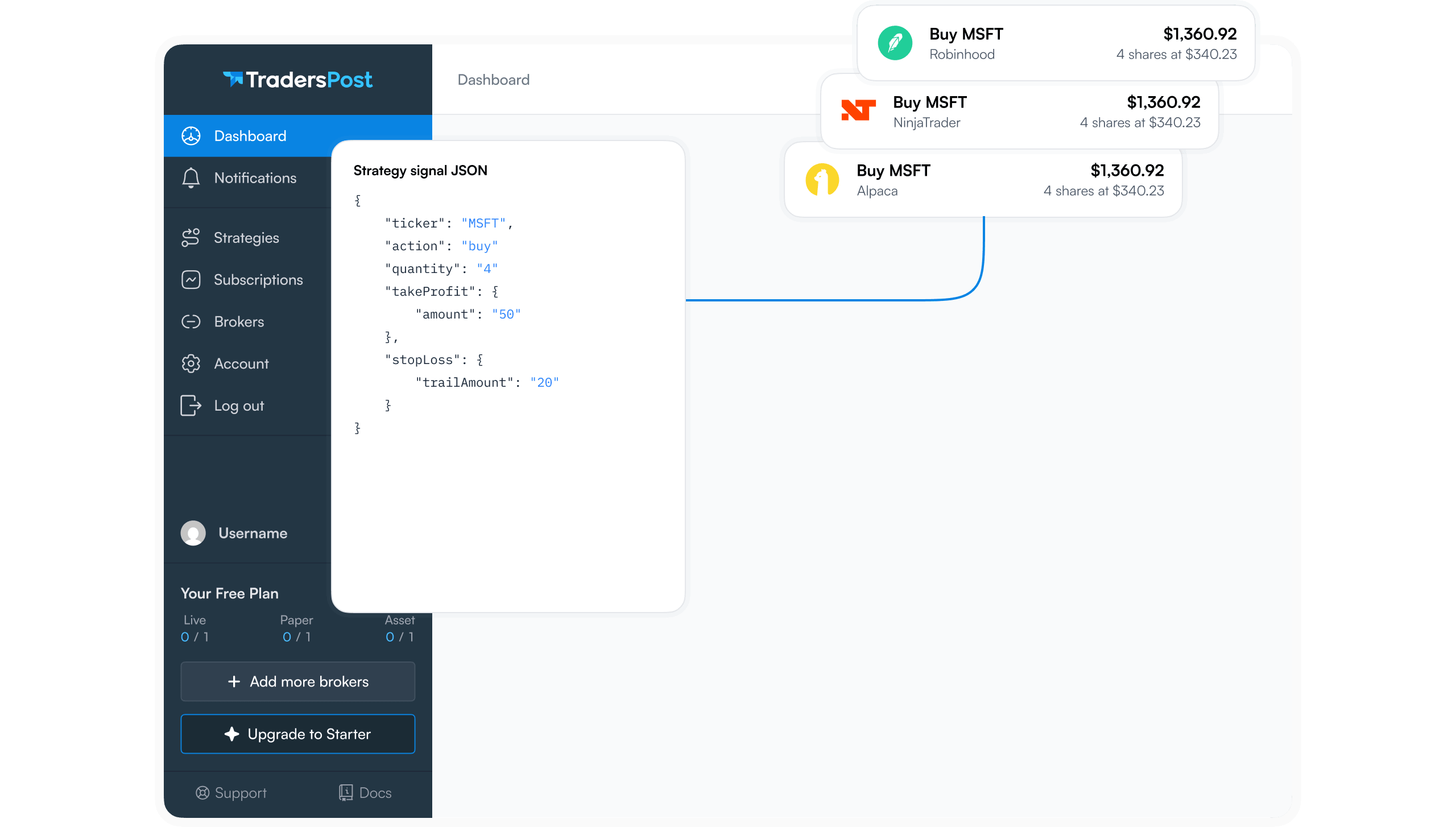
In the realm of automated trading, where algorithms can execute numerous trades without human intervention, risk management becomes a critical safeguard. Implementing robust risk controls is essential to protect your capital from adverse market conditions and potential system failures. This post will guide you through effective risk management strategies for automated trading, focusing on position sizing, stop loss mechanisms, portfolio risk controls, and technology safeguards. TradersPost stands as a vital tool in this landscape, bridging the gap between TradingView and brokers like Alpaca, TradeStation, Tradier, and Interactive Brokers to ensure seamless and secure automated trading.
Position Sizing Strategies
Effective risk management begins with proper position sizing. This involves determining the optimal amount of capital to allocate per trade based on various factors.
Fixed Dollar Amount
Allocating a specific dollar amount per trade is straightforward but can become less effective as account sizes change. It’s suitable for beginners who want an easy-to-understand approach without complex calculations.
Percentage of Capital
Risking a fixed percentage of your total capital per trade, typically 1-2%, ensures automatic adjustment as your account grows or shrinks. This method helps compound gains and losses proportionally, balancing growth with risk.
Volatility-Based Sizing
Adjusting position size based on asset volatility maintains consistent dollar risk across different assets. Though more sophisticated, it offers a potentially more stable approach by accounting for market fluctuations.
Kelly Criterion
The Kelly Criterion uses win rate and average win/loss ratio to determine position size. While it can lead to aggressive positions with accurate probability estimates, caution is advised due to its complexity and potential for over-leveraging.
Implementing Risk Limits
To prevent catastrophic losses, implementing multiple layers of risk limits is crucial.
Per-Trade Risk
Setting a maximum loss per trade (usually 1-3% of account value) is enforced through stop losses. This prevents any single trade from causing significant damage to your portfolio.
Daily Risk Limits
Establishing daily loss limits (commonly 3-5% of account value) ensures that if reached, the system shuts down automatically. This prevents revenge trading by algorithms and curbs excessive losses in volatile markets.
Portfolio Risk Management
Managing overall exposure requires attention to correlation limits between positions, sector concentration constraints, and geographic exposure considerations. These steps help maintain diversification, which FINRA says, along with asset allocation, can help manage both systemic risk (risk affecting the economy as a whole) and non-systemic risk (risk that affects a small part of the economy, or even a single company)1.
Stop Loss Implementation
Stop losses are vital in controlling risks at the individual trade level.
Fixed Percentage Stops
These stops are simple to implement by setting a stop loss at a fixed percentage below entry price. They offer straightforward protection against large losses but may require frequent adjustments in volatile markets.
ATR-Based Stops
Using Average True Range (ATR) for stop placement considers market volatility when setting stop distances. Though requiring parameter optimization, it provides more flexibility than fixed percentage stops.
Technical Level Stops
Placing stops below key support levels involves real-time technical analysis for optimal positioning. While complex to implement, they align stop placement with market structure for better protection.
Advanced Stop Loss Strategies
Dynamic stop loss management enhances protection by adapting to market conditions.
Trailing Stops
Trailing stops move in the direction of profitable trades to lock in gains while allowing room for further profit potential. Calculating the trail distance carefully is crucial to avoid premature exits or excessive risks.
Break-Even Stops
Moving stops to break-even once a trade becomes profitable eliminates initial risks but may result in more trades closing at break-even rather than achieving full profit targets.
Volatility-Adjusted Stops
Adjusting stop distances based on current volatility allows traders to tighten stops during low volatility periods and widen them when conditions are more volatile. This strategy requires real-time volatility monitoring for effectiveness.
Monitoring and Adjustments
Comprehensive monitoring systems keep your automated trading safe and efficient.
Real-Time Monitoring Systems
Utilize systems that monitor order execution accuracy, track slippage costs, calculate real-time portfolio risks, and assess drawdown levels. TradersPost facilitates part of this: when a signal includes signalPrice, it estimates slippage, the difference between the alert price and the actual fill price2.
Alerts System
Implement alerts for critical events like system failures or breaches of predefined risk limits. Regular notifications about approaching thresholds help manage risks proactively rather than reactively.
Technology Safeguards
Automated systems face unique technology risks that must be actively managed to prevent disasters.
Redundancy Implementation
Building redundancy into critical components such as data feeds (multiple providers), execution paths (alternative broker connections), and infrastructure (backup servers) helps mitigate single points of failure that could lead to significant losses.
Kill Switch Protocols
Having both manual and automatic kill switch capabilities ensures immediate shutdowns when necessary due to system errors or unexpected market events. Regular testing maintains readiness under all conditions.
References
1 finra.org, Risk
2 docs.traderspost.io, Signal Message Reference