Mega IPO Retail Access 2026: Platform Guide
Learn how mega IPO retail access works in 2026—from broker allocations and lockups to post-listing strategies—with SpaceX and OpenAI in focus for investors.

Marketing

Bottom Line
- In 2026, retail investors may have access to mega IPOs like SpaceX and OpenAI, but allocation depends on broker participation, account history, and eligibility rules.
- Retail IPO allocations are often reduced in oversubscribed offerings, with institutional demand absorbing most shares, meaning indications of interest do not guarantee shares.
- SpaceX's IPO will test retail access, with factors like broker participation, account eligibility, and oversubscription scaling affecting allocation.
- Robinhood's IPO Access allows indications of interest, but allocation is not guaranteed and depends on the issuer, underwriters, and broker decisions.
- Schwab and Fidelity offer IPO access with eligibility based on account type, assets, trading history, and whether the firm is in the selling group.
Retail investors may get their first realistic shot at the decade’s most sought-after listings in 2026, but access to a mega IPO is rarely as simple as clicking “buy” on listing day. Mega IPO retail access 2026 will depend on which broker you use, whether it receives an underwriting allocation, your account history, order limits, and the issuer’s own eligibility rules. For potential offerings involving SpaceX, OpenAI, or similarly high-profile private companies, those details could determine whether you receive shares at the IPO price or are forced to chase a volatile opening trade.
This guide breaks down how retail IPO programs work across major platforms, how allocations are typically prioritized, and why indications of interest do not guarantee shares. You will also learn how lockups, insider selling windows, valuation expectations, and first-day liquidity can shape the risk after a stock begins trading. The goal is practical: help you build a realistic plan for participating, size positions intelligently, and decide when waiting for the post-listing market may offer a better entry than fighting for a limited IPO allocation.
Why Mega IPO Retail Access Matters in 2026
The retail-investor problem: demand exceeds available shares
A mega-IPO is a large, heavily publicized public listing that attracts substantial institutional orders, extensive media coverage, and intense retail interest. In these offerings, the limiting factor is usually not investor awareness, but share supply. The issuer and underwriting syndicate determine how many shares are sold, and only a portion may be made available through retail-oriented broker allocation programs.
Having a brokerage account does not create an entitlement to buy at the IPO offer price. Pre-listing shares are distributed through underwriter and broker allocation systems, often subject to account eligibility, funding requirements, trading-history criteria, customer status, geographic restrictions, and internal allocation policies. When retail indications of interest exceed available shares, requested quantities may be reduced sharply or no allocation may be received.
Traders should separate three opportunities that are frequently treated as interchangeable:
- IPO allocation before trading: Receiving shares at the offer price through a participating broker’s IPO program.
- Buying after the opening trade: Entering in the public market after the stock begins trading, potentially at a large premium or discount to the offer price.
- Pre-IPO or private-market exposure: Obtaining indirect or secondary-market exposure before a listing, usually through specialized products with different liquidity, valuation, transfer, and eligibility constraints.
For the most anticipated listings, access at the offer price can be difficult. A trader who cannot obtain an allocation should not assume that a market order at the open is an equivalent substitute. The opening price, early volatility, spreads, and available liquidity can produce a materially different entry price and risk profile.
SpaceX as the retail-access test case
SpaceX is a useful retail-access test case because its brand recognition and expected investor demand make the allocation process as important as the underlying company narrative. The relevant questions are operational: Which brokers participate in the offering? Which account types qualify? Is an indication of interest required? How are oversubscribed orders scaled? Are shares available to self-directed retail accounts, or only to selected clients?
CNBC’s retail-access explainer, “SpaceX IPO: What retail investors need to know before buying shares”, illustrates why investors need to distinguish an offer-price allocation from simply buying once a ticker begins trading. For automated traders, the practical task is to model the event sequence: allocation notice, expected listing date, opening-auction uncertainty, position-size limits, and post-open order handling.
Editorial note: IPO timing, share availability, participating brokers, allocation procedures, and eligibility requirements can change without notice. Verify current details directly with the broker and review the official prospectus, registration statement, and offering documents before submitting an indication of interest or placing an order.
What this guide covers, and what it does not
This article compares retail-access pathways across broker IPO programs and provides a repeatable framework for evaluating future mega-IPOs. It focuses on platform mechanics, qualification rules, allocation realities, lockup considerations, and post-listing execution. Traders can use that framework to build broker-specific checklists and automation safeguards, such as alerts for allocation deadlines, controls that prevent unintended market orders at the open, and volatility-based position-sizing rules.
This is educational content, not investment advice and not a recommendation to buy any IPO. It also differs from the dedicated SpaceX case-study post: rather than assessing SpaceX as an investment, this guide examines how retail access systems work and how to evaluate them before the next highly demanded listing.
How Retail Investors Can Access a Mega-IPO
Path 1: Requesting Shares Through an IPO-Access Program
Some retail brokers distribute shares in selected IPOs through an offering center or IPO-access page. The usual sequence is straightforward: the broker posts an upcoming deal, eligible customers submit an indication of interest, the issuer and underwriting syndicate set the final offer price, and the broker notifies customers of their allocation before trading begins.
An indication of interest is not a guaranteed order. If you request 100 shares, you may receive 10, 25, or no shares. Allocations are often reduced in heavily oversubscribed mega-IPOs, particularly where institutional demand absorbs most of the syndicate allocation.
- Check whether the offering is available through your specific broker and account type.
- Confirm cash or margin requirements before submitting an indication of interest.
- Read the prospectus, preliminary price range, risk factors, and the broker's IPO agreement.
- Review any flipping restrictions, which may limit immediate resale or affect future IPO eligibility.
Availability is deal-specific. It depends on whether the broker is included in, or has access to, the underwriting syndicate, the broker's relationship with the lead banks, account eligibility rules, and internal allocation policies. A broker that offered one large technology IPO may not offer the next one. For automation-oriented investors, treat IPO allocation status as an event-driven input, not an assumed fill: do not activate post-allocation portfolio logic until the broker confirms the actual share quantity and final price.
Path 2: Buying After the Stock Starts Trading
Investors who receive no allocation can generally trade once the shares are publicly listed and supported by their broker. However, the IPO offer price is not necessarily the price at which public-market buyers can enter. A deal priced at $30 per share may open at $45 if buy orders materially exceed available sell interest, or it may trade below $30 shortly after opening if demand weakens.
The first trade can occur well after the opening bell because the exchange and designated market maker must match accumulated orders. Pre-open indications are informational, not executable guarantees. Avoid assuming that a market order will fill near an indicated opening price, especially during the first minutes of trading.
- Set a maximum position size before the listing session begins.
- Set a maximum acceptable entry price, expressed as an absolute price or premium to the offer price.
- Use limit orders with explicit price caps rather than unbounded market orders.
- For automated execution, include volatility guards, price-band checks, and cancel-or-replace logic.
For example, if an IPO is priced at $32 and your model permits a maximum 20% premium, the order ceiling is $38.40. If the opening auction indicates $44, the correct automated action may be no trade.
Path 3: Pre-IPO and Indirect Exposure
Other routes may include private-company funds, secondary-market platforms, venture-capital funds, thematic ETFs, or public companies with meaningful commercial or investment exposure to the issuer. These are not interchangeable with buying IPO common stock. Private vehicles may impose accreditation requirements, long lockups, management fees, uncertain valuations, transfer restrictions, and concentrated exposure. Secondary transactions can also involve stale pricing and limited liquidity.
Do not treat private-market access claims, tokenized representations, contractual claims, or unverified share offers as equivalent to ownership of common shares in the IPO. Verify the legal issuer, security type, custody arrangement, transfer rights, fees, and redemption terms before committing capital.
Robinhood, Schwab, SoFi and Fidelity: What to Compare
Robinhood IPO Access: Simplicity Does Not Equal Certainty
Robinhood’s IPO Access feature can allow eligible customers to submit an indication of interest for selected participating offerings directly in the app. The workflow is simple, but an indication of interest is not a confirmed allocation. The issuer, underwriters, and broker determine whether shares are available to retail participants and how many shares each approved customer receives.
For any prospective mega-IPO, including widely discussed private companies, traders should not assume availability on Robinhood. Participation is deal-specific and must be confirmed in the platform’s IPO Access section for that particular offering. No broker feature guarantees access to SpaceX or any other issuer.
- Confirm account eligibility: Verify that the account is open, in good standing, approved for the program, and eligible in your state or jurisdiction.
- Verify available cash: Use settled funds unless the offering terms explicitly state otherwise. Do not assume buying power from recent sales will qualify.
- Check the deadline: IPO indications often close before the first day of trading, sometimes before the final offering price is known.
- Read order rules: Confirm whether you can modify or cancel the request, whether the request is binding after pricing, and the maximum share request.
- Review resale expectations: Early selling may affect future IPO participation under broker or underwriter policies.
Schwab and Fidelity: Brokerage IPO Participation Details
Schwab, Fidelity, and other large brokerage firms may provide access to selected new issues, but eligibility can be more conditional than an app-based request flow suggests. Requirements may vary by account type, household assets, relationship status, trading history, minimum account balances, or a customer’s prior new-issue activity. Availability also depends on whether the firm is included in the offering’s selling group.
Check each broker’s IPO center, new-issues page, or offering documentation for the live requirements, minimum request size, indication deadline, pricing process, and account restrictions. For automated traders, treat these conditions as event-specific inputs, not static broker attributes. A platform that supported one high-profile listing may not receive shares in the next one.
Read the policy governing sales shortly after listing, commonly called flipping. A rapid sale of allocated IPO shares can lead to reduced eligibility for future offerings, particularly where the broker tracks allocations under underwriting rules. Compare actual deal availability, allocation methodology, and resale restrictions, rather than assuming Schwab or Fidelity consistently offers superior access.
SoFi and App-Based Access: Convenience, Eligibility and Risk Controls
SoFi and similar app-based brokers can make IPO requests easier to discover and submit, but they cannot remove the central constraint: scarce allocations. A large retail request book can result in a small allocation, partial allocation, or no allocation at all. Traders should verify whether the IPO is available for their jurisdiction and account type, whether unsettled funds count toward the request, and whether fractional shares become available only after regular post-listing trading begins.
| Platform | Current IPO Program Availability | Typical Eligibility Questions | Allocation Certainty | Resale Restrictions | Post-Listing Trading Support |
|---|---|---|---|---|---|
| Robinhood, Schwab, Fidelity, SoFi | Confirm for the specific deal | Account type, location, cash, deadlines, relationship criteria | None until shares are allocated | Review flipping policy | Confirm whole-share, fractional-share, limit-order, and extended-hours rules |
Program terms, supported offerings, and participation standards can change. Recheck the broker’s live offering page when the mega-IPO is announced and again before submitting an indication of interest.
Allocation Mechanics: Why Your IPO Request May Be Cut
From indication of interest to final allocation
An IPO indication of interest is a request, not a reservation of shares. You submit the number of shares you want, typically within a preliminary price range, before your broker’s stated deadline. The issuer and underwriters then price the offering, assess demand, and distribute the available shares across institutional and retail channels. Your broker subsequently notifies you whether you received a full allocation, partial allocation, or no allocation. If allocated, the shares and corresponding cash debit generally settle in your account according to the offering’s settlement schedule.
Requested quantity and allocated quantity can differ sharply in a heavily oversubscribed mega-IPO. For example, an investor submits an indication for 100 shares at an expected $50 offer price, implying a maximum commitment of $5,000. If demand materially exceeds supply, the broker may allocate only 10 shares, producing a $500 initial position rather than the intended $5,000 position.
At a high level, allocation depends on:
- Overall deal demand: More oversubscription generally means smaller retail fills.
- Broker inventory: A platform can allocate only the shares it receives from the underwriting syndicate.
- Eligible client demand: Retail requests may exceed the broker’s retail share pool.
- Account eligibility: Funding, residency, account type, and platform-specific rules can affect participation.
- Issuer and underwriter priorities: Distribution may favor long-term holders, certain customer categories, or strategic allocation objectives.
Automated position-sizing logic should therefore treat an IPO request as a probabilistic input, not a guaranteed order. Do not pre-program downstream hedges, stop orders, or portfolio rebalancing based on the requested share count.
Cash, account and deadline requirements
Before submitting interest, confirm how your broker calculates buying power. Some platforms require fully settled cash for the maximum requested amount, while others apply specific rules for margin accounts or pending cash transfers. Do not assume margin buying power is acceptable for an IPO allocation. A request can be reduced or rejected if funds are insufficient when the broker validates the order.
Record the offer deadline, preliminary price range, maximum dollar commitment, and the broker’s amendment or cancellation policy. IPO terms can change before pricing, including the final offer price and expected trading date. Also verify whether your account is eligible: new accounts, restricted accounts, certain retirement accounts, margin accounts, and accounts in restricted jurisdictions may have different access rules.
Pre-IPO checklist:
- Verify platform, account-type, and geographic eligibility.
- Read the prospectus and review the stated price range and risk factors.
- Set a maximum dollar budget using settled-fund requirements.
- Submit the indication before the broker deadline, not the public pricing date.
- Review the allocation notice, final price, share count, and settlement details.
The hidden cost of chasing a small allocation
A small allocation often creates behavioral and systematic risk. An investor who receives 10 shares instead of 100 may attempt to “complete” the intended position immediately after trading begins. If the stock opens at $85 rather than its $50 IPO price, that add-on is not an extension of the original allocation. It is a new purchase at a 70% higher entry price, with different downside, liquidity, and volatility characteristics.
Treat the allocation and any post-listing purchase as separate decisions. The allocated shares can follow an IPO-specific holding plan. Any open-market add-on should satisfy independent rules for maximum price paid, minimum opening volume, spread tolerance, volatility thresholds, and total position exposure. For automated traders, encode separate position-size limits for allocated shares and secondary-market purchases so an incomplete allocation cannot trigger an uncontrolled chase after the open.
SpaceX Now, OpenAI Next: Preparing for Access Uncertainty
What the SpaceX Example Teaches Retail Investors
SpaceX coverage illustrates a recurring mega-IPO problem: intense brand recognition can cause investors to focus on anticipated valuation, ticker speculation, or social-media claims while overlooking the actual mechanics of retail access. A widely discussed company is not necessarily an available IPO, and an available IPO is not necessarily available through every brokerage.
Do not assume Robinhood, Schwab, Fidelity, SoFi, or any other broker will offer a specific deal because the firm has an IPO program. Participation depends on the issuer, underwriting syndicate, deal terms, account eligibility, jurisdiction, available share inventory, and the broker's current policy. Confirm access only after the broker lists the transaction in its IPO interface and publishes the applicable indication-of-interest, funding, allocation, and cancellation rules.
Prepare before availability is confirmed. Complete identity verification, link and test funding methods, enable required trading permissions, and define allocation limits before rumors accelerate. For automated traders, this also means configuring alerts for SEC filings, broker IPO-page changes, and first-trade conditions rather than building a strategy around unverified dates or symbols. See the SpaceX IPO retail-access case study.
OpenAI IPO Speculation: Plan for Scenarios, Not Rumors
OpenAI is a useful forward-looking example because investor interest is substantial, but IPO timing, structure, valuation, ticker symbol, and retail participation remain speculative unless formally announced. A company may remain private, conduct another private financing, use a different transaction structure, postpone a listing, or list under terms materially different from market expectations.
Build a scenario plan that remains valid regardless of online speculation:
- No allocation available: Take no pre-open position. Monitor the prospectus, first-day liquidity, spreads, and volatility before considering secondary-market trading.
- Partial allocation available: Treat the allocation as uncertain until confirmed. Request no more shares than fit a predefined portfolio limit, and do not assume an indication of interest guarantees shares.
- Post-listing trading only: Set a maximum purchase price and minimum liquidity conditions. For example, require a defined opening-range period, acceptable bid-ask spread, and a limit order rather than a market order.
Create a watchlist for official company releases, SEC registration documents, exchange notices, and broker participation pages. Do not automate orders from unverified IPO dates, rumored tickers, or informal price targets.
A Reusable Mega-IPO Preparation Checklist
- Open and verify brokerage accounts well before a potential listing. Do not wait for an IPO announcement to resolve identity checks, bank-linking delays, transfer holds, or account eligibility restrictions.
- Compare the current IPO-program terms at Robinhood, Schwab, SoFi, Fidelity, and any other broker under consideration. Record minimum balances, eligibility rules, indication deadlines, allocation practices, selling restrictions, and whether shares must be held in a specific account type.
- Set three hard limits before pricing: a maximum allocation request, a maximum post-open purchase price, and a total portfolio exposure limit. These limits should be encoded in order templates or risk controls, not left to discretionary decisions during the opening auction.
- Create a research folder containing the prospectus, risk factors, lockup timeline, expected earnings-calendar cadence, capitalization table where available, and screenshots of each platform's IPO policy on the date reviewed.
Lockups, Flipping Rules and the Post-IPO Reality
IPO lockups can create an important future catalyst
A lockup is a contractual restriction that limits when company insiders, employees, founders, and early investors may sell shares after an IPO. The common purpose is to prevent a large block of pre-IPO holders from immediately selling into the newly public market. Lockups are frequently associated with 90-day or 180-day periods, but those conventions are not rules. The actual dates, covered holders, release conditions, and exceptions are specific to each offering.
Lockup expiration is monitored because it can increase the potential supply of freely tradable shares. That does not mean the stock must decline on expiration. Some holders may retain their positions, selling may already be anticipated, and strong earnings can overwhelm supply concerns. Still, an automated event calendar should record the issuer’s stated lockup terms from the prospectus, typically the S-1 or final 424B4 filing, rather than applying a generic 180-day date.
- Identify the exact lockup expiration date and any staggered release provisions.
- Estimate the number of shares subject to restriction relative to the public float.
- Track Form 4 filings, Rule 144-related disclosures, and secondary or follow-on offering announcements.
- Flag the first earnings report and quiet-period research initiation window as separate volatility events.
For a newly public mega-cap issuer, the first earnings release, analyst coverage launches, and an announced follow-on offering can affect price behavior as much as, or more than, the lockup date itself.
Broker anti-flipping policies and short-term sale restrictions
Some IPO-access programs discourage or restrict “flipping,” meaning the rapid resale of IPO shares received through an allocation program. A broker may view a sale shortly after listing as inconsistent with long-term allocation participation and may reduce or revoke eligibility for future IPO allocations. The relevant policy is the broker’s current IPO participation agreement, not market folklore about a universal 30-day or 60-day holding period.
Separate the broker’s allocation policy from general post-listing trading rules. Once shares are listed, a customer may generally be able to sell them in an ordinary cash or margin account, but a broker can still impose allocation-program consequences. Timing, definitions of rapid resale, affected accounts, and enforcement vary by platform and by offering.
Before accepting an allocation, traders should review the agreement, account-specific restrictions, settlement requirements, and any limitations on automated order handling. Do not deploy an automated immediate-exit strategy for allocated IPO shares unless the broker explicitly permits that workflow and the account has been configured accordingly.
Opening-day volatility: avoid turning access into overexposure
IPO access does not guarantee orderly execution after the opening auction. Early trading can involve thin liquidity, delayed price discovery, wide bid-ask spreads, volatility halts, partial fills, and sharp reversals. An order submitted near the indicated opening price can execute materially higher after trading begins.
Define limit prices, stop methodology, maximum position size, and a maximum number of entries before the session opens. For automation, include a halt-state check, limit-order-only controls, and a rule preventing repeated re-entry after failed or partially filled orders.
For example, assume an investor planned a 2% portfolio position based on a $40 IPO offer price. If the stock opens at $60, a 50% premium, the investor should not automatically buy enough shares at $60 to force the original share count. That changes the intended capital allocation from 2% to 3% before considering slippage. Recalculate shares from the pre-set portfolio-risk budget, or decline the trade if the opening price exceeds the strategy’s permitted premium.
Turn a Mega-IPO Plan Into a Rule-Based Trading Workflow
Separate the Allocation Decision From the Trading Strategy
Treat a pre-IPO allocation request and a post-listing trade as two separate decisions with separate written rules. An allocation may be subject to broker eligibility, account minimums, concentration limits, indication-of-interest deadlines, share clawbacks, and restrictions on immediate resale. None of those factors establishes a valid trading entry after the stock begins trading.
Your allocation plan should state:
- Maximum request amount: the largest dollar amount or share count you will request, assuming a partial allocation is possible.
- Holding thesis: whether allocated shares are intended for a multi-week, multi-month, or longer-term position, and what facts would invalidate that thesis.
- Broker-policy constraints: eligibility rules, expected allocation treatment, lockup or flipping policies, and whether the broker supports conditional exits after listing.
Your post-listing plan should be independent of the allocation outcome. Define objective setups that an automated workflow can recognize: a completed opening range, volume exceeding a specified threshold, a reclaim of a defined intraday moving average, or a break below a preselected risk level. A company’s brand, founder, media attention, or reported oversubscription should not override the entry criteria. The system should trade repeatable conditions, not excitement about a celebrity company or fear of missing the first-day move.
Example: Opening-Range Strategy With Defined Risk
The following is an illustrative workflow, not a recommendation. After the opening trade, wait 30 minutes without placing an entry. Mark the high and low of that 30-minute opening range. Consider a long entry only if price breaks above the opening-range high and a confirmation rule is satisfied, such as a one-minute bar closing above the high with cumulative volume at least 150% of the average volume of the prior five one-minute bars.
Risk controls can be specified before the alert is armed:
- Risk no more than 0.25% of account equity on the trade.
- Apply a maximum dollar position cap, even if the stop distance would otherwise permit a larger size.
- Place the invalidation level below the opening-range low, or below another level that has been tested for the specific rule set.
- Calculate shares from the smaller of the risk-based size and the dollar-cap size, then round down to a valid whole-share quantity.
For example, a $100,000 account risking 0.25% has a maximum planned loss of $250. If the entry is $52.00 and the tested stop is $50.75, the $1.25 per-share risk permits 200 shares before commissions, slippage, and any position cap.1 That calculation must account for spreads and realistic fill assumptions.2 Historical testing of a general breakout rule does not guarantee performance on an unusually volatile new IPO, where price gaps, halted trading, thin displayed liquidity, and rapid spread changes can invalidate normal assumptions.
Paper Test Before Risking Capital
Paper test the complete alert-to-order workflow before deploying automation on a newly listed stock.3 Opening-day IPO behavior is often abnormal, and a strategy that functions correctly on established symbols can fail operationally when symbols, data feeds, or order conditions change.
- Verify symbol formatting across the charting platform, alert engine, broker API, and order-management system.
- Test duplicate-alert handling, idempotent order submission, and safeguards against repeated entries.
- Validate order-size calculations, including fractional-share support, buying-power checks, and position caps.
- Compare limit-order and market-order behavior under simulated wide spreads and delayed fills.
- Confirm alert timestamps, opening-range calculations, stop placement, partial-fill handling, and exit logic.
Monitor the first live automated sessions closely and use conservative size until the workflow behaves as expected under actual market conditions. For additional setup concepts and risk considerations, review the IPO trading strategies guide.
Frequently Asked Questions
Can retail investors buy mega-IPOs at the IPO price?
Sometimes. Retail investors may be able to buy shares at the IPO price if a participating broker offers the deal and the investor meets that broker’s account, eligibility, and program requirements. Submitting an indication of interest is not a guarantee of receiving shares. High-profile mega-IPOs can be heavily oversubscribed, so eligible investors may receive only a partial allocation, or none at all.
Which brokers offer IPO access in 2026?
Robinhood, Schwab, SoFi, Fidelity, and other brokers may offer access to select IPOs or new issues in 2026, but availability varies by deal, account type, eligibility, and program terms. Check your broker’s IPO or new-issues section for the current offering and its rules. Do not assume any platform will offer SpaceX, OpenAI, or another specific company until an official offering is listed.
What is the difference between the IPO price and the opening price?
The IPO price is the offer price paid by investors who receive an allocation through the IPO process. The opening price is established when the stock begins public trading and can be substantially higher or lower than the IPO price. If you buy after the opening trade, you are purchasing in the public market, not through the IPO allocation. Use a separate risk and position-sizing plan for post-listing trades.
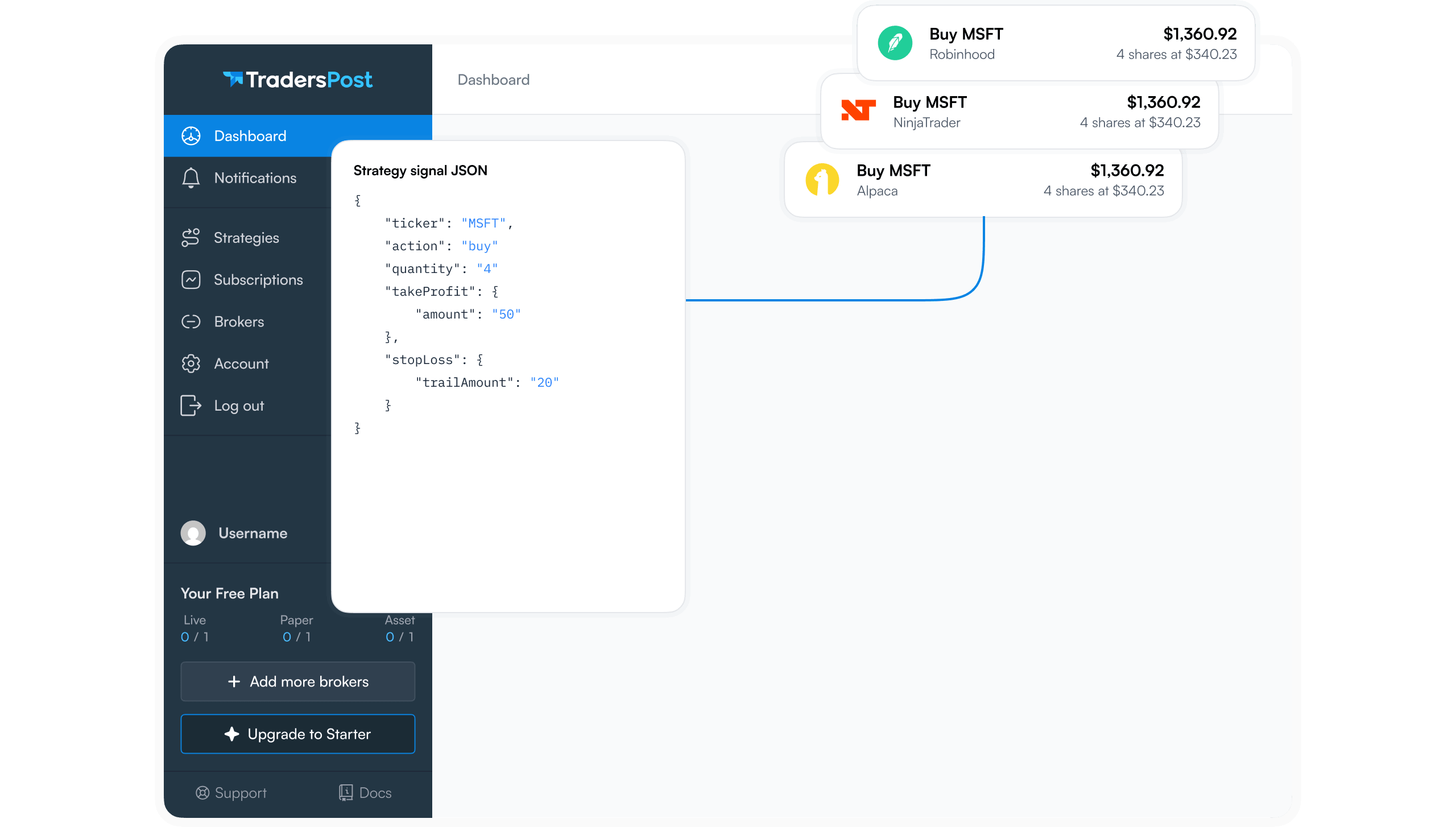
Can TradersPost automate IPO trades?
TradersPost does not provide IPO allocations or guarantee access to new issues. However, once a confirmed symbol is publicly tradable and supported by your connected broker, TradersPost can automate defined post-listing trading rules using TradingView or TrendSpider webhook alerts.4 Paper test your strategy first, and make sure your automation follows broker rules, IPO-program restrictions, and your own risk limits before trading live.
Should I sell IPO shares before the lockup expires?
There is no universal answer. A lockup expiration is only one factor to consider alongside valuation, earnings, liquidity, market conditions, and your individual risk tolerance. Review the prospectus to understand the actual lockup terms, since timelines and restrictions differ by company. If you received shares through an IPO-access program, also consider your broker’s anti-flipping policies before planning an early sale.
Conclusion
Mega IPO retail access in 2026 is likely to remain a mix of broker allocations, public-market trading, and disciplined preparation. Early access can be limited, allocations are never guaranteed, and the first sessions after listing often bring wide spreads, rapid price discovery, and elevated volatility. The advantage for retail traders is not chasing headlines, but defining entry criteria, risk limits, and exit rules before a symbol begins trading.
Before committing capital, create a TradersPost paper-trading workflow for confirmed post-IPO symbols. Test TradingView or TrendSpider alerts, validate your position sizing against realistic volatility5, and review how your rules perform before considering live automated execution. Take the next step with a repeatable process built for opportunity and risk control. Start paper testing with TradersPost today.
References
1 TradersPost Docs, Position Sizing
2 TradersPost Docs, Order Behavior
3 TradersPost Docs, Paper Trading
4 TradersPost Docs, Webhooks
5 TradersPost Docs, TradingView Signal Source