Prop Firm Automation Rules: Which Firms Allow It
Compare prop firm automation rules for futures traders: allowed, restricted, and banned practices, plus a compliance workflow before going live.

Marketing

Bottom Line
- Prop firms may allow automated entries but often restrict unattended trading, third-party execution software, and trade copying across accounts.
- Automation permissions can vary significantly by platform, account type, jurisdiction, and account stage, with stricter reviews often occurring before funding or payout.
- Firms like Apex Trader Funding, Topstep, and MyFundedFutures may permit automation under specific terms, but require confirmation for VPS use and trade copying.
- Common compliance issues include unauthorized account replication, shared signals, and coordinated trading across multiple accounts.
- Prop firms frequently update their rules regarding automation, APIs, and trade copying, necessitating regular review and documentation of current terms.
A profitable futures strategy can still fail before its first payout if your automation violates a prop firm’s rules. Prop firm automation rules differ sharply by firm, platform, and account type: one may allow trade-copying across your own accounts, another may prohibit it, and a third may permit automated entries while banning unattended order management or third-party signal execution. The details matter because violations can lead to denied withdrawals, account closures, or disqualification after weeks of successful trading.
This guide compares the practices firms commonly allow, restrict, and ban, with a focus on algorithmic strategies, bots, APIs, trade copiers, bracket orders, and semi-automated execution. You will learn how to distinguish legitimate automation from prohibited account management, identify the policy language that deserves closer review, and avoid assumptions based on another firm’s rules. We will also lay out a practical compliance workflow to use before going live, so you can document your setup, confirm platform permissions, and trade with fewer preventable policy risks.
What Are Prop Firm Automation Rules?
Why Automated Trading Rules Vary by Prop Firm
“Automation” is not a single activity. It can include algorithmic entries, TradingView alerts sent through webhooks, bots that place orders, bracket orders attached at entry, direct API trading, trade copiers, VPS-hosted systems, and fully unattended strategies. A prop firm may permit some of these methods while prohibiting others.
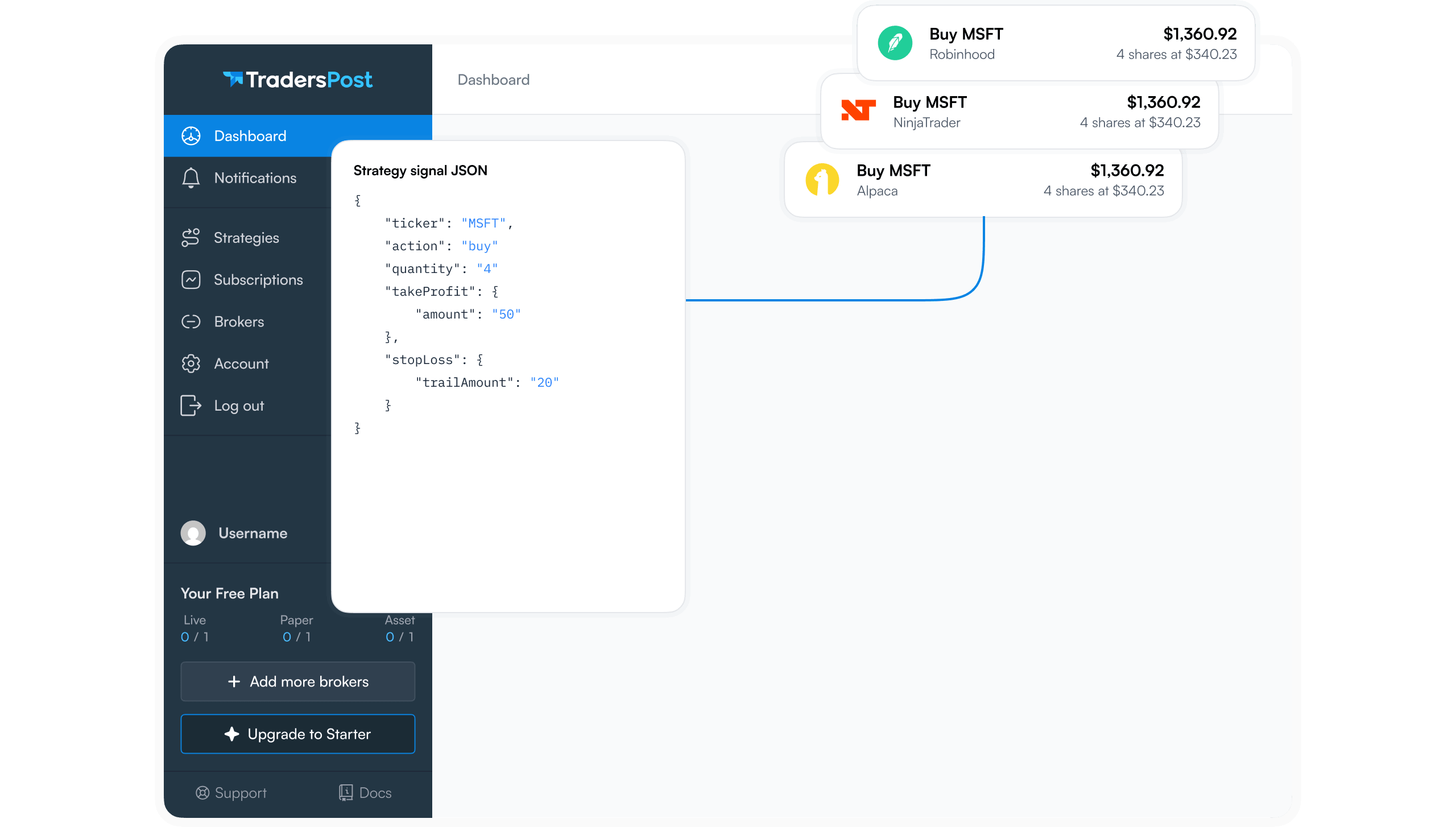
For example, a firm may allow a trader to use a TradingView strategy that sends a webhook to execute orders in one account, provided the trader owns and supervises the strategy.1 The same firm may prohibit copying those trades from a master account into several evaluation accounts, even if every account belongs to the same trader. The compliance issue is often not the entry logic itself, but account replication, shared signals, latency-based execution, or activity that appears coordinated across multiple users.
- Platform: API access, Expert Advisors, webhooks, and third-party bridges may be available on one supported platform but blocked on another.
- Account type: Evaluation accounts may have different automation permissions than instant-funded or live-funded accounts.
- Jurisdiction: Country-specific entities, brokers, and data providers can impose different restrictions.
- Account stage: A method tolerated during an evaluation may be reviewed more strictly before funding or payout.
- Payout status: Firms may scrutinize execution records, consistency, and account relationships during payout review.
Use this article as a comparison framework, not as a replacement for the firm’s current terms, FAQ, prohibited-practices page, platform rules, or written confirmation from its support or compliance team.
The Difference Between Alerts, Automation, and Copy Trading
An alert is a signal. For example, a TradingView script detects a moving-average crossover and sends a webhook notification. Automation occurs when software receives that signal and places, modifies, or closes an order without manual intervention. Copy trading replicates a trade from one account to another, usually from a master account to follower accounts.
These distinctions matter because a strategy can be automated without being a trade copier. A webhook can send orders from one TradingView strategy directly to one permitted prop account. That is automated execution. If a master account then replicates the same order into five evaluation accounts, that is copy trading, even if the original order was generated by an algorithm.
A common compliance mistake is assuming that “not using a copier” eliminates copying concerns. Firms may still restrict identical or near-identical execution across related accounts when it indicates shared automation, coordinated trading, or attempts to scale an evaluation strategy across multiple accounts.2 Ask specifically whether the firm permits one strategy, one signal source, or one VPS to execute on multiple accounts.
Why Rules Change Frequently
Prop firms regularly revise prohibited-strategy lists, supported platforms, news-trading policies, consistency requirements, API permissions, and account-copying limitations. Changes often follow broker migrations, platform upgrades, risk incidents, regulatory requirements, or shifts in the firm’s payout and exposure model.
Build a documented rules review into your workflow:
- Before purchasing each new evaluation.
- Before moving from evaluation to funded status.
- Before connecting a new webhook service, API bridge, copier, VPS, or execution bot.
- After materially changing strategy frequency, instruments, account count, or order-routing infrastructure.
Save a PDF or timestamped screenshots of the rules applicable when you open the account. For ambiguous cases, such as one signal source trading multiple accounts or a VPS running unattended execution, request written clarification. Keep the response with your account records, and describe the exact setup rather than asking whether “automation” is allowed in general.
Prop Firm Automation Rules Comparison
Checking Which Firms Currently Allow Automation
Futures prop firm rules change frequently, often by program, platform, and account stage, so any static list goes out of date quickly. For an up-to-date view of the brokers and prop firms TradersPost connects to and supports for automation, start with the TradersPost connections page. Treat it as a guide, not a definitive ruling: it reflects platform support, not any individual firm's current account agreement, so always confirm the specific automation, VPS, third-party tool, and trade-copying terms directly with the prop firm before you automate.
Permission for automated entries does not automatically authorize unattended trading, third-party execution software, high-frequency order behavior, VPS hosting, or replication across accounts. Even when a firm appears on a supported-connections list, verify that your exact setup is allowed for your specific program and account stage.
Firms That Restrict VPS, Third-Party Tools, or Trade Copying
Infrastructure restrictions and strategy restrictions are separate. A firm may accept algorithmic signal logic while prohibiting a third-party VPS, remote desktop sharing, external execution bridge, account manager, group trading, or copying trades between accounts. Firms commonly review correlated orders, matching entry timestamps, identical quantities, shared IP addresses, shared devices, and repeated order patterns because these can indicate unauthorized replication or shared control.
A compliant planning model is to operate one account with independently generated alerts and your own execution decisions. Do not use a master-to-follower structure, shared VPS, or external copier unless the firm expressly authorizes that exact setup in writing.
Firms That Prohibit Fully Automated or Unattended Trading
Some programs may require discretionary trader involvement, prohibit bots, or reserve the right to reject activity that appears fully automated. In those cases, an alert-only workflow may be acceptable while auto-execution is not. For example, a script can identify a breakout and send a notification, but the trader must review the setup and manually place each order.
- Do not assume a supported platform authorizes every add-on, script, API, webhook connector, or automation method.
- Ask support whether unattended execution, VPS hosting, external order routing, and same-owner multi-account copying are permitted for your specific program.
- If the terms state “manual trading only,” “no algorithmic trading,” or “no bots,” do not attempt to bypass the rule through a different connector, VPS, or account structure.
The Rules That Matter Most for Automated Futures Traders
Consistency Rules and Automated Position Sizing
Many prop firms assess not only total profit, but how that profit was produced. Consistency rules may restrict a single winning day, one unusually large trade, abrupt contract-size increases, or profit concentrated in a narrow set of trades. An automated system can violate these expectations even if its net result is profitable. Common causes include martingale-style size escalation after losses, volatility-based sizing without hard caps, and a strategy that trades aggressively during one high-volatility session.
For a 50K evaluation, a practical control is to cap the system at two micro contracts or one mini contract until it has built a defined profit buffer3, such as $1,500 above the starting balance. Scale only when preset conditions are met, for example: trailing drawdown has widened sufficiently, the prior 20 trading days meet a maximum daily-profit concentration threshold, and no daily loss limit has been breached.
- Set a hard daily loss limit that disables new entries for the session.
- Define a maximum contract count independent of signal confidence.
- Limit trades per session and per instrument.
- Use profit-locking logic to reduce size or stop trading after a defined daily gain.
Prohibited Strategies: HFT, Latency Arbitrage, and Order Abuse
Commonly prohibited conduct includes high-frequency trading, latency arbitrage, quote stuffing, spoofing, excessive order cancellation, exploitation of delayed market data, and use of platform or routing errors. A fast automated strategy is not automatically HFT. The compliance concern arises when order rates, cancellation rates, or execution logic are designed to capture millisecond-level infrastructure advantages rather than legitimate market signals.
Build around normal bar-close signals or controlled intrabar logic, not stale quotes, delayed data feeds, or rapid cancel-and-replace behavior. Before deployment, review order logs for order-to-fill ratios, cancellation frequency, average order lifetime, fill patterns, and alert frequency. A strategy that submits hundreds of resting orders to obtain a small number of fills may be operationally incompatible with a prop firm's rules even if it is not intended to spoof.
Copy Trading, Correlated Accounts, and Multi-Account Limits
Prop firms commonly restrict copying across accounts, external signal-provider copying, shared strategy groups, and accounts controlled by related traders. Managing several permitted accounts is not necessarily the same as mirroring one account into many. A firm may allow limited multi-account management while prohibiting third-party copy software or identical automated execution across funded accounts.
Identical trades can be flagged even when they were independently generated by the same strategy. Maintain records showing account ownership, strategy source code or configuration, signal-generation timestamps, VPS access, and whether any copier is used. If verification is requested, clear documentation is materially better than trying to reconstruct the workflow after the fact.
News Trading, Overnight Holds, and Session Restrictions
Rules may restrict entries around major releases, prohibit holding through news, require flat positions before a session close, or impose special holiday and low-liquidity restrictions. Futures traders should specifically monitor FOMC decisions, CPI, NFP, PPI, GDP, scheduled Fed speakers, and contract rollover periods.4
A practical automation rule is to block new entries from five minutes before through five minutes after a restricted event, then require a fresh valid signal after the blackout rather than entering on a pre-event setup. Verify whether the firm's restriction applies to opening trades, closing trades, stop-loss fills, existing positions held through the event, or only certain evaluation and funded account types.
Evaluation Rules vs Funded Account Rules
Why Passing an Evaluation Does Not Guarantee Funded-Account Approval
An evaluation is not necessarily a complete test of whether a strategy is acceptable on a funded account. Evaluation rules commonly concentrate on measurable thresholds: profit target, maximum drawdown, daily loss limit, minimum trading days, and position-size limits. A funded agreement may introduce additional review standards, particularly before a payout is approved.
Those standards can include profit consistency requirements, restrictions on concentration of profits in one session, limits on high-impact news trading, prohibited order behavior, account-sharing restrictions, and reviews of execution patterns. A strategy that passes an evaluation by trading aggressively around scheduled data releases, increasing size after losses, or entering several accounts simultaneously may still trigger scrutiny once the account is funded.
For example, an evaluation dashboard may permit trading through the Non-Farm Payrolls release as long as the account remains within its loss limits. The funded payout policy may separately state that profits earned during restricted news windows are ineligible, subject to adjustment, or grounds for review. Similarly, a firm may tolerate automated execution during an evaluation but prohibit trade copying, latency arbitrage, or materially identical orders across accounts after funding.
Before deploying automation, compare four documents, not just the evaluation rules: the evaluation agreement, funded-account agreement, payout policy, and prohibited-practices policy. Treat policy language such as “sole discretion,” “abusive trading,” “unrealistic fills,” or “unauthorized automation” as a reason to obtain written clarification.
Build Automation Around the Strictest Applicable Rule
When evaluation and funded policies differ, code to the stricter standard. If a rule is unclear, assume the more restrictive interpretation until the firm confirms otherwise in writing. This approach reduces the risk that an automation workflow passes an evaluation but becomes unusable when funded.
Your strategy and execution layer should enforce a rule checklist before every order:
- Maximum contracts: Cap order quantity at the lower of the evaluation and funded limits.
- Daily drawdown stop: Disable new entries well before the firm’s daily loss threshold.
- Trailing threshold awareness: Calculate trailing drawdown from the firm’s stated reference point, whether balance high-water mark, end-of-day balance, or intraday unrealized equity.
- Time-of-day permissions: Block entries outside approved trading hours.
- News blackout: Cancel pending entries and prevent new positions during restricted event windows.
- Overnight flattening: Close positions before the firm’s mandatory flat time, allowing for execution delays.
- Account-copying restrictions: Prevent duplicate signal routing where copying, mirrored execution, or multi-account synchronization is restricted.
Do not rely solely on the prop firm’s liquidation system. If a $2,500 daily loss limit exists, an automated system should stop opening positions at a lower internal threshold, such as $2,000 or $2,200, with a buffer for slippage, commissions, and delayed position updates. Firm-side liquidation is a last-resort control, not a strategy risk-management feature.
How to Request Written Clarification From a Prop Firm
Ask a narrow operational question and describe the complete order path. A useful starting point is: “Do you permit a TradingView webhook strategy to automatically place futures orders in my account through a third-party execution platform, with no trade copying and no HFT behavior?”
Then ask follow-up questions that remove ambiguity:
- Is VPS-hosted or cloud-hosted execution permitted?
- May the strategy operate unattended while I am away from the platform?
- May the same strategy trade multiple accounts, and if so, under what limits?
- Are there restricted news windows or prohibited order types?
- Are specific platforms, APIs, webhooks, bridges, or execution services prohibited?
- Does the answer differ between evaluation accounts, funded accounts, and payout review?
Retain the firm’s response with the date, representative name, and relevant policy version. Request clarification again if the firm revises its terms, changes its trading platform, or if you alter your automation infrastructure, such as moving from local execution to a VPS or adding an API-based order router.
How to Automate a Prop Firm Strategy More Safely
Start With a Rule-Compliant Strategy Specification
Automation should begin with a written specification that can be executed without interpretation. Define every decision point: entry trigger, exit trigger, stop loss, profit target, maximum contracts, daily trade limit, maximum daily loss, permitted trading sessions, and prohibited event windows. If a rule cannot be translated into deterministic logic, it is not ready for unattended execution.
Avoid discretionary statements such as “take only the best setups,” “skip choppy conditions,” or “enter when momentum looks strong” unless each condition has measurable inputs and thresholds. For example, a compliant specification might state:
- Trade one Micro E-mini Nasdaq-100 contract only.
- Allow entries only from 9:35 a.m. to 11:30 a.m. ET.
- Limit the strategy to two completed trades per day.
- Stop entering new positions once realized and unrealized daily P&L reaches -$150.
- Block new entries during defined CPI and FOMC blackout windows.
- Cancel working entry orders at the session cutoff and flatten positions before the firm’s required close.
Map these controls to the prop firm’s written requirements. In particular, verify rules on news trading, overnight holds, maximum size, trailing drawdown treatment, copy trading, third-party execution tools, and whether automated order submission is permitted.
Use Paper Trading Before Sending Live Orders
Run the strategy in forward paper trading before connecting it to a funded or evaluation account. Historical backtests can validate signal logic, but they do not adequately test webhook delivery, platform connectivity, order-routing behavior, or session-state errors.5
- Confirm alert timestamps match the intended bar, price, and session.
- Test duplicate-alert handling and ensure repeated webhooks do not create additional entries.
- Verify position-state handling after partial fills, rejected orders, manual intervention, and reconnects.
- Confirm stop losses and profit targets are attached, modified, and canceled correctly.6
- Test normal sessions, high-volatility sessions, and news-heavy sessions.
Compare platform signals with execution logs after every test session. Investigate missed alerts, delayed orders, slippage, partial fills, unexpected reversals, and quantity mismatches. Paper trading validates operational mechanics, not firm eligibility. A strategy can function perfectly in simulation and still violate a firm’s written automation, news, or risk-management rules.
Add Guardrails for Live Deployment
Live automation needs independent limits beyond the entry signal. Set hard controls for maximum position size, maximum entries per day, maximum daily loss, cooldown periods after losses, session cutoffs, and a flat-before-close requirement where applicable. The automation should refuse new entries once any limit is reached, even if the underlying signal remains active.
Build idempotency into webhook and execution logic. Each signal should carry a unique identifier, and the execution layer should reject an already processed signal. Also require a position check before every order: a long-entry signal should not add contracts if the account is already long unless pyramiding is explicitly allowed by both the strategy and the firm.
- Check connection, account selection, buying power, and daily P&L status before the session.
- Review all orders, fills, cancellations, and rule warnings after the session.
- Pause automation immediately after an abnormal fill, rejected protective order, unexpected position, or firm warning.
- Maintain a manual emergency procedure to cancel working orders and flatten positions through the broker or platform.
Document who can disable the strategy, where credentials are stored, and how the account will be flattened if the automation, platform, or internet connection behaves unexpectedly.
Common Automation Mistakes That Can Violate Prop Firm Rules
Assuming a Supported Platform Means Every Bot Is Approved
A prop firm’s support for a platform such as TradingView, MetaTrader, NinjaTrader, Tradovate, or TradeLocker does not automatically approve every automation method connected to that platform. A firm may permit manual trading through a supported platform while restricting API access, trade copiers, cloud-based bots, browser automation, webhook bridges, VPS-hosted scripts, or third-party order-routing services.
Review the entire execution chain, not just the charting interface. For example, a TradingView strategy alert may be acceptable on its own, but routing that alert through a webhook service to an external execution bot, then into a funded account through a broker API, may introduce tools or connections the firm prohibits.
- Charting platform: Where signals are generated.
- Alert mechanism: TradingView alerts, platform alerts, email parsers, or custom scripts.
- Automation provider: Webhook bridge, API connector, trade copier, or bot framework.
- Broker connection: Direct API, supported integration, simulated gateway, or third-party routing layer.
- Hosting environment: Local machine, VPS, cloud server, or shared hosted instance.
If the terms do not clearly address a tool, ask the firm for written confirmation before using it. Describe the tool’s function precisely, including whether it only sends signals or can submit, modify, cancel, or copy orders.
Using Automation to Bypass Drawdown or Consistency Rules
Automation can create conduct that appears compliant with a displayed daily loss limit or trailing drawdown while still conflicting with broader risk-management, consistency, or prohibited-strategy provisions. Firms commonly scrutinize abrupt changes in risk, recovery behavior, and trading patterns that suggest an account is being managed to exploit evaluation mechanics rather than traded under controlled risk parameters.
High-risk examples include increasing position size aggressively when approaching a profit target, using martingale or anti-martingale recovery logic after a loss, rapidly reversing long and short positions to capture short-term variance, or placing an oversized trade after several losing trades. A bot that normally trades two contracts but automatically sends 10 contracts after a drawdown may remain inside a visible loss threshold, yet still violate a rule requiring consistent sizing or prudent risk management.
Use fixed-risk automation instead. Define maximum contracts or lots per instrument, a maximum loss per trade, a daily loss shutoff, and a maximum number of entries per session. Disable recovery multipliers. A robust bot should reduce or stop activity after adverse conditions, not increase exposure in an attempt to recover losses.
Forgetting That One Strategy Can Create Duplicate Orders
Duplicate orders are a frequent automation failure. They can arise from multiple active TradingView alerts, webhook retries after a delayed response, chart reloads, multiple browser sessions, duplicate strategy instances, or overlapping entry conditions that generate the same signal on the same bar. An order bridge may also resend a request if it cannot confirm that the first submission reached the broker.
The result can be accidental oversizing, excessive order activity, unintended position reversals, duplicate stop orders, or a breach of contract, position, or daily risk limits. For example, a strategy intended to buy one micro contract can submit three identical orders if three alerts point to the same webhook endpoint.
- Confirm that each intended trade action has exactly one active alert.
- Verify that only one permitted account is connected to each workflow.
- Use unique signal IDs and order-state checks where the automation provider supports them.
- Document how webhook timeouts, retries, rejected orders, and partial fills are handled before trading live.
- Test the complete workflow in simulation or a permitted evaluation environment before enabling full automation.
Prop Firm Automation Compliance Checklist
Pre-Account Checklist
Do not assume that a firm allowing a platform such as NinjaTrader, MetaTrader, Tradovate, or TradingView also permits every form of automation available on that platform. Confirm the firm’s written position on each component of your execution stack before purchasing an evaluation.
- Automation type: Verify whether fully automated strategies, algorithmic order submission, platform APIs, broker APIs, webhooks, VPS-hosted systems, third-party execution tools, and unattended trading are permitted.
- Signal versus execution: Some firms allow TradingView alerts or indicator signals but prohibit webhook-driven order placement. Others permit automated entries but require manual exits or prohibit bracket-order management by external software.
- Copying restrictions: Confirm whether trade copiers are allowed between your own accounts, whether a master account can distribute orders to multiple evaluations, and whether copying from a funded account is prohibited. A permitted copier may still be subject to account-count limits.
- Documentation review: Read the evaluation agreement, funded trader agreement, FAQ, payout policy, prohibited-practices policy, and platform-specific rules. Terms often change when an account transitions from evaluation to funded status.
- Identity and infrastructure controls: Confirm the maximum number of accounts permitted per trader, device and IP-address rules, VPS requirements, and whether multiple users may access the same server. Ask whether highly similar trades across accounts can trigger a review for coordinated activity.
Keep written confirmation for any non-standard setup. For example, if you plan to run a NinjaTrader strategy on a VPS that sends identical MES orders to three accounts through a copier, obtain a support response specifically addressing that workflow.
Pre-Live Checklist
Paper test the complete order lifecycle, not merely the entry signal. Run the exact platform, VPS, data feed, copier, alert service, and account-routing configuration you intend to use live.
- Verify entries, stop-loss orders, profit targets, trailing-stop behavior, quantity calculations, session windows, alert delivery, and restart behavior after a platform or VPS interruption.
- Test emergency procedures: manual flattening, strategy disable controls, cancellation of working orders, and the behavior of linked accounts if the master strategy is stopped.
- Set internal limits below the firm’s published limits. If the daily loss limit is $1,000, configure a strategy-level lockout at a lower threshold, such as $700 to $800, allowing for slippage, commissions, delayed fills, and positions that cannot be exited immediately.
- Cap order size below the maximum position limit. A strategy permitted to hold 10 contracts should not routinely submit 10-contract entries if partial fills or duplicate alerts could briefly exceed the limit.
Disable automation during unclear news windows, contract rollover, exchange maintenance, platform outages, or any interval in which the firm has not explicitly confirmed trading eligibility. A valid strategy can still violate rules if it trades during a restricted event window.
Ongoing Compliance Checklist
Automation compliance is not a one-time approval. Re-check applicable rules whenever you move from evaluation to funded status, change plan tiers, add accounts, switch VPS providers, alter API connections, or materially change strategy frequency, instruments, holding time, or sizing.
- Review daily order logs and execution reports for duplicate orders, rejected orders, stop placement, fill prices, and copier allocation accuracy.
- Compare actual trading behavior with your documented strategy. A system originally approved for one or two ES trades per session may require review if it is modified into a high-frequency scalping process.
- Monitor account warnings, drawdown calculations, payout eligibility notices, and changes to prohibited-practices language.
- Pause automation and contact the firm before resuming if your infrastructure, account structure, or strategy behavior changes materially.
Maintain a simple compliance record containing the current rule set, support confirmations, strategy version, VPS details, and daily log reviews. This creates an auditable explanation of how your system operates if the firm requests clarification.
Frequently Asked Questions
Do prop firms allow automated trading?
Some futures prop firms allow algorithmic, webhook-based, or rule-driven trading, but usually with important restrictions. Limits may apply to VPS hosting, trade copying, high-frequency behavior, third-party execution tools, and unattended order placement. Rules can also differ between evaluation and funded accounts. Always review the firm’s current written terms and ask for clarification about your exact automation workflow before using it in a live or funded environment.
Can I use TradingView alerts with a prop firm?
TradingView alerts may be permitted if they fit the prop firm’s platform and automation rules, but approval is not universal. Ask specifically whether webhook alerts that automatically send orders through a third-party execution service are allowed. Before trading live, paper test alert frequency, position sizing, duplicate-order protection, failed webhook handling, and session restrictions. A functioning alert setup is not automatically compliant with the firm’s trading policies.
Is copy trading allowed at futures prop firms?
Many futures prop firms restrict or prohibit copying trades between accounts, following external traders, or using master-follower account structures. Even trades generated independently can receive scrutiny when multiple accounts repeatedly place identical orders at the same time. Before managing more than one account, review the firm’s account-management, prohibited-practices, and trade-copying policies. Do not assume that copying is allowed simply because your accounts are under your own name.
Can I use a VPS for prop firm automation?
A VPS may be allowed, restricted, or prohibited depending on the prop firm and account type. Some firms view VPS usage as a technical infrastructure choice, while others focus on whether it enables prohibited automation, copying, unattended execution, or latency-based strategies. Before hosting an automated workflow on a VPS, request written confirmation from the firm. Include details about the platform, execution bridge, alert source, and whether orders can be placed without manual approval.
What automated strategies are usually prohibited by prop firms?
Commonly restricted practices include high-frequency trading, latency arbitrage, delayed-data exploitation, spoofing, excessive order cancellations, platform abuse, martingale-style risk escalation, and prohibited trade copying. Some programs also limit news trading, overnight holding, or trading during specific market sessions. A more compliant automated strategy typically uses transparent entry and exit rules, controlled position sizing, clear stop-loss logic, and risk limits that align with the firm’s published terms.
Conclusion
Automation can help prop traders execute consistently, but approval is never a blanket permission. Each firm may set different rules for APIs, trade copiers, third-party platforms, news trading, order frequency, position sizing, and account management. Before connecting any workflow, review the firm’s current terms, confirm that your broker and platform setup are permitted, and keep records of any written approval.
Use a simple compliance checklist: verify automation policy, test order behavior in simulation, set firm-specific risk limits, monitor every live alert, and disable the workflow immediately if conditions or rules change. After completing that checklist, paper test a rule-based TradingView or TrendSpider alert workflow with TradersPost before deploying it in a live prop firm account. Build confidence methodically, protect your evaluation, and take the next step with a controlled, documented process.
References
1 TradersPost Docs, Webhooks
2 TradersPost Docs, Subscriptions
3 TradersPost Docs, Position Sizing
4 Federal Reserve, FOMC Calendars
5 TradersPost Docs, Paper Trading
6 TradersPost Docs, Order Classes