SpaceX IPO Retail Investors: Key Lessons
SpaceX IPO retail investors faced scarce allocations and volatility. Learn practical rules for access, FOMO, sizing, and hold-or-sell decisions with automation.

Marketing

Bottom Line
- Retail investors submitted over $100 billion in SpaceX IPO orders, far exceeding the available shares for individuals.
- SpaceX initially targeted 30% of IPO shares for retail investors but reduced the allocation to the low-20% range.
- Major brokerages allocated shares to retail investors, but many received only a fraction of their requests, sometimes as little as one share.
- An indication of interest (IOI) for an IPO is not a guaranteed order, and allocation decisions depend on broker-specific rules and demand.
- Retail investors must plan for different allocation outcomes and avoid chasing shares at inflated post-listing prices.
SpaceX IPO retail investors learned a hard truth about blockbuster listings: getting shares can be more difficult than deciding what to do with them. When demand overwhelms supply, retail allocations may be tiny, late, or unavailable altogether, while early trading can produce sharp price swings that punish rushed decisions. The opportunity is real, but so are the mechanics that turn hype into avoidable losses.
This guide breaks down the practical rules retail investors need before chasing a high-profile IPO: how allocation systems work, why FOMO often leads to oversized positions, and how to set a maximum position size before the opening bell.1 You will also learn a disciplined framework for hold-or-sell decisions, including profit targets, downside limits, lockup-related volatility, and simple automation tools that can enforce your plan when emotions are highest.
The goal is not to predict the first-day pop. It is to build a repeatable process for accessing sought-after offerings, managing scarce allocations, and protecting capital when the market turns a headline event into a volatile trade.
What Happened in the SpaceX IPO?
Retail Demand Was Far Greater Than Available Shares
The central fact for retail traders was the scale of unmet demand: retail investors reportedly submitted more than $100 billion in SpaceX IPO orders, far exceeding the shares available to individual investors.2 That is the defining feature of a heavily oversubscribed IPO. An order entered through a brokerage is a request for shares, not a guaranteed allocation.
Final allocations can vary materially based on broker eligibility rules, account size, order timing, customer category, stated investment horizon, and the brokerage’s internal allocation policy. A trader who requested $10,000 of stock could receive a small fraction of that amount, or no shares at all, even if the order was accepted before the deadline.
According to CNBC reporting published June 11, 2026, retail demand drove allocation pressure while the retail portion of the offering was reduced. This section treats the event as a retail-trading case study, not investment advice or a recommendation to buy or sell SpaceX shares.
SpaceX Reduced Its Intended Retail Allocation
SpaceX reportedly initially targeted roughly 30% of IPO shares for retail investors, then reduced the actual retail allocation to the low-20% range.3 The distinction matters because retail demand was expanding at the same time the pool of shares reserved for retail customers was shrinking.
The issuer decides how many shares are directed to retail distribution overall. Each participating brokerage then receives its own allotment and applies its process to distribute those shares among eligible clients. A broker cannot allocate shares it did not receive, regardless of the volume of customer orders on its platform.
For example, an investor requesting 100 shares may receive only 1 to 10 shares in a highly oversubscribed offering. That outcome produces a fundamentally different position from the intended trade. A strategy designed around a 100-share holding, such as selling covered calls or managing a defined dollar exposure, may be impractical after a one-share allocation.
- Before submitting an IPO indication of interest: verify the broker’s eligibility requirements and allocation methodology.
- For automated workflows: treat IPO allocations as uncertain inputs, not as filled orders.
- After allocation: recalculate position size, exposure limits, and exit logic using the actual share count.
Small Allocations Created an Immediate Decision Problem
Customers at major brokerages, including Robinhood, Schwab, Fidelity, SoFi, and E-Trade, reportedly received allocations, but many received only a fraction of their requests, sometimes as little as one share. CNBC’s June 15, 2026 coverage described the resulting hold-or-sell dilemma for retail recipients.
A one-share allocation can have limited dollar upside even if the stock rises sharply after listing. It can nevertheless create substantial behavioral risk: the investor may feel compelled to buy additional shares in the secondary market at a higher price simply to build the position originally intended. That is a new trade, with a new entry price and different risk profile, not an extension of the IPO allocation.
For systematic traders, the practical rule is straightforward: separate allocated IPO shares from any post-listing purchase. Use separate cost bases, separate risk limits, and pre-defined rules that prevent allocation disappointment from triggering an unplanned momentum entry.
How IPO Access Works for Retail Investors
An IPO Indication of Interest Is Not a Filled Order
If SpaceX files for an IPO, retail access would typically follow a broker-controlled workflow rather than a standard market order process. First, an investor must meet the brokerage's IPO eligibility requirements. Depending on the firm, this may include a funded account, minimum account value, prior trading activity, an approved options or margin profile, or acknowledgment of IPO risk disclosures. Eligibility rules can change for each offering.
Next, the investor submits an indication of interest (IOI), usually expressed as a requested number of shares or dollar amount. An IOI is not a purchase, does not reserve shares, and generally does not guarantee the final IPO price. Before pricing, the broker or underwriter may reduce, cancel, or decline the request. If shares are allocated, the investor receives the allocation decision and must generally accept the shares by a stated deadline.
- Requested: 100 shares
- Allocated: 15 shares
- Final IPO price: $80 per share
- Required cash if accepted: $1,200, plus any applicable fees
An automated trading workflow should treat an IOI as a contingent event, not as a confirmed position. Do not include requested shares in live exposure, buying-power, or portfolio-concentration calculations until the allocation has been confirmed and accepted.
Broker Access Does Not Mean Equal Access
A brokerage advertising IPO access does not imply that every eligible client receives shares, or that allocation terms match those at another brokerage. Firms can differ materially in account requirements, submission deadlines, allocation methodology, minimum and maximum request sizes, and whether an offering is available to retail customers at all.
Before submitting an interest request for a potential SpaceX offering, review the broker's current IPO materials, including the preliminary prospectus when available, allocation policy, account agreement, and any restrictions on early selling. Some brokers may limit participation in future IPOs for clients who quickly sell allocated shares, a practice often described as flipping. The relevant restriction may be a broker policy rather than a legal lockup, but it can affect future access.
For systematic traders, store offering-specific fields separately from permanent account settings: IOI deadline, expected pricing date, acceptance deadline, allocated-share quantity, final price, and any broker-specific resale rule. Do not assume a workflow built for one broker transfers unchanged to another.
Build a Realistic Allocation Plan Before Requesting Shares
Plan for four outcomes: no allocation, a token allocation, a partial allocation, or a full allocation. The requested quantity is an expression of interest, not the intended final position size. Define two separate limits before submitting an IOI: the maximum capital committed through the IPO allocation and the maximum total exposure permitted after public trading begins.
For example, an investor may request 100 shares with a maximum IPO commitment of $10,000, while setting a separate post-listing rule that total SpaceX exposure may not exceed 2% of portfolio equity. If the investor receives only 2 shares, that does not create an obligation to buy 98 additional shares once the stock opens. The opening market may trade materially above the IPO price, and chasing the original requested quantity can convert a small allocation into an oversized, poorly priced position.
- Zero shares: Follow the post-listing entry rules or take no trade.
- Token allocation: Keep it, sell it, or add only if the independent market-entry criteria are met.
- Partial or full allocation: Recalculate concentration, stop level, and liquidity assumptions using the actual allocated cost basis.
Why the SpaceX IPO Created FOMO Risk
Hype Can Distort a Trader's Entry Plan
A SpaceX IPO would combine several conditions that routinely produce scarcity-driven demand: an internationally recognized brand, a compelling growth narrative, restricted IPO allocations, and intensive media coverage. These factors can make unavailable shares appear more valuable simply because retail investors expect limited access. That is a demand signal, not necessarily a favorable entry signal.
A strong company narrative and a sound trade setup are different assessments. SpaceX may have attractive long-term business attributes, but an IPO buyer must still evaluate valuation, float size, lockup conditions, opening imbalance, and expected volatility. A company can be widely admired while its opening price leaves little margin for error.
The common retail error is treating a small allocation as justification to chase stock after trading begins. Receiving one or two shares at the IPO price does not make shares purchased 20%, 40%, or 60% above that price equivalent exposure. The post-open purchase has a different entry, different downside, and often a less favorable risk-reward profile.
- Automation rule: Set a maximum premium to the IPO price before the opening auction, such as “no new long entries above 15% of the IPO price.”
- Liquidity rule: Do not trigger a market order during the opening print. Use limit orders and require a defined spread, volume threshold, and minimum number of completed one-minute bars.
- Position rule: Size a post-listing trade independently from any allocated shares.
Post-Listing Volatility Changes the Trade
IPO price discovery can produce sharp moves as underwriters, institutional holders, retail demand, and short-term momentum traders establish a market. The IPO price, opening print, intraday high, and closing price are separate reference points. An investor allocated shares at the IPO price is not taking the same trade as a trader who buys after the stock opens substantially higher.
For example, assume a trader receives one SpaceX share at an IPO price of $100. If the stock opens at $125, the allocated position has an immediate unrealized gain. Buying additional shares at $125 is a new decision, not an automatic extension of the original allocation. The trader should reassess whether the upside target still exceeds the defined stop-loss risk, rather than blindly averaging up because the first share is profitable.
A systematic opening-week plan can require confirmation before entry: opening-range volume above a preset threshold, price holding above VWAP for a defined interval, and a stop level that keeps total loss within a fixed percentage of account equity. If those conditions are absent, the correct automated action may be no trade.
Separate Long-Term Conviction From Short-Term Momentum
Long-term ownership and opening-week momentum trading require different rules. A long-term investor may accept early volatility and plan staged purchases over months. A momentum trader needs a precise trigger, invalidation level, profit-taking method, and maximum holding period. Combining these approaches often leads to poor discipline, such as converting a failed breakout trade into an unplanned investment.
Before placing an order, state the thesis in one sentence: “I am building a long-term position,” “I am trading opening-week momentum,” “I am trading a breakout above a defined level,” or “I have no trade.” Your automation should match that thesis. Do not change it mid-trade solely because price accelerates or reverses quickly.
A Retail Trader's Hold-or-Sell Framework
Start With the Actual Position, Not the Requested Position
For a SpaceX IPO allocation, calculate exposure from the shares you received, not the shares you requested. If you requested 100 shares but were allocated 4 shares at a hypothetical $250 IPO price, your actual capital at risk is $1,000 before commissions, fees, and taxes. Your decision framework should reflect that $1,000 position, not the larger position you expected to own.
A small allocation may be economically immaterial relative to the rest of the account. If a position represents 0.1% of portfolio equity, attempting to trade every intraday swing can create more execution risk, tax complexity, and attention cost than value. In that case, simplifying the decision, such as holding to a defined date or exiting under a predetermined rule, can be more rational than actively managing a token allocation.
- Allocated share count: Confirm settled shares, including any fractional-share treatment.
- Average cost: Use the actual IPO allocation price plus applicable transaction costs.
- Current market value: Shares held multiplied by the current executable bid, not the last trade.
- Intended time horizon: Opening-day trade, multi-week swing, or long-term investment.
- Tax considerations: Identify the likely short-term versus long-term capital-gain treatment for your jurisdiction.
- Maximum loss tolerance: Define the dollar and percentage loss you are willing to accept before entering the trade.
Use Rules for Taking Profits and Limiting Losses
IPO positions should be governed by rules established before volatility forces a decision. A retail trader could choose to sell all shares after a predefined gain, sell enough shares to recover initial capital, retain a smaller core position after scaling out, or exit the entire position if price breaches a specified risk level. These are different risk-management structures, not universally correct answers.
For example, a trader allocated 10 shares at $250 could set an automated limit order to sell all shares at $325, representing a 30% target. Another trader might sell 8 shares at $312.50 to recover the original $2,500 outlay, then hold the remaining 2 shares as a long-duration position. A third may use a closing-price rule, such as exiting if the stock closes below the first-week low, rather than reacting to every intraday print.
A stop-loss or exit threshold should reflect the trader's loss capacity, position size, and available liquidity. It should not be placed simply to avoid admitting an incorrect view. Tight stops can cap downside in an IPO, but newly listed stocks often experience wide normal ranges, thin order books, opening-auction imbalances, and rapid price gaps. A stop placed too close to the market may trigger during ordinary volatility and convert a temporary drawdown into a realized loss.
Avoid Adding Shares Without a Separate Entry Signal
Holding allocated IPO shares and buying additional SpaceX shares in the open market are separate decisions. An allocation may have been obtained at the IPO price, while added shares may carry substantially different risk after opening volatility, price discovery, and changing liquidity conditions. Treat each add as a new trade with its own entry, invalidation level, and position-size limit.
Require an independent, testable entry criterion before increasing exposure. Suitable automated conditions may include:
- A reclaim and close above a defined reference level, such as the IPO price or opening-range high.
- A breakout above resistance accompanied by volume exceeding a specified multiple of recent average volume.
- A pullback into support that holds for a defined number of bars without breaking the prior swing low.
- A daily closing-price confirmation above a level, rather than an intraday spike through it.
“I only got one share” is an emotional response to allocation scarcity, not an entry thesis. If the setup would not justify a purchase by a trader with zero IPO allocation, it generally does not justify adding shares merely because the allocation was small.
Turn an IPO Trading Plan Into Automated Rules
Define Entry Conditions Before the Market Opens
If SpaceX were to begin public trading, retail traders should convert any IPO thesis into objective conditions that can be evaluated by an automated system. IPO sessions can feature wide spreads, abrupt price discovery, trading halts, and limited available float. A rule should specify the trigger, the order type, the invalidation level, and the time window in which the rule is permitted to operate.
- First-hour range breakout: enter only if price closes above the high of the first 60 minutes on a defined bar interval, such as a five-minute bar, and volume exceeds a specified threshold.
- Moving-average pullback: enter only after price breaks out, pulls back to a selected intraday moving average, and closes back above that average without violating the planned stop level.
- Breakout retest: enter only after price clears a defined resistance level, returns to test that level, and holds above it for a specified number of bars.
These are rule concepts, not universally suitable IPO setups. Final parameters must account for bid-ask spread, displayed and actual liquidity, opening volatility, available shares or borrow constraints, order-routing behavior, and the capabilities of the trader's broker and automation platform. A strategy that performs acceptably in a liquid large-cap stock may fail when an IPO has thin order-book depth or rapid price gaps.
Size Positions Using Risk, Not Excitement
Position size should be derived from a predefined loss limit, not from media attention, perceived scarcity, or the size of an IPO allocation. A basic calculation is:
Position size = maximum dollar risk ÷ (planned entry price − planned stop price)
For example, if a trader is willing to risk $100 and the distance between the planned entry and stop is $5 per share, the maximum position is 20 shares before considering buying power, liquidity, commissions, spread, and expected slippage. If the entry is $110 and the stop is $105, a 20-share position has approximately $100 of initial price risk.
For volatile IPOs, the actual loss can exceed the planned loss if price gaps through a stop or fills occur at inferior prices. Automated sizing logic can add safeguards, such as rejecting an order when the spread exceeds a maximum percentage, when estimated slippage would exceed the risk budget, or when the required size represents too large a portion of recent trading volume.
An existing SpaceX IPO allocation must also count toward total exposure. For example, a trader already holding 50 allocated shares should evaluate any secondary-market purchase as an addition to the same single-name risk, rather than treating the allocation and automated trade as separate positions.
Automate Exits and Reduce Execution Delays
Predefined exits are particularly important during fast IPO sessions. Manual monitoring can create delayed decisions when price accelerates, reverses, or trades through key levels faster than a trader can enter an order. Automation can enforce exit rules consistently, including:
- Exit the full position if price closes below a selected moving average.
- Sell a defined portion, such as 50%, at a preplanned profit target and manage the remainder with a trailing rule.
- Close all IPO positions before the end of the trading day to avoid overnight gap exposure.
- Disable new entries after a maximum daily loss, such as two full-risk losses or a fixed dollar threshold.
Automation does not eliminate risk. Alerts can fail, connectivity can be interrupted, market conditions can change, stops can experience slippage, and broker order handling may affect fill quality. Traders should test order logic, confirm broker-supported order types, and use conservative assumptions before deploying automated rules in a newly listed security.
Paper Test a Post-IPO Strategy Before Going Live
Test the strategy on comparable volatile listings
A single SpaceX IPO session, if and when one occurs, would not provide enough observations to validate an automated strategy. Build a test set from comparable high-attention, high-volatility listings, including large-cap IPOs, direct listings, and newly public companies with substantial retail participation. Review trades across different market regimes: strong index uptrends, risk-off sessions, high-VIX periods, and earnings-heavy weeks.
Test specific rule sets rather than a vague “IPO momentum” concept. For example:
- Opening-range breakout: Buy only after price closes above the first 5-, 15-, or 30-minute range high, with a defined stop below the range midpoint or low.
- Pullback entry: Enter after an initial impulse, then a retracement to VWAP, the opening-range high, or a short moving average, only if volume confirms renewed buying.
- End-of-day momentum: Test entries after 2:30 p.m. ET when price holds above VWAP and breaks an intraday high on expanding relative volume.
- Gap-and-go: Test whether premarket strength followed by a break above the opening print produces acceptable risk-adjusted results.
Paper results must include execution friction. Use conservative assumptions for bid-ask spread, market-order slippage, partial fills, missed limit orders, trading halts, and rapidly changing quotes. An opening-breakout model that appears profitable using bar-close fills can fail once a 0.5% to 2% entry-and-exit execution penalty is applied.
Measure more than win rate
Track each setup with metrics that reveal whether the edge survives normal losses and poor execution. At minimum, record expectancy, average winner, average loser, maximum drawdown, profit factor, trade frequency, and the percentage of trades materially affected by slippage.4
A strategy with an 80% win rate can still be unacceptable if its typical gain is 0.4R and its occasional loss is 4R. For automated traders, expectancy per trade and drawdown behavior matter more than headline accuracy. Segment results by holding period and calendar age after listing. Document whether the model performs differently during the first trading week, when price discovery and retail attention can be extreme, versus weeks two through eight, when liquidity and institutional participation may change.
- Calculate results separately for long and short signals.
- Compare marketable orders with passive limit-order assumptions.
- Flag trades entered during halts, reopening auctions, or unusually wide spreads.
- Reject strategies whose profitability depends on a few outlier winners.
Go live gradually after the rules prove workable
Once paper testing shows repeatable results, deploy with the smallest practical size. Confirm that the alert, webhook, broker routing, and exit logic behave correctly under live conditions before increasing exposure. Scale only when live slippage, loss size, and drawdown remain within the limits defined during testing.
Before enabling a SpaceX-related IPO automation, verify:
- Correct ticker: Confirm the exchange-listed symbol and avoid placeholder or similarly named instruments.
- Alert settings: Verify frequency, duplicate-alert handling, and session restrictions.
- Webhook payload: Check symbol, side, quantity, order type, stop price, and time-in-force fields.
- Broker account selection: Confirm the intended live account, buying-power rules, and margin permissions.
- Market-hours rules: Define whether premarket, regular hours, and after-hours orders are permitted.
- Exit behavior: Test stop-loss, profit target, trailing-stop, and cancel-replace logic.
Paper trading is a screening tool, not a guarantee of live performance.5 Real fills, queue position, outages, halts, and emotional intervention can materially change outcomes.
Key Lessons for Retail Investors After the SpaceX IPO
Access Is Valuable, but Allocation Is Uncertain
Broker IPO programs can give retail investors access to shares that previously would have been reserved largely for institutions and high-net-worth clients. Access, however, is not the same as a guaranteed position. When demand materially exceeds the retail pool, the broker, underwriting syndicate, or both may reduce requested orders substantially.
The SpaceX IPO example illustrates the practical issue: strong retail demand can lead to a reduced retail allocation, with eligible customers receiving only a small number of shares relative to their indicated interest. An investor who requests 100 shares may receive 10, 5, or none. The exact outcome can depend on broker eligibility rules, account size, order timing, requested quantity, and the final size of the retail tranche.
- Read the broker's allocation policy before submitting interest. Determine whether indications of interest are binding, whether orders can be scaled back, and whether selling restrictions apply.
- Do not build a portfolio plan around a full allocation. Treat allocated shares as one possible component of exposure, not as the entire intended position.
- Predefine the post-allocation decision. For example, if a 100-share request results in a 10-share allocation, decide in advance whether that small position will be held, supplemented after listing, or closed under a specific rule.
A Good Company and a Good Trade Are Not Identical
A company can have exceptional technology, revenue growth, strategic importance, and long-term prospects while its IPO entry price still offers unattractive short-term risk-reward. The relevant trading question is not simply whether SpaceX is a high-quality business. It is whether the available entry price, expected volatility, liquidity, and downside risk support the specific trade or investment objective.
Define the holding period before the first order is sent. A multi-year investor may accept early volatility if the position is sized for a long-duration thesis. A short-term trader needs a different framework, such as an opening-range breakout, a first-day mean-reversion setup, or a post-lockup liquidity event. Those approaches require explicit invalidation levels and should not be converted into long-term investments merely because the price moves against the initial trade.
Post-listing volatility often makes discipline more valuable than speed. Automated traders should avoid treating the opening print as a signal by itself. Require measurable conditions, such as a minimum number of minutes of stable trading, defined volume thresholds, acceptable bid-ask spreads, and a stop level that can be executed under realistic liquidity assumptions.
Predefined Rules Are the Antidote to IPO FOMO
IPO FOMO is most dangerous when access is limited and public attention is high. Replace discretionary urgency with a documented process:
- Confirm allocation eligibility, scaling rules, settlement requirements, and any restrictions on immediate sales.
- Set a maximum total exposure across allocated IPO shares and any shares purchased after listing.
- Define entry conditions, profit-taking rules, stop conditions, and the maximum permitted loss before the market opens.
- Size the position from risk, not conviction. A high-volatility IPO should generally receive a smaller share quantity than a liquid, established equity with a comparable dollar stop.
- Backtest or paper-trade the execution logic using prior IPOs before deploying it live, including spread, slippage, halts, and partial-fill assumptions.
For broader educational context and reusable rule-based frameworks, review the IPO trading strategies guide. This material is educational only and is not individualized investment, tax, or legal advice.
Frequently Asked Questions
Could retail investors buy shares in the SpaceX IPO?
Eligible retail customers at brokerages such as Robinhood, Schwab, Fidelity, SoFi, and E-Trade reportedly received access to SpaceX IPO shares. However, access to an IPO program does not guarantee an allocation. Many customers received only a portion of the shares they requested, if any. Eligibility requirements, account minimums, order deadlines, and allocation methods vary by brokerage and may change for future IPOs.
Why did many retail investors receive so few SpaceX IPO shares?
Retail demand reportedly exceeded $100 billion in orders, making the offering heavily oversubscribed. Although SpaceX reportedly considered allocating roughly 30% of shares to retail investors, the final retail allocation was reduced to the low-20% range. Brokerages then had to divide a limited pool of shares among eligible customers, which often resulted in small or partial allocations even for investors who requested larger amounts.
Should I buy more shares after receiving a small IPO allocation?
A small IPO allocation alone is not a reason to chase additional shares in the open market. Treat any post-IPO purchase as a separate trade or investment decision with its own entry criteria, position size, and exit plan. Compare the IPO price with the current market price, and account for volatility, bid-ask spreads, and your total portfolio exposure before deciding whether to buy more.
How can TradersPost help with IPO trading?
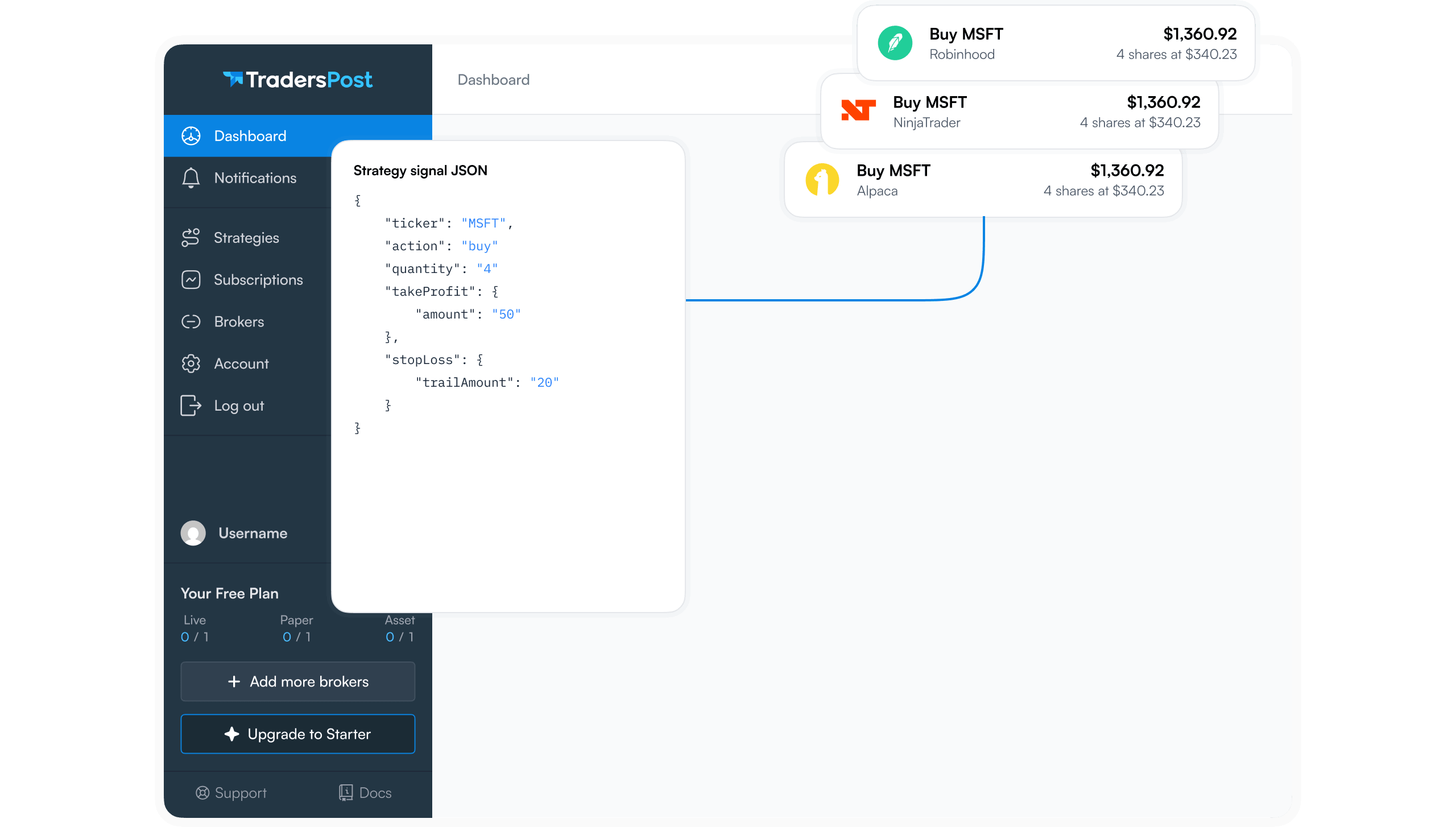
TradersPost can help automate a rules-based IPO trading workflow. You can create alerts in TradingView or TrendSpider and send them to TradersPost through webhooks.6 With a connected broker, TradersPost can then submit orders based on predefined entry, exit, and position-sizing rules. Paper test the full workflow first, since automated trading still involves market, connectivity, execution, and slippage risks.
What is the best strategy for trading a volatile IPO?
There is no single best strategy for every volatile IPO because liquidity, valuation, price swings, and broader market conditions can differ significantly. A disciplined approach typically uses predefined entry conditions, risk-based position sizing, planned exits, and testing on comparable historical setups. Avoid making decisions solely on hype or early price movement. Review an IPO trading strategies guide for educational frameworks, examples, and risk-management ideas.
Conclusion
A potential SpaceX IPO could create significant interest among retail investors, but attention alone is not an edge. The most important lessons are to separate confirmed information from speculation, understand the difference between private-market pricing and public-market trading, and prepare for volatility, limited early liquidity, and IPO-specific risks. A disciplined plan should define entry criteria, position size, risk limits, and exit rules before the first trade is placed.
Rather than reacting to headlines or chasing an opening-day move, build a repeatable process that can be tested under realistic conditions. Build your IPO trading rules in TradingView or TrendSpider, send alerts to TradersPost, and paper test your execution workflow before trading live. Taking these steps now can help you approach a SpaceX IPO, or any high-profile listing, with greater confidence and control. Prepare early and trade with purpose.
References
1 TradersPost Docs, Position Sizing
2 CNBC, SpaceX cuts retail IPO allocation (June 2026)
3 TechCrunch, SpaceX IPO closes up 19% (June 2026)
4 Monster Trading Systems, Trading System Performance Metrics
5 TradersPost Docs, Paper Trading
6 TradersPost Docs, Webhooks