Do Stop Losses Work After Hours
Stop-loss orders often don't trigger in extended trading sessions. See which brokers restrict stops after hours and how traders protect positions instead.

Marketing

Do stop losses work after hours? For most US stock traders, plain stop-loss orders do not trigger during pre-market, after-hours, or overnight sessions. Brokers commonly hold these orders until regular trading resumes because stop orders depend on monitored trigger prices and convert into market orders after activation.
The practical alternatives are usually limit orders, broker-approved stop-limit orders, smaller positions, or waiting for the regular session. The right choice depends on your broker, the security, available liquidity, and whether avoiding a poor fill matters more than guaranteeing an immediate exit.
The Short Answer for Most Brokers
Why Standard Stops Pause After Hours
A stop-loss order needs a live market price that the broker recognizes as a valid trigger. Extended-hours trading occurs across thinner, fragmented venues, so many brokers do not continuously monitor those prices for plain stop orders. Pomegra states that stop-loss orders are typically unavailable after hours because they require monitoring of the live market price.1
Interactive Brokers says plain stop orders do not work outside regular trading hours, although it distinguishes those orders from stop-limit orders.2 Robinhood likewise states that stop orders will not execute during extended or overnight hours. Orders placed then queue for the next regular market opening.3
What Executes During Extended Hours
Limit orders are the most consistently available choice. They execute at the specified price or better, or remain unfilled. That price control makes them more suitable for a session where a market order could sweep through a thin order book.
Stop-limit availability is broker-specific. Interactive Brokers allows stop-limit orders to work outside regular trading hours even though plain stop orders cannot.4 Robinhood takes a different approach, queuing stop-loss, stop-limit, and trailing stop orders entered during extended or overnight hours for the next regular session.
Broker Rules Differ
Do not infer one broker's behavior from another broker's order ticket. The important differences include:
- Interactive Brokers permits eligible stop-limit orders outside regular trading hours, but not plain stop orders.
- Its US overnight session accepts only Day Limit orders, which expire at 3:50 AM ET if unfilled.
- Robinhood queues market, stop, stop-limit, and trailing stop orders entered during extended or overnight hours for regular market open.
These distinctions also vary by product. An outside-hours setting on an account does not make every order type or symbol eligible.
How Regular Stop-Loss Orders Function
Stops Become Market Orders
A standard stop-loss order becomes a market order when the security reaches its stop price. This can help limit losses or lock in gains, but the stop price is only a trigger. It is not a guaranteed execution price.5
Once triggered, the order prioritizes execution rather than price. That mechanism works most predictably in an active market with enough bids and offers. In a fast or illiquid market, the actual fill can be materially worse than the stop price.
Stop-Limits Add Price Control
A stop-limit order becomes a limit order after reaching the stop price. The stop controls activation, while the limit defines the lowest acceptable sell price or highest acceptable buy price. The tradeoff is non-execution: if price moves through the limit too quickly, the position remains open.6
That distinction explains why a broker may permit stop-limit orders outside regular hours while rejecting plain stops. A limit order constrains the execution price, reducing the risk of an uncontrolled market fill in a thin session.
Triggers Need Continuous Quotes
A stop order is useful only if the broker is monitoring eligible quotes and treating them as trigger events. Extended-hours venues may have fewer participants, unlinked prices, and long intervals between trades. Brokers therefore commonly substitute limit-based execution for automatic market-order activation.
If a plain stop is unavailable, placing a sell limit at the intended exit price provides price control. It does not recreate a stop, however. A sell limit below the current market may execute immediately, while a sell limit above the market waits for a buyer at that price.
Extended Trading Windows Explained
Pre-Market and After-Hours Times
Robinhood defines regular market hours as 9:30 AM to 4 PM ET. Its extended sessions run from 7 AM to 9:30 AM and from 4 PM to 8 PM ET.7 Pomegra describes a broader pre-market window of 4 AM to 9:30 AM and an after-hours window of 4 PM to 8 PM, with selected brokers extending later.8
Your usable window is determined by the broker, account, security, and order instruction. A chart displaying pre-market candles does not prove that your broker will accept every order type shown in your strategy.
Overnight Versus Extended Hours
Interactive Brokers distinguishes the 4 PM to 8 PM after-hours window from its overnight session beginning at 8 PM ET. Trades completed overnight carry the following business day's trade date. Only Day Limit orders are accepted in its US overnight session, and unfilled orders expire automatically at 3:50 AM ET.9
This matters when configuring automation. An instruction accepted at 6 PM might be rejected or handled differently after 8 PM, even though both periods occur outside regular hours.
Restricted Order Types
Market orders are generally unavailable after hours, while conditional and complex orders are rarely supported. Limit orders remain the common order type because they prevent execution beyond the trader's specified price.10
Before carrying a position past the close, confirm how your broker treats each of these instructions:
- Plain stop and stop-loss orders
- Stop-limit and trailing stop orders
- Day and good-til-canceled limit orders
- Attached brackets and conditional orders
- Orders entered during overnight trading
Troubleshooting Orders That Do Not Fire
For an automated strategy, verify the signal source before blaming the broker. The TradingView or TrendSpider chart and alert must include extended-hours data if the strategy is expected to generate signals then.
In TradersPost, check Allow entry extended hours and Allow exit extended hours in the strategy subscription. Extended-hours orders must use limit orders because market orders are not allowed in that window. Then review the signal and trade logs to determine whether the alert fired, the platform processed it, and the broker accepted it.
Liquidity and Slippage Risks
Why Spreads Widen Overnight
After-hours volume is typically 5-15% of regular-session volume, and spreads can be 2-5 times wider. Pomegra reports that a liquid large-cap stock may show a $0.03 to $0.05 after-hours spread compared with approximately $0.01 or less during regular hours.11
With fewer orders at each price, even a modest trade can consume multiple levels of liquidity. A visible last price may therefore be a poor estimate of where the full position can exit.
Gap Risk at Reopening
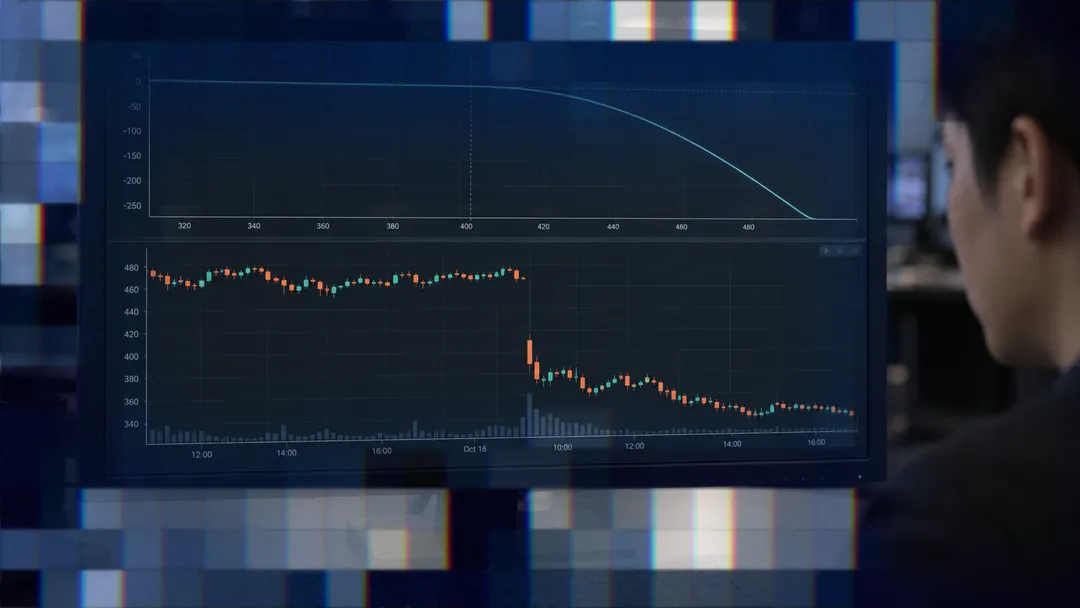
A dormant stop does not preserve its intended price when the market reopens. Vanguard gives the example of a stock closing at $18 and opening at $12 after news. The opening price activates the stop, but the resulting market order may execute near $12 rather than the intended stop level.12
Extended-hours prices may also differ from both the regular-session close and the next opening price. Robinhood identifies changing prices, lower liquidity, greater volatility, and wider spreads as extended-hours risks.13
Adjusting Position Size
Position size should reflect the available depth, not the volume seen during regular hours. Pomegra suggests reducing a typical 1,000-share regular-hours position to 200-500 shares after hours as protection against slippage.14
Large-cap stocks may absorb meaningful orders, while small-cap and micro-cap stocks can have negligible liquidity. Reducing size limits the damage from wide spreads, partial fills, and abrupt price changes, but it cannot guarantee an exit.
Working Around the After-Hours Gap
Use Limit Orders Instead
A limit order is the standard substitute when stops are not monitored. It executes only at the limit price or better. That outcome is predictable in price terms, but execution is not guaranteed.
For a long position, decide whether the goal is to exit immediately or wait for a recovery to a minimum acceptable price. A sell limit below the current bid may fill quickly, while a higher limit may remain open. Monitor partial fills and expiration instructions rather than assuming the entire position has closed.
Guaranteed Stops for CFDs
OANDA offers guaranteed stop-loss orders for CFDs across forex, indices, and gold. A GSLO guarantees execution at the specified price despite volatility or market gapping, including gaps over weekends and holidays. A premium applies only if the GSLO triggers.15
GSLOs can only be added during market hours. Outside market hours, an existing GSLO can only be moved farther from the current market price. This is a CFD feature from the cited provider, not a general stock-order capability.
Enable the Outside-RTH Setting
Interactive Brokers lets traders enable an outside-RTH preset in Trader Workstation so eligible orders may be activated, triggered, or filled outside regular hours. The same instruction can be selected per order through the Fill Outside RTH checkbox under Time in Force.16
The setting applies only when outside-RTH trading is available for that product. It does not override an order-type restriction or make an ineligible symbol tradable.
Automating Exits Beyond Market Hours
Send Stops Through Webhooks
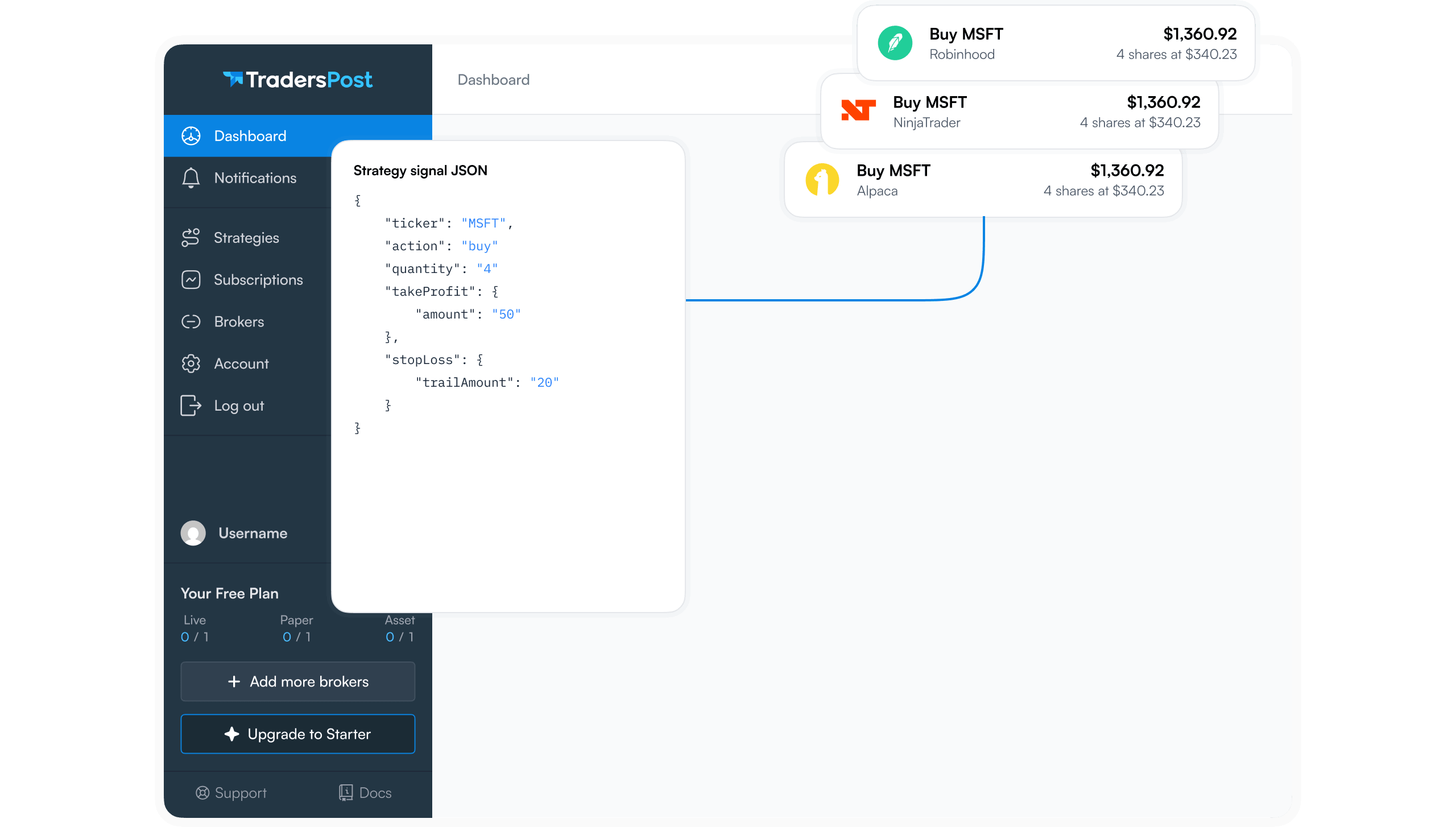
An automated signal can define the intended order before it reaches the broker. The webhook payload can use extendedHours for stock orders and include a stopLoss object. That object supports type, stopPrice, and limitPrice, with the limit price requiring a stop-limit type.
These fields control what is submitted, not what must fill. The connected broker's session rules, supported instructions, product eligibility, and available liquidity still determine the result.
Match Signals to Broker Windows
Include an accurate ISO-8601 value in the webhook's time field. The timestamp records when the signal was generated and supports latency measurement between signal generation and trade execution.
Align alert timing with the broker's exact pre-market, after-hours, and overnight windows. Also test whether orders expire at session end, queue for the opening, or remain active under their time-in-force instruction.
Next step: use TradersPost to test an extended-hours workflow with limit orders, timestamps, and defined stop parameters before enabling automatic submission for a live strategy.
Choosing Orders by Session
Regular Hours: Stops and Stop-Limits
During regular hours, stop-loss and stop-limit orders serve different priorities. A stop-loss prioritizes getting out after activation but provides no execution-price guarantee. A stop-limit controls the acceptable price but may never execute.
Stops can help manage losses or lock in gains when a position is not actively monitored. Use caution in volatile markets, where a temporary movement can activate the order before price rebounds.17
Extended Hours: Favor Limits
Limit orders are more reliable after hours because the outcome is bounded: execution occurs at the limit or better, or it does not occur. Pomegra suggests placing a limit slightly inside the current spread and submitting earlier in the after-hours session, when liquidity is generally stronger.18
Do not repeatedly chase price without checking depth. Moving a sell limit lower may improve fill probability, but it also increases the accepted loss.
When to Wait for Open
An order that remains unfilled for about 30 minutes may have an unrealistic price or insufficient liquidity. If the limit is reasonable but the book is thin, canceling and trying during regular hours may produce a better market.19
Waiting is often appropriate for small-cap and micro-cap positions with negligible extended-hours activity. The tradeoff is exposure to additional news and a possible opening gap.
Bottom Line on After-Hours Stops
What Works and What Does Not
- Plain stop-loss orders generally do not trigger during extended or overnight stock sessions.
- Limit orders are the most consistently available after-hours order type.
- Stop-limit orders offer price control, but availability varies by broker and execution is not guaranteed.
- Thin liquidity, wider spreads, and opening gaps can defeat the protection a trader expected.
Steps Before You Log Off
Check your broker's rules for stops, stop-limits, trailing stops, time in force, and overnight trading. Reduce position size when liquidity is thin, and confirm that every working order is marked for the intended session.
If you automate exits, paper test the full chain from chart alert to broker response. TradersPost can route extended-hours limit instructions and defined exit parameters, but the broker's rules remain decisive. Review logs after testing, then enable live automation only when order behavior matches your risk plan.
Frequently Asked Questions
Can Stops Work in Pre-Market?
Plain stop-loss orders are typically unavailable in pre-market because they require monitored trigger prices. Interactive Brokers restricts plain stops but can allow eligible stop-limit orders outside RTH. A limit order is the common substitute.
Why Did My Stop Not Execute?
Your broker may not activate stops outside regular hours. Robinhood queues stop, stop-limit, and trailing stop orders entered during extended or overnight sessions for the next regular opening. Also check whether your order lacked an outside-hours instruction.
Do Stop-Limits Work After Hours?
They can, depending on the broker and product. Interactive Brokers allows eligible stop-limit orders outside RTH. Once triggered, the order becomes a limit order, so a rapid move through the limit can leave it unfilled.
What Happens to Unfilled Orders?
Expiration depends on the broker and time-in-force instruction. Pomegra notes that most brokers cancel unfilled after-hours orders when the session ends, typically at 8 PM ET.20 Confirm whether your order expires, remains active, or must be resubmitted.
Are Guaranteed Stops Available for Stocks?
The OANDA source describes GSLOs for CFDs across forex, indices, and gold, not as a standard stock order type. They guarantee the specified exit price but must be placed during market hours and may carry a premium if triggered.
References
1 Pomegra: Placing After-Hours Orders
2 Interactive Brokers: Trading Outside Regular Trading Hours
3 Robinhood: Extended-Hours Trading
4 Interactive Brokers: Trading Outside Regular Trading Hours
5 Vanguard: Stock and ETF Order Types
6 Vanguard: Stock and ETF Order Types
7 Robinhood: Extended-Hours Trading
8 Pomegra: Placing After-Hours Orders
9 Interactive Brokers: Trading Outside Regular Trading Hours
10 Pomegra: Placing After-Hours Orders
11 Pomegra: Placing After-Hours Orders
12 Vanguard: Stock and ETF Order Types
13 Robinhood: Extended-Hours Trading
14 Pomegra: Placing After-Hours Orders
15 OANDA: Guaranteed Stop-Loss Orders
16 Interactive Brokers: Trading Outside Regular Trading Hours
17 Vanguard: Stock and ETF Order Types
18 Pomegra: Placing After-Hours Orders
19 Pomegra: Placing After-Hours Orders
20 Pomegra: Placing After-Hours Orders