Gamma Risk Vs Gap Risk
Gamma risk and gap risk both defeat stop-losses, but for different reasons. Compare their causes, overlap, and how to size and manage each one.

Marketing

Gamma risk vs gap risk comes down to acceleration versus discontinuity. Gamma risk is the danger that an option’s delta changes rapidly as the underlying moves. Gap risk is the danger that the next tradable price jumps beyond the previous price, leaving no opportunity to exit at levels in between.
Both risks can defeat a stop-loss, but for different reasons. High gamma can make exposure expand during a fast move, while a gap can skip the stop entirely. Options traders can face both at once, especially when carrying short-dated, short-premium positions overnight.
The practical response is to size for adverse moves, reassess exposure near expiration, reduce unnecessary event risk, and use defined-risk structures when a stop alone cannot cap the loss.
What Is Gamma Risk?
Delta, Gamma, and Acceleration
Delta estimates how much an option’s price changes for a $1 move in the underlying. Gamma estimates how much that delta changes for a $1 move. Gamma risk is therefore acceleration risk: the position’s directional sensitivity can change while the underlying is moving.1
At-the-money options generally carry the most gamma. Gamma decreases as an option moves further in or out of the money because another small underlying move has less effect on whether the contract finishes with intrinsic value.2
Long Gamma Vs Short Gamma
Long calls and puts have positive gamma. As the underlying moves in the favorable direction, delta increases in the position’s favor. The option buyer pays premium for this convexity, benefits from sufficiently large moves, and has a loss capped at the premium paid for an unhedged long option.
Short calls and puts have negative gamma. The seller collects premium and usually benefits from theta decay, but a fast move causes delta to accelerate against the position. The resulting loss can grow nonlinearly rather than at a fixed rate.3
Why Gamma Peaks Near Expiration
Gamma becomes concentrated in short-dated, at-the-money contracts as expiration approaches. A small underlying move near the strike can rapidly change the probability that the contract expires in the money, forcing delta to adjust sharply.4
That makes 0DTE exposure unstable. A same-day SPY option near the money in the morning can react differently late in the session because little time value remains. A position that appeared reasonably sized earlier can become oversized as gamma rises, even if its unrealized profit or loss has changed little.
What Is Gap Risk?
How Price Gaps Form
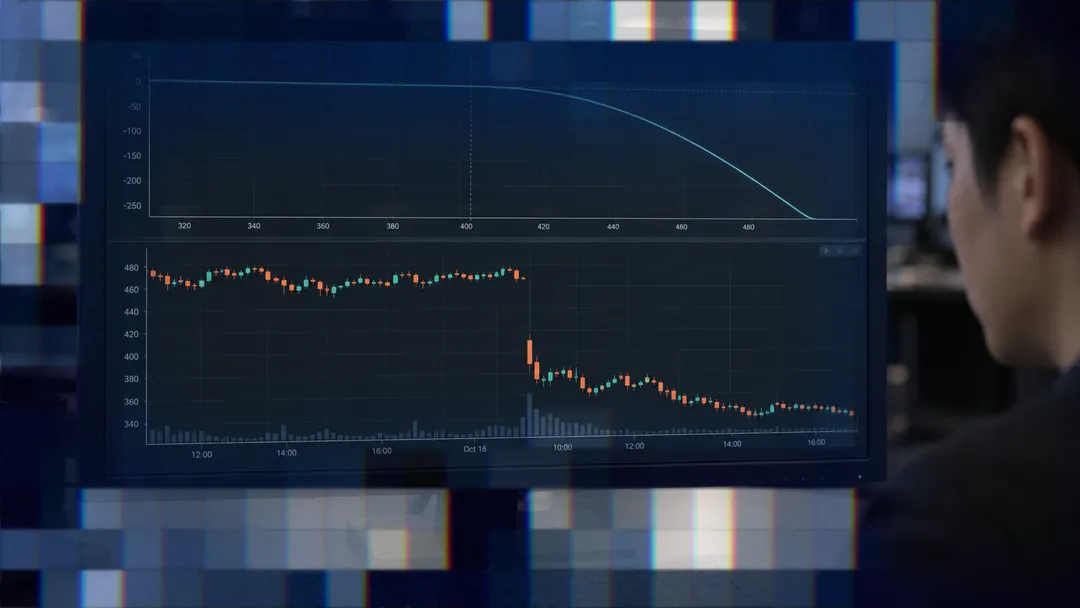
A gap is a discontinuity where the next trade occurs materially above or below the prior price, with no trading at the skipped levels. It often appears when information arrives while trading is closed, restricted, or thin.5
Common catalysts include earnings announcements, economic releases, central bank decisions, geopolitical shocks, policy changes, thin off-hours liquidity, weekends, and holidays. Longer closures provide more time for information to accumulate before being expressed at the next open.6
Why Stops Fail Across Gaps
A stop-loss can only execute at a price the market trades. If a long stock position has a sell stop below the closing price and the stock opens beneath that stop, the order may fill near the opening price rather than at the stop. The gap determines the realized loss.7
Stops remain useful during orderly trading, but they are not guaranteed execution prices. Position size must account for the possibility that the first available fill is materially worse than the planned exit.
Gap Risk Across Asset Classes
Market structure affects how often gaps appear:
- Equities typically have high gap exposure because of fixed exchange hours, after-hours earnings, and opening-auction repricing.
- Indices have medium-to-high exposure to overnight macroeconomic news and broad sentiment changes.
- Foreign exchange has lower weekday gap exposure because it trades almost continuously, but weekends and holidays still matter.
- Futures usually have lower weekday exposure than cash equities, although session breaks and weekends still create discontinuities.
These relative differences reflect trading hours and liquidity, not an assurance that one asset class cannot experience a severe jump.8
Gamma Risk Vs Gap Risk
Source of the Risk
Gamma risk comes from an option’s convex payoff and changing delta. Gap risk comes from the market jumping between tradable prices. Stocks, futures, currencies, and options can all experience gap risk, while gamma applies specifically to options and option-like exposures.
A stock trader can have gap risk without gamma risk. An intraday options trader can have gamma risk without holding through a conventional overnight gap. The distinction matters because the two risks require different stress tests.
Time Horizon and Trigger
Gamma changes continuously with the underlying price, time to expiration, and other pricing inputs. It becomes especially important in the final hours of an at-the-money 0DTE contract. Gamma is a model-based Greek that traders can monitor as conditions change.
Gap risk materializes at a discrete point, such as a market reopening or a rapid repricing during thin liquidity. Traders can identify scheduled periods with elevated event exposure, but the exact timing and size of a gap cannot be predicted with certainty.9
Who Is Exposed
Option buyers and sellers both have gamma exposure, but its sign differs. Buyers have positive gamma, while sellers have negative gamma. Any trader holding an exposed position through a market closure, weekend, holiday, or binary event can face gap risk.
A short-option seller can face both simultaneously. An overnight jump can carry the underlying through the short strike while negative gamma causes delta to expand against the trade.
Where Both Risks Overlap
Options Carry Both Risks
Options can amplify an underlying gap through leverage and gamma. A percentage change in the underlying can produce a much larger percentage change in the option premium. If a gap crosses a short strike, a modest credit can become a multiple-of-premium loss before the trader has an opportunity to adjust.10
The overlap is acute in short-dated, at-the-money contracts. Gamma is concentrated there, while little remaining time value cushions a sudden move.
Gaps Amplify Gamma Losses
Dynamic hedging assumes the trader can transact as exposure changes. An overnight gap breaks that assumption because no adjustment can occur between the close and the opening print.
For a short option, the loss is convex. A move twice as large does not necessarily produce only twice the loss because delta becomes increasingly adverse as the underlying moves through the strike.
Volatility Compounds Both
Gaps often arrive with higher implied volatility. A short-premium seller can therefore suffer directional loss, negative-gamma acceleration, and a vega loss at the same time. These effects compound, helping explain why gaps can be especially damaging to short-option positions.11
Sizing and Measuring Each Risk
Sizing for a Plausible Gap
Size a position so that a plausible adverse gap remains a survivable fraction of account capital. Do not treat the distance to the stop as the maximum loss. For short options, stress the projected loss after accounting for delta changes and a possible implied-volatility increase.12
The process should include three checks:
- Choose an adverse gap scenario appropriate for the instrument and event window.
- Reprice the full position under that underlying move and a volatility increase.
- Reduce quantity until the stressed loss fits the account’s risk budget.
The scenario is not a forecast or a guaranteed maximum. It is a sizing input designed to keep an unexpectedly poor open from becoming an account-threatening event.
Position-Level Gamma Exposure
Position-level gamma describes how quickly a specific trade’s delta is changing now. For a short-dated position, ask what the trade would look like after a sharp adverse move over the next hour, not merely after an average move.
A practical stress test for SPY or QQQ options is to examine the position after a 1.5-2% adverse underlying move. Gamma must then be reassessed as expiration approaches because an acceptable morning exposure can become excessive later in the session.13
Market-Level Gamma Exposure
Market-level gamma exposure, often called GEX, estimates aggregate options dealer positioning. When dealers are net short gamma, hedging tends to follow price by buying strength and selling weakness. When they are net long gamma, hedging tends to oppose moves by selling strength and buying weakness.14
GEX and gamma-wall levels are modeled, probabilistic zones. They may provide context for volatility and hedging flows, but they do not guarantee support, resistance, or direction.
Managing Gamma and Gap Risk
Close, Roll, or Hedge
Closing an option position removes its gamma exposure but gives up any remaining opportunity. Rolling to a later expiration or another strike can reduce gamma concentration while preserving a related position. An offsetting option or stock hedge can reduce net exposure, although active hedging requires monitoring and incurs execution costs.15
Events and Overnight Exposure
Review earnings schedules, economic calendars, central bank decisions, and policy events before holding risk overnight. If an event is not part of the trade thesis, reducing or closing the position before the session ends lowers the amount exposed to repricing.
Weekends and long holiday breaks deserve extra scrutiny because more time exists for information to accumulate while the market is closed.16
Defined Risk Vs Stops
A defined-risk spread uses a protective option to cap contractual loss at expiration, subject to execution, assignment, and expiration mechanics. This structure directly addresses the weakness of a stop that cannot execute while the market is closed. Smaller position sizes and hedges across assets can also reduce the effect of one adverse gap.17
Stops still have a role. They can automate exits during tradable conditions, but they should be treated as risk-control instructions rather than guaranteed prices.
Common Risk Mistakes
- Selling naked short-dated options without defining an acceptable maximum loss.
- Treating the stop price as the largest possible loss.
- Holding concentrated short-option exposure over weekends or known events.
- Sizing 0DTE positions like 30-45 DTE positions despite their different gamma profiles.
- Assuming delta neutrality removes gamma, vega, liquidity, and gap exposure.
Automating Defined-Risk Orders
Attach Stops and Profit Targets
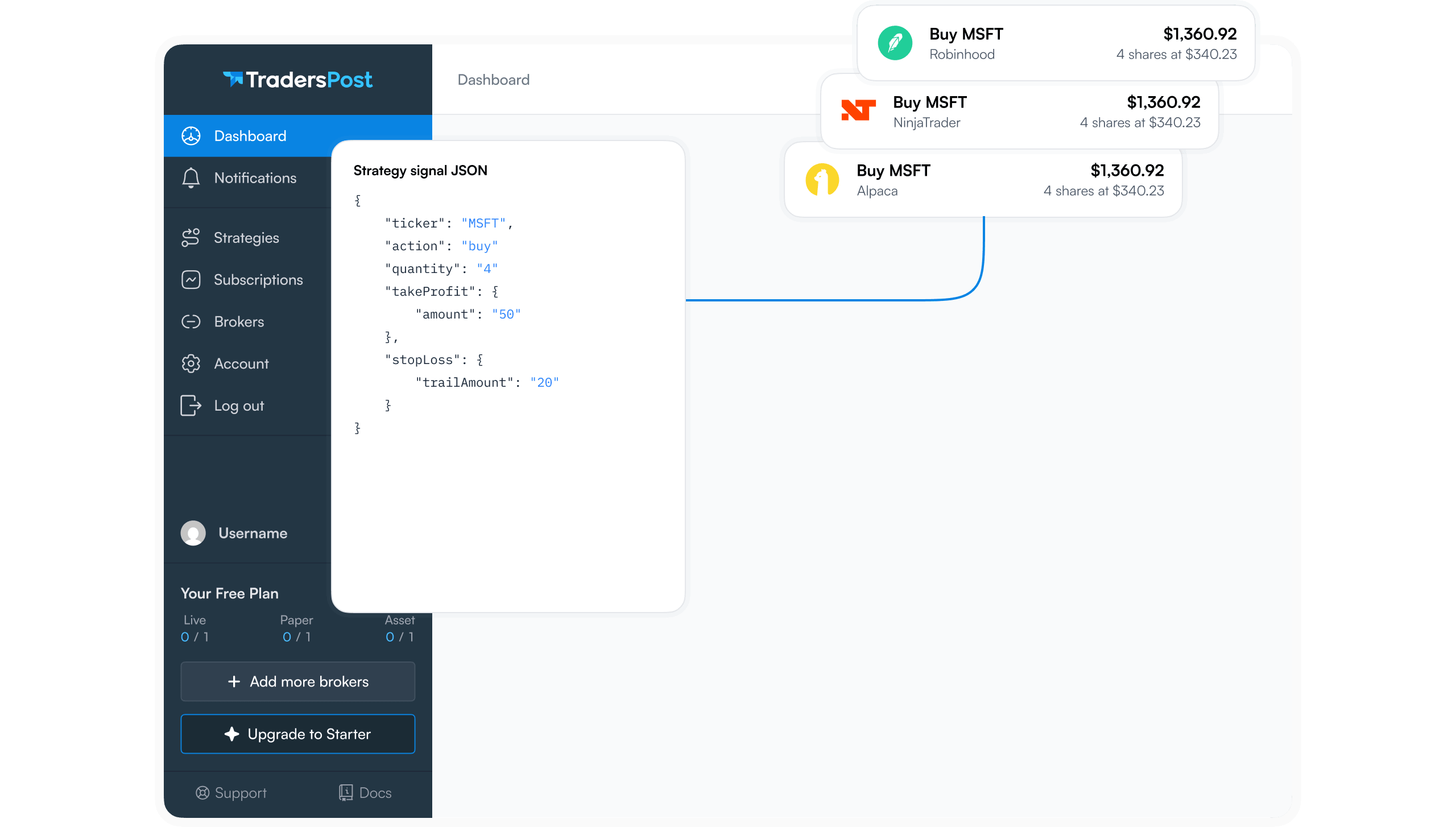
A TradingView alert sent through a webhook can include structured risk instructions. TradersPost accepts stopLoss and takeProfit objects. Stop-loss fields include type, percent, amount, stopPrice, and limitPrice. Take-profit fields include percent, amount, and limitPrice.
A stop can be configured as a fixed stop or stop-limit. A trailing stop uses trailAmount or trailPercent to maintain an offset from the highest or lowest price reached. The risk_dollar_amount and risk_percent quantity types require a stop loss before quantity can be calculated.
These controls automate the planned exit logic, but they do not turn a stop into guaranteed gap protection. The position still needs to be sized for a worse available fill.
Filter Stale Signals and Spreads
The rejectAfter field sets a maximum signal age of 1-30 seconds. It uses the signal’s time field when provided, otherwise it uses the webhook receive time. This can prevent an old signal from executing after market conditions have changed.
The bidAskSpreadFilter and bidAskSpreadFilterPercent fields set maximum dollar or percentage spreads for an entry or exit. They cannot prevent a gap, but they can reject execution after spreads have widened beyond the configured threshold.
Next step: connect a broker to TradersPost, test the workflow with a paper account, and attach stopLoss and takeProfit instructions to your TradingView alerts before considering live automation.
Bottom Line: Key Takeaways
What Separates Each Risk
- Gamma risk is the risk that an option’s delta accelerates as the underlying moves.
- Gap risk is the risk that the next tradable price jumps beyond intermediate prices and a planned stop.
- Gamma is specific to options, while gap risk can affect stocks, options, futures, currencies, and other instruments.
- Short options can combine negative gamma, gap exposure, and adverse volatility changes.
- Neither a stop-loss nor momentary delta neutrality removes the need for conservative sizing.
Practical Steps for Both
Size short-option positions for a plausible adverse gap after gamma and vega effects, not for the stop distance alone. Reassess gamma as expiration approaches, reduce unnecessary exposure before known events and long closures, and prefer defined-risk structures when the loss must remain capped regardless of the opening price.
Automated brackets and signal filters improve execution discipline, but they cannot create liquidity where no tradable price exists. Build the position so it can survive the scenario in which the stop fills materially worse than planned.
Frequently Asked Questions
Can Stops Protect Against Gaps?
Not at a guaranteed price. A stop can execute only at an available market price. If the market opens beyond it, the resulting loss is determined by the available fill rather than the stop level.18
Why Are Options Gaps Worse?
Options combine leverage with changing delta. A short option’s loss can accelerate as the underlying crosses its strike, while an accompanying volatility increase can add vega loss to the directional and gamma effects.
Who Has More Gamma Risk?
Buyers and sellers both have gamma exposure. Buyers have positive gamma and benefit from sufficiently large favorable moves, while sellers have negative gamma and can be hurt by fast moves despite collecting premium and benefiting from theta.
Does GEX Predict Direction?
No. GEX estimates how dealer hedging could influence volatility and price behavior. Positive gamma is associated with hedging that tends to dampen moves, while negative gamma can produce hedging that amplifies them. Neither condition predicts market direction.
How Should I Size?
Stress the position against a plausible adverse gap and, for short options, include gamma and vega effects. Reduce quantity until that modeled loss is survivable, then reassess the exposure as expiration approaches. Trim leverage before known events and weekends when the strategy does not require carrying the risk.
References
1 What Is Gamma Scalping?
2 Gamma Risk Explained for Options Traders
3 Gamma Risk Explained for Options Traders
4 What Is Gamma Scalping?
5 What Is Gap Risk in Trading?
6 What Is Gap Risk in Trading?
7 Gap Risk
8 What Is Gap Risk in Trading?
9 What Is Gap Risk in Trading?
10 Gap Risk
11 Gap Risk
12 Gap Risk
13 Gamma Risk Explained for Options Traders
14 What Is Gamma Scalping?
15 Gamma Risk Explained for Options Traders
16 What Is Gap Risk in Trading?
17 Gap Risk
18 Gap Risk Explained: Meaning, Types, Process, and Risks