Post-Only Order: How It Works
Post-only orders guarantee maker-side execution or cancellation. Learn how they work, why exchanges cancel or reprice them, and when to use one.

Marketing

A post only order is a limit order that must enter the order book as maker liquidity. If it would execute immediately against a resting order, the exchange cancels or rejects it instead. This condition gives traders control over whether an order provides or removes liquidity.
Post-only instructions can reduce fee uncertainty, protect passive quotes during transmission delays, and secure a place in the order queue. They also introduce execution risk because an order that crosses the book will not fill. The exact cancellation, repricing, and compatibility rules vary by exchange.
What Is a Post-Only Order?
Definition and Core Purpose
A post-only order is a limit order with an instruction that it may only add liquidity. It cannot execute immediately as a taker order. If the matching engine determines that the order would trade against existing liquidity, the venue cancels or rejects it before execution.
Phemex describes post-only as an option for limit or conditional limit orders that ensures the order enters the book as a maker order. If it would match an existing order immediately, the system cancels it.1 Traders commonly use the instruction when maker execution is part of their fee or quoting requirements.
Post-Only vs Standard Limit Orders
A standard limit order controls the worst acceptable execution price, but it does not guarantee a maker fill. If a buy limit arrives at or above the best ask, it can execute immediately. If it arrives below the best ask, it can rest on the book. A sell limit behaves in the opposite direction.
Post-only removes that ambiguity by making passive placement a condition. Coinbase states that a post-only limit order will always be a maker order. A limit order without post-only can become a maker order, a taker order, or an order that is partially maker and partially taker.2
Maker and Taker Fees Explained
Makers add resting orders to the book. Takers remove that liquidity by matching against those orders. The distinction affects both execution timing and the fee classification applied by the venue.
Coinbase classifies a valid market order as a taker order because it immediately interacts with available liquidity.3 Post-only exists to force maker-side placement for a limit order that might otherwise cross the spread.
How Post-Only Enforcement Works
Reject vs Cancel on Crossing
Exchanges may describe the failed placement as a rejection or cancellation, but the central result is the same: the incoming order does not take liquidity. Coinbase posts a post-only limit order only when it would not be placed at the same price as an existing order on the opposite side.4
Phemex automatically cancels a post-only order if it would trade immediately. Crypto.com similarly cancels a post-only order that would cross the order book on arrival.5
Prices That Trigger Cancellation
The best bid and best ask establish the boundary between passive and marketable prices. On Phemex, a post-only sell must be priced above the best bid, while a post-only buy must be below the best ask. Otherwise, the order is canceled.6
- A buy below the best ask can rest as maker liquidity.
- A buy at or above the best ask can trade immediately and fails the post-only test.
- A sell above the best bid can rest as maker liquidity.
- A sell at or below the best bid can trade immediately and fails the post-only test.
For a triggered Phemex short limit order, a price equal to or below the best bid would fill immediately unless post-only is enabled. With post-only applied, the order is prevented from taking that resting bid.7
What Happens After Cancellation
Standard post-only logic does not convert the order into an aggressive fill. The order is removed before it can trade, so there is no incoming partial fill followed by cancellation of the remainder. The trader or automated system must decide whether to submit a new price.
Crypto.com identifies this retry process as a limitation because traders must manually adjust and resubmit rejected orders, reducing efficiency in fast-moving markets.8
Post-Only Among Other Order Types
Post-Only as an Order Flag
Post-only is best understood as a modifier on a limit order, not as a replacement for the limit price. Raydium documents Post-Only alongside IOC, FOK, and Reduce-Only as flags that change the execution behavior of Limit or Stop-Limit orders.9
The limit price still defines the acceptable price. The post-only flag adds a second condition: the order must rest rather than match immediately.
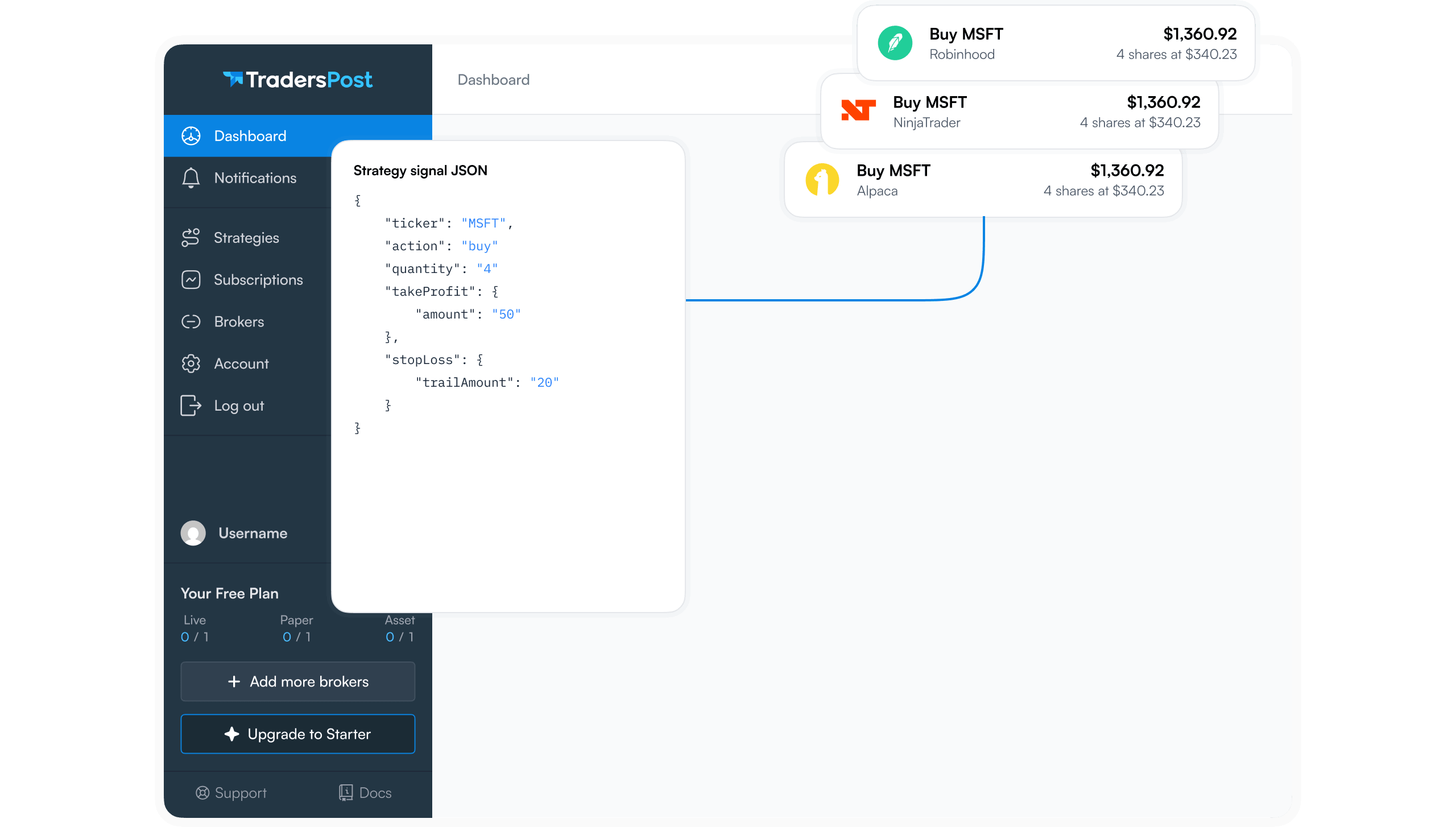
In TradersPost, the webhook orderType field sets the order type to create. If the connected integration does not support the submitted type, the platform falls back to the default order type configured in the strategy subscription. Post-only is not a documented universal value for that field, so traders should not assume that sending a custom post-only string will create the intended behavior.
Combining Post-Only With Reduce-Only
Raydium allows Post-Only and Reduce-Only on the same order.10 This combination can support a passive exit that cannot increase or reverse the position. If the price would take liquidity, the order is canceled. If the order would increase the position, Reduce-Only prevents execution.
Raydium also identifies Scale plus Post-Only as a passive ladder entry. A Scale order divides a larger order across a price range, while Post-Only prevents each submitted limit from crossing the book on placement.
Incompatible Time-in-Force Settings
Post-only conflicts with instructions designed around immediate execution. Immediate or Cancel attempts to fill available quantity immediately and cancels the remainder. Fill or Kill requires the full quantity to execute immediately or not at all.
Coinbase states that IOC and FOK instructions produce taker orders.11 Pairing either instruction with post-only would create contradictory requirements: one demands immediate execution, while the other prohibits it.
Why Traders Use Post-Only Orders
Earning Maker Fees
The direct reason to use post-only is fee classification. Phemex states that a post-only limit order ensures the maker fee applies instead of the taker fee.12 That can matter when a strategy submits frequent passive quotes or operates with a small expected edge per fill.
Raydium notes that market orders always pay taker fees, while a limit order pays maker fees if it rests and taker fees if it matches immediately. Its Post-Only flag targets maker fees by rejecting placements that would cross.13
Protecting Against Send Latency
An order can appear passive when a strategy generates it but become marketable before reaching the matching engine. For example, a buy limit below the ask at signal time can cross if the ask falls while the order is in transit.
Post-only makes the intended role explicit. Either the order arrives at a passive price and rests, or the venue refuses it. This protection does not remove latency, but it prevents latency from silently changing a maker quote into a taker fill.
Queue Position and Priority
A posted order gains a position in the queue at its price. In a price-time system, earlier orders at the same price generally execute before later orders, so repeated cancellation and resubmission can reduce fill probability.
Coinbase uses Price-Display-Time Priority. Taker orders match the earliest maker order at the best price before moving to later orders at that price.14 A post-only order can establish queue position, but it does not guarantee that enough opposing flow will arrive to fill it.
Smart Post-Only Solves Retries
Standard Post-Only Limitations
A standard post-only order fails if its price matches or crosses the best opposite-side price. In a fast market, a strategy may repeatedly calculate a passive price that becomes marketable before each order reaches the exchange.
Manual repricing adds delay and may cause the trader to miss the intended entry. Automated retries can also lose queue position and must account for changing balances, margin, and market conditions.
How Smart Repricing Works
Crypto.com's Smart Post-Only feature checks whether an order would trade immediately. If it would, the exchange adjusts the price by one tick so it can enter as a maker order. Buys are moved below the best ask, while sells are moved above the best bid.15
In Crypto.com's published example, the best ask is $100.00 and an incoming Smart Post-Only buy is priced at $100.03. The system moves the order by one $0.01 tick and places it at $99.99 as a maker order.16
Access and Restrictions
Crypto.com currently makes Smart Post-Only available through its Exchange API. The API request uses SMART_POST_ONLY in the exec_inst field. The instruction cannot be combined with REDUCE_ONLY, and the adjusted order is rejected if its margin requirement exceeds available margin.17
Smart repricing improves placement efficiency, but traders must accept that the final resting price can differ from the submitted price. That difference should be included in signal validation and execution monitoring.
Post-Only Rules Across Exchanges
Coinbase Post-Only Rules
Coinbase posts a post-only limit only when it would not be posted at the same price as an existing contra-side order. The exchange does not allow post-only limit orders during an Auction. It also applies the standard minimum order size but no maximum order size to post-only limit orders.18
Phemex and Crypto.com Conditions
Phemex requires post-only sells to remain above the best bid and post-only buys to remain below the best ask. Crypto.com cancels a standard post-only order when it would cross the book. These rules share the same maker-only objective, although Crypto.com also offers its API-based smart repricing alternative.
Raydium Perps Post-Only Flag
On Raydium Perps, Post-Only can modify a Limit or Stop-Limit order. If the order would match resting liquidity when placed, Raydium cancels it rather than allowing the order to cross. The flag therefore changes execution semantics without removing the underlying limit price.
Deciding When to Use Post-Only
Situations Where Post-Only Fits
Post-only fits strategies where maker status is more important than immediate execution. Raydium describes a Limit plus Post-Only order as a strict maker quote with no accidental take. It also identifies Scale plus Post-Only as a passive ladder entry.
- Use it when taker execution would invalidate the order's fee assumptions.
- Use it when a quote must rest before filling.
- Use it for passive ladders where immediate crossing is undesirable.
- Avoid it when entering or exiting immediately matters more than maker status.
Trade-Offs Before Using It
Post-only guarantees execution behavior, not execution itself. An order can be canceled on arrival, remain unfilled behind earlier orders, or lose relevance as the market moves away. Standard post-only may also require repricing and resubmission after each failed placement.
Before enabling it, define how the strategy handles a rejection. Possible responses include skipping the signal, calculating a new passive price, waiting for the next strategy evaluation, or switching to another approved order instruction. The response should be explicit rather than an uncontrolled retry loop.
Support Varies by Broker Connection
TradersPost broker integrations define which order types the platform can send through each connection. Its Coinbase integration lists market, limit, and stop-limit orders. Its Crypto.com integration lists limit, market, stop, and stop-limit orders. Neither integration lists post-only as a separate supported order type.
Check the supported order types for your specific broker connection before building post-only assumptions into an automated strategy. A webhook order type that the connection does not support falls back to the default configured in the strategy subscription, which may produce different behavior from the intended maker-only instruction.
Next step: review your TradersPost broker connection and strategy subscription settings before deployment, then test the actual order behavior with controlled size.
Conclusion
Bottom Line
- A post-only order must rest as maker liquidity or be canceled or rejected.
- A standard limit order can be maker, taker, or partially both.
- Post-only controls fee classification but does not guarantee a fill.
- Smart Post-Only can reprice a crossing order instead of canceling it.
- Exchange rules and integration support must be checked before automation.
Post-only is useful when maker-side execution is a strict strategy requirement. Its main cost is missed execution when the submitted price becomes marketable. Validate the venue's crossing rules, retry behavior, compatible flags, and integration support before relying on it in live trading.
Frequently Asked Questions
What If It Would Fill Immediately?
Most venues cancel or reject the order instead of allowing it to execute. Phemex and Crypto.com cancel a crossing post-only order, while Coinbase only posts it when it does not match an existing contra-side order at the same price.
Does It Guarantee Maker Fees?
It guarantees that the order either enters as maker liquidity or does not execute on entry. You therefore avoid a taker fee on that order, but you do not receive a fill guarantee. A canceled order pays no trading fee and gains no market exposure.
Can Market Orders Be Post-Only?
No. A market order is designed to execute immediately against available liquidity. Post-only applies to limit-based orders because they can rest at a specified price. Raydium lists Post-Only for Limit and Stop-Limit orders, not Market orders.
Standard vs Smart Post-Only?
Standard post-only cancels or rejects an order that would cross. Crypto.com's Smart Post-Only instead moves the price by one tick so the order can rest as maker liquidity. Its Smart Post-Only feature is currently available through the Exchange API.
Can It Combine With IOC?
No. IOC and FOK seek immediate execution and produce taker orders under Coinbase's rules. Post-only prevents immediate taker execution, so the instructions have conflicting purposes.
References
1 Phemex: Post Only Order
2 Coinbase Exchange Trading Rules
3 Coinbase Exchange Trading Rules
4 Coinbase Exchange Trading Rules
5 Crypto.com: Smart Post-Only Orders
6 Phemex: Post Only Order
7 Phemex: Post Only Order
8 Crypto.com: Smart Post-Only Orders
9 Raydium Perps: Order Types
10 Raydium Perps: Order Types
11 Coinbase Exchange Trading Rules
12 Phemex: Post Only Order
13 Raydium Perps: Order Types
14 Coinbase Exchange Trading Rules
15 Crypto.com: Smart Post-Only Orders
16 Crypto.com: Smart Post-Only Orders
17 Crypto.com: Smart Post-Only Orders
18 Coinbase Exchange Trading Rules