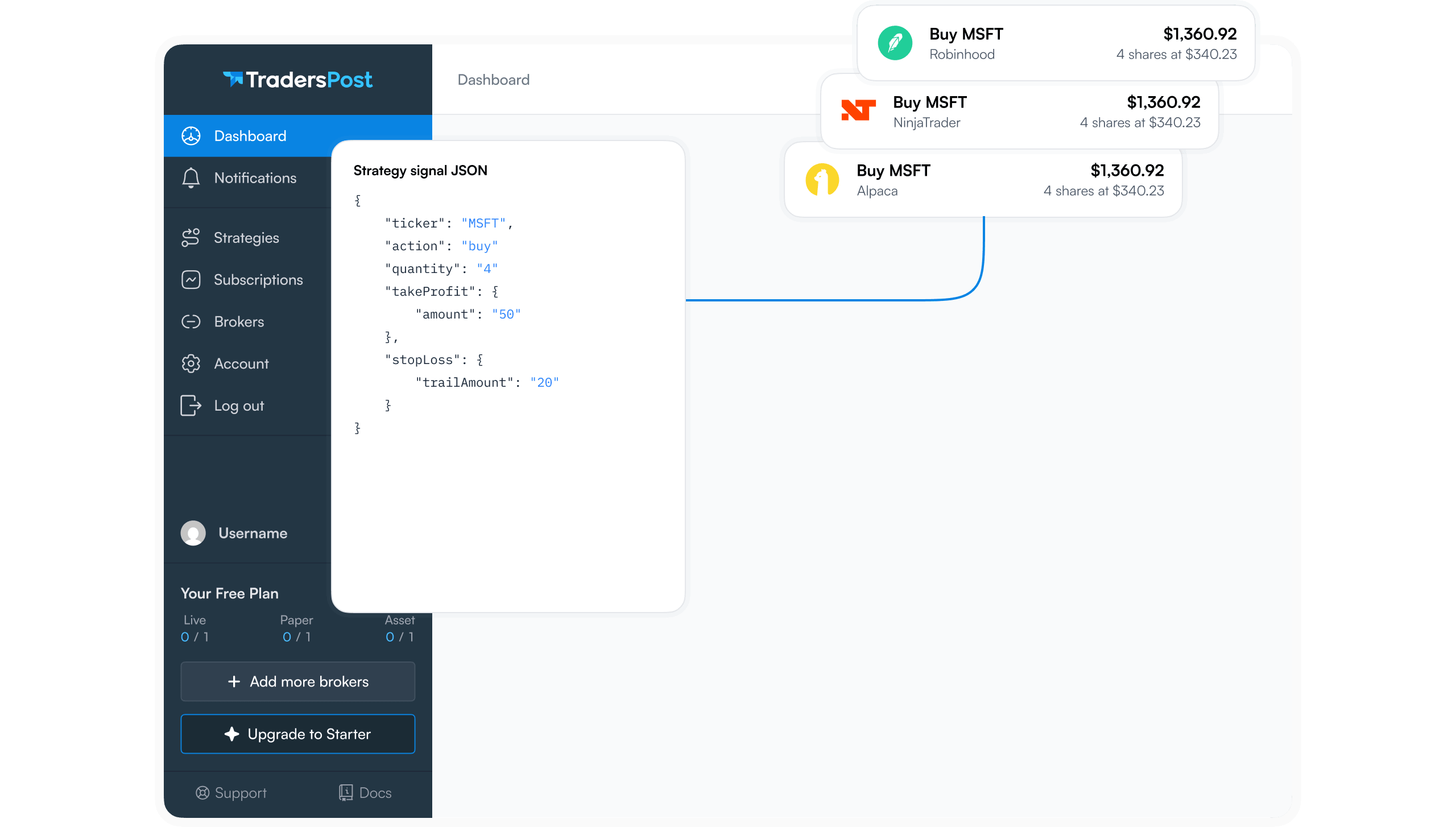
Automated Crypto Dip Buying: Recovery Playbook
Learn automated crypto dip buying with volatility filters, recovery triggers, and profit ladders. Test rule-based alerts before trading live 24/7 on exchanges.

Marketing

Bottom Line
- A dip-buying bot may require BTC to decline at least 8% from its 72-hour high and for realized volatility to be above its 20-day median before entering a position.
- Entry conditions for a dip-buying system include a close above the prior four-hour candle high and recovery candle volume exceeding the prior 20-candle average.
- To avoid indiscriminate buying, entries are allowed only when the 14-period ATR is below 6% of the current price or after ATR has stopped rising for two completed bars.
- A BTC strategy might trigger a long position when the price is at least 10% below its highest close of the previous five days, with a 15-minute candle closing above the 20 EMA and 14-period RSI crossing above 35.
- Multi-timeframe confirmation may require a 15-minute long signal to be valid only if the 4-hour RSI is above 40 and the 4-hour close remains above its 200 EMA.
A 12% crypto selloff can be a bargain, the start of a deeper liquidation, or just noise in a high-volatility market. The difference is rarely obvious in real time, which is why automated crypto dip buying needs more than a simple “buy when price falls” rule. A recovery strategy must identify whether selling pressure is exhausting, define exactly when to enter, and control how much capital is committed if the market keeps falling.
This guide breaks down a practical, rule-based recovery playbook for buying dips without relying on round-the-clock chart watching or emotional decisions. You will learn how to build volatility filters that avoid chasing routine price swings, use recovery triggers to confirm that momentum is stabilizing, and structure profit ladders that systematically scale out as price rebounds. We will also cover alert logic, position sizing, and testing methods that let you validate each rule before connecting it to a live exchange.
The goal is not to catch every bottom. It is to create a repeatable process for selectively deploying capital during sharp declines, with predefined entries, exits, and risk limits that can operate 24/7.
What Is Automated Crypto Dip Buying?
Reactive Dip Buying vs. Scheduled DCA
Automated crypto dip buying is a rule-based system that submits buy orders only after a defined market event occurs. The event may be a sharp correction, an intraday volatility spike, a retest of a higher-timeframe support zone, or a recovery signal following a selloff. Rather than buying because a chart “looks cheap,” the system requires measurable conditions before it enters.
This differs from scheduled dollar-cost averaging (DCA). A DCA plan invests a fixed amount at fixed intervals, such as buying $200 of BTC every Monday, regardless of whether Bitcoin is trending, consolidating, or falling sharply. Scheduled DCA prioritizes consistency and long-term accumulation. Event-driven dip buying prioritizes price context and selectively deploys capital when a predefined setup appears.
For example, a dip-buying bot might require all of the following before opening a position:
- BTC has declined at least 8% from its 72-hour high.
- Realized volatility is above its 20-day median, confirming an unusual move.
- Price closes back above the prior four-hour candle high or reclaims a defined support level.
- Volume on the recovery candle exceeds the prior 20-candle average.
The purpose is not to buy every red candle. It is to avoid entries during ordinary noise or uncontrolled breakdowns by requiring both a qualifying decline and evidence that selling pressure is stabilizing. Neither reactive dip buying nor DCA guarantees a profit. Crypto assets can continue declining well after an initial correction, support retest, or apparent reversal.
Why Corrections Create an Automation Use Case
Broad selloffs can create opportunities, but they also expose the limits of manual execution. Consider an early-June-style correction in which BTC and major altcoins fall 7% to 15% over several hours, liquidations accelerate, and prices then recover a meaningful portion of the decline overnight. A trader monitoring only part of the move may miss the recovery confirmation, hesitate because the prior candles were violent, or enter without placing a stop or profit target.
Crypto trades continuously, and the highest-volatility periods often occur outside a trader’s normal working hours. Automation is valuable because it can monitor conditions across markets, calculate position size, and place linked exit orders without requiring a discretionary decision during the most stressful part of the move.
A properly configured system decides the critical variables before volatility expands:
- Entry condition: what defines a valid dip and recovery.
- Position size: how much capital is allocated per signal.
- Risk exit: where the thesis is invalidated if the selloff resumes.
- Profit-taking logic: how gains are realized if price rebounds.
The Core Components of a Dip-Buying Recovery System
A repeatable recovery system has six core building blocks: a dip definition, a volatility filter, a recovery trigger, position sizing, a risk exit, and a take-profit ladder. The dip definition may be a percentage decline from a rolling high. The volatility filter can exclude low-quality moves or prevent entries during extreme dislocation. The recovery trigger confirms that price has reclaimed a level, closed above a moving average, or broken a short-term lower-high sequence.
The objective is not to catch the exact bottom. Exact-bottom entries are not a reliable automation target because the lowest print is only identifiable after the fact. The objective is to participate after a qualifying decline and observable evidence of stabilization or recovery. This article presents a system template for testing and execution, not a prediction-based crypto trading strategy.
Define a Dip Worth Buying
Set a Measurable Correction Threshold
An automated dip-buying system needs a numeric definition of a correction. “Price looks cheap” cannot be coded, tested, or audited. Define the trigger relative to a recent reference point, trend measure, or volatility measure, then apply it consistently.
- Percentage drawdown: buy eligibility begins only after BTC falls at least 8% from its rolling 24-hour high, or after an altcoin declines 12% from its rolling seven-day high.
- Deviation from trend: trigger when ETH closes at least 2 ATR below its 20-period moving average on the strategy timeframe.
- Multi-condition trigger: require both a 10% decline from the 72-hour high and an RSI reading below 35 before evaluating an entry.
Thresholds must be asset-specific. A 5% move can be meaningful for BTC during a quiet market, while it may be routine noise for a lower-liquidity altcoin. Ethereum generally supports wider thresholds than Bitcoin, and smaller altcoins often require wider drawdown thresholds, lower position sizes, and stricter liquidity controls. Test several values across bullish, bearish, and high-volatility periods. A threshold that performed well in a low-volatility uptrend may repeatedly enter too early during a broad deleveraging event.
Use Volatility Filters to Avoid Indiscriminate Buying
A large red candle is not automatically a mean-reversion opportunity. When volatility is expanding, price may be repricing into a sustained downtrend rather than temporarily overshooting. A dip trigger should therefore be paired with a filter that identifies whether market conditions are stabilizing.
- Allow entries only when the 14-period ATR is below 6% of current price.
- Alternatively, permit the drawdown trigger but wait until ATR has stopped rising for two completed bars.
- Reject entries when Bollinger Band width is expanding rapidly, indicating an active volatility breakout rather than compression.
- Block new buys after more than five consecutive bearish candles on the execution timeframe.
- Flag abnormal sell pressure when volume exceeds 2.5 times its 20-period average, then require a stabilization signal before entry.
For altcoin strategies, add a broad-market filter. For example, only deploy an SOL or meme-coin dip-buy order when BTC has closed above its short-term moving average or has avoided making a new 4-hour low for three consecutive bars. This prevents an altcoin bot from repeatedly buying isolated “dips” while Bitcoin is driving a market-wide liquidation.
Avoid False Precision Around Bottoms
A robust system does not need to buy the exact low. Exact-bottom logic is fragile because the lowest traded price is only known after the fact. Instead, define an entry zone and require evidence that selling pressure has weakened.
- Enter within a zone from 8% to 12% below the 24-hour high, rather than at one fixed price.
- Require a close back inside the lower Bollinger Band after a temporary break below it.
- Require a higher low on a lower timeframe, or a reclaim of a 20-period moving average.
Confirmation usually produces a worse nominal entry than a blind limit order. The benefit is fewer entries during persistent downtrends, where an apparently attractive dip can continue falling for multiple sessions. For automation, that trade-off is usually favorable: prioritize a repeatable recovery setup over an untestable attempt to capture the precise bottom.
Build Recovery Triggers for Safer Entries
Choose a recovery confirmation rule
A dip threshold alone is not an entry signal. The automation should wait for evidence that selling pressure has eased and buyers have regained control. Use an event-driven rule with unambiguous inputs, so the strategy can be backtested on the same candle data it will use in live execution.
- Bullish close after an oversold reading: enter when RSI has fallen below a defined level, such as 30, and the next completed candle closes above its open.
- Previous-candle-high reclaim: enter only when price closes above the high of the prior candle after the selloff.
- RSI recovery: require RSI to cross back above a threshold, such as 35, after first moving below 30.
- Short-term moving-average reclaim: enter when price closes above a 20-period EMA after qualifying as a dip.
For example, a BTC strategy could trigger a long only when price is at least 10% below its highest close of the previous five days, then a completed 15-minute candle closes above the 20 EMA while 14-period RSI crosses above 35. This rule defines the decline, the recovery event, and the timing of execution. Avoid conditions such as “support appears to hold” or “the reversal looks strong.” If a condition cannot be expressed as deterministic code, it cannot be reliably tested or automated.
Use multi-timeframe confirmation carefully
A lower-timeframe recovery can be filtered by broader market conditions. For example, a 15-minute EMA reclaim may be eligible for entry only when the 4-hour market is not decisively bearish. This can reduce entries taken during persistent liquidation trends, when short-term bounces often fail quickly.
- Allow 15-minute long signals only if 4-hour RSI is above 40.
- Require the 4-hour close to remain above its 200 EMA.
- Block entries if the asset has printed a fresh multi-week closing low within the last four hours.
Use one or two higher-timeframe filters, not an accumulation of loosely related confirmations. Every additional filter reduces trade frequency and can create a backtest that appears robust only because it was fitted to a specific historical period. Measure the effect of each filter on trade count, win rate, average loss, maximum drawdown, and performance across different volatility regimes.
Prevent duplicate entries during choppy recoveries
A common automation failure occurs when price repeatedly crosses an EMA or RSI threshold during a weak recovery. Without position-state controls, the bot may submit multiple buy orders around the same recovery level, unintentionally increasing exposure.
- Cooldown: prohibit new long entries for a fixed period, such as 12 completed 15-minute candles, after an entry.
- One-entry-per-dip rule: mark the current dip as traded and require a new qualifying selloff before another signal can open a position.
- Maximum position limit: cap total notional exposure, contracts, or coin quantity regardless of signal count.
- Signal-state logic: require the recovery condition to reset, such as RSI first falling back below 30 or price declining another defined percentage, before permitting a new entry.
Define whether a second purchase is a planned scale-in or a completely new trade. A scale-in should have its own price spacing, maximum number of additions, and combined stop or invalidation rule. A new trade should be permitted only after the prior position has been closed and a fresh dip-recovery sequence has occurred.
Size Positions and Set Downside Risk Rules
Use Fixed-Risk Sizing Instead of Emotional Sizing
A larger decline does not automatically justify a larger position. A 15% drop may represent a high-quality mean-reversion setup, but it may also reflect a trend break, liquidation cascade, or market-wide risk event. Automated systems should size from predefined downside risk, not from the apparent attractiveness of the discount.
Use a fixed-risk framework for every entry:
- Set the maximum account percentage to risk on one trade, such as 0.5% to 1%.
- Define the invalidation price before submitting the order.
- Calculate position value from the percentage distance between entry and invalidation.
For example, a $10,000 account risking 1% has a maximum loss budget of $100. If the entry is $100 and the stop is 5% lower at $95, the maximum position value is approximately $2,000: $100 divided by 0.05. This excludes trading fees, funding costs, and slippage, so a production bot should either reduce the position slightly or include an execution-cost buffer in its calculation.
For spot markets, position value should generally be capped by both risk-based sizing and a maximum portfolio allocation. For perpetual futures or margin products, leverage must be modeled separately. Leverage can increase liquidation risk, amplify losses during slippage, and create exposure beyond the intended spot-equivalent allocation.
Choose an Invalidation Rule Before Entering
A dip-buying signal needs a rule that identifies when the expected recovery has failed. The bot should place, monitor, or synthetically enforce that rule before or immediately after entry. Suitable invalidation methods include:
- Fixed percentage stop: Exit if price falls a defined percentage below entry, such as 4% or 6%.
- ATR-based stop: Place the stop a multiple of average true range below entry, such as 1.5 ATR, to adapt to changing volatility.
- Correction-low stop: Exit on a close below the low established during the pullback.
- Recovery-level failure: Exit if price closes back below a reclaimed moving average, breakout level, or prior support after the recovery trigger.
Match the stop logic to the signal timeframe. A 1% stop may be reasonable for a low-volatility hourly setup, but it is often too tight for a volatile altcoin trading on five-minute candles. Use candle-close conditions when the strategy is designed to tolerate intrabar noise, and use hard stop orders when immediate downside containment is more important.
Crypto markets can move rapidly across thin order books. Stops may fill below their trigger price during liquidation events, exchange outages can delay execution, and order behavior differs across venues.1 Backtests should include conservative slippage assumptions and live systems should verify order status, partial fills, and exchange-specific trigger rules.
Decide Whether to Scale In After a Deeper Dip
Scaling in is valid only when it is planned as part of the strategy. A controlled model might allocate 60% of intended exposure at the initial recovery trigger, then reserve 40% for a second entry only if a separate condition occurs, such as a retest of support followed by another confirmed close above the recovery level.
This differs from averaging down. Averaging down adds exposure merely because price declined, often without a defined limit or new evidence that the setup remains valid. An automated system should never treat a falling price alone as a scale-in signal.
- Set a maximum number of entries, such as two.
- Cap total notional exposure across all entries.
- Calculate the stop and risk from the combined average entry price.
- Apply one hard invalidation rule to the full position.
If the combined position exceeds the original risk budget after the second entry, reduce its size or reject the scale-in order. The risk limit should remain fixed even when the market offers a deeper discount.
Automate Take-Profit Ladders for the Recovery
Why a Take-Profit Ladder Fits Dip Recoveries
Dip-buy recovery rallies frequently encounter supply before they become durable reversals. Common stall points include the prior support level that failed during the selloff, intraday or higher-timeframe moving averages, session VWAP, anchored VWAP from the breakdown, and Fibonacci retracement zones. A bot that holds for one distant target can turn a profitable rebound into a flat or losing trade when price rejects at one of these levels.
A take-profit ladder converts that uncertainty into a predefined trade-management process. The strategy sells portions of the position as price reaches technically relevant areas, securing realized gains while preserving residual exposure if the recovery expands into a broader trend reversal. The ladder is not a forecast that every target must be reached. It is a conditional execution plan: if price trades at a target, the bot reduces exposure according to the specified allocation.
For automation, calculate targets from both risk and market structure. A target that is theoretically 2R but sits beyond a major weekly resistance may have a lower probability of filling than a slightly closer level aligned with the asset’s actual volatility.
Example Three-Target Recovery Ladder
Define R as the initial risk per unit, measured from entry to the invalidation level. If a bot enters at $100 and places its protective stop at $95, initial risk is $5 per unit. Therefore, 1R is $105 and 2R is $110, before trading fees, funding costs, and slippage.
- Target 1: Sell 40% at 1R ($105) or at the nearest confirmed resistance, whichever is more realistic for the setup.
- Target 2: Sell 35% at 2R ($110) or near the 50% retracement of the preceding decline.
- Runner: Manage the remaining 25% with a trailing stop, a short-term trend filter, or a higher-timeframe resistance target.2
After the first fill, the bot may move the stop on the remaining position to breakeven, or to a level just below the reclaimed support zone. That decision should be tested separately, since an aggressive breakeven rule can remove the runner during normal retests. Use volatility-adjusted spacing rather than fixed percentages across all assets. For example, a 2R target may be routine for a liquid BTC recovery but unrealistic within a short holding window for a lower-liquidity altcoin with shallow order books.
Add a Time-Based or Trend-Based Exit
Not every recovery resolves cleanly. Price can remain above the invalidation level without reaching the first target, tying up capital while momentum decays. Automated dip-buy systems should therefore include a timeout or trend-failure rule in addition to price targets and stops.
- Exit the remaining position if price fails to make a new high within 24 hours of entry.
- Exit if a defined timeframe closes below a short-term EMA, such as the 20-period EMA on the execution chart.
- Exit if price loses the recovery VWAP after trading above it, particularly when volume expands on the breakdown.
Time-based exits are especially useful for short-term event-driven strategies, where the expected catalyst is a rapid liquidity rebound after a liquidation cascade, news shock, or funding-driven flush. If the rebound does not develop within the tested time window, the original thesis has weakened even if the stop has not been hit.
Create the TradersPost Automation Workflow
Map the Strategy From Chart Signal to Order
Build the automation as a defined sequence, not as a collection of independent settings. Start with the chart logic: identify the dip condition, define the recovery confirmation, and specify the exact bar-close event that qualifies for entry. For example, a BTCUSD strategy may require price to close 3% below a 20-period moving average, then close back above the prior bar’s high before issuing a long entry.
Next, convert that chart event into an execution instruction. Connect the supported trading account in TradersPost, create the strategy, select the account and instrument mapping, then configure the entry and exit behavior. Validate that the execution setup uses the same:
- Ticker symbol: The chart symbol and the executable symbol must refer to the same market. Confirm spot versus perpetual futures, quote currency, and exchange-specific notation.
- Side: A dip-buying entry should explicitly send a buy or long instruction, while an exit should send sell, close, or reduce-position instructions as intended.
- Order type: Use market orders only if immediate execution is required and slippage is acceptable. Use limit orders only when the strategy can tolerate missed fills.
- Quantity rule: Define fixed quantity, fixed notional value, percentage-of-equity sizing, or a capped scaling rule.3 Do not rely on an undefined default order size.
- Exit logic: Specify whether the recovery target, stop loss, trailing exit, or time-based exit is generated by the chart alert or managed in the execution configuration.
Before enabling live automation, document every rule in a checklist. Include entry conditions, alert timeframe, sizing, maximum position size, stop behavior, profit-taking logic, symbol mapping, and what happens when a new buy signal arrives while a position is already open.
Use TradingView or TrendSpider Alerts for Event-Driven Signals
Configure TradingView or TrendSpider alerts to fire only when the tested strategy condition is actually complete. If the dip-recovery setup requires confirmation at bar close, use confirmed bar-close alerts rather than intrabar alerts. Intrabar price movement can temporarily satisfy a recovery condition and then reverse before the candle closes, creating signals that do not exist in the historical test.4
Match the alert timeframe to the strategy timeframe. A recovery system tested on 15-minute candles should normally send 15-minute confirmed alerts, not alerts derived from a 1-minute chart. Changing the alert timeframe changes the strategy’s signal frequency, entry location, and realized drawdown profile.
Each alert payload should include a unique strategy identifier and an unambiguous action. For example, use instructions such as BUY, SELL, CLOSE_LONG, or REDUCE_LONG, along with the intended symbol and sizing information. A unique identifier such as btc_dip_recovery_15m_v1 makes it easier to trace an order back to a specific alert during troubleshooting.
Plan for 24/7 Crypto Execution and Operational Checks
Crypto does not close for weekends or overnight sessions. Your automation must remain reliable during low-liquidity hours, sudden weekend moves, exchange maintenance, API interruptions, and delayed alert delivery. Review whether the connected account can accept orders during maintenance windows and define the expected behavior if an order is rejected or remains unfilled.
- Set a maximum daily loss that disables new entries after a predefined realized or unrealized loss threshold.
- Set a maximum concurrent position limit to prevent repeated dip signals from creating unintended exposure.
- Create a documented kill-switch process: disable alerts, pause the TradersPost strategy, cancel resting orders, and verify the account position during abnormal conditions.
Monitor the first live trades closely. Confirm alert receipt, order submission, fill price, order status, partial exits, remaining position quantity, and actual slippage versus the chart signal. A strategy that backtests well can still fail operationally if symbol mapping, order sizing, or exit instructions behave differently in live execution.
Paper Test Before Trading a Live Crypto Recovery
Test Across More Than One Type of Market Correction
A dip-buying automation should be evaluated across distinct correction regimes, not calibrated around one memorable crash or recovery. Review historical and simulated trades during sharp capitulation dips, slow persistent downtrends, range-bound pullbacks, and strong bull-market retracements. Each regime creates different execution and recovery conditions.
- Capitulation dips: Test whether entries are triggered too early while liquidation-driven selling is still accelerating.
- Slow downtrends: Measure exposure when repeated dip signals occur but price continues making lower lows for days or weeks.
- Range-bound pullbacks: Verify that profit targets are realistic when price mean-reverts but does not establish a sustained recovery.
- Bull-market retracements: Check whether the strategy participates in fast rebounds without requiring an excessively deep discount.
Record more than total return. At minimum, track win rate, average win, average loss, maximum drawdown, profit factor, time in trade, and the percentage of trades reaching their intended recovery target. A system with a high win rate can still be structurally weak if occasional losses are much larger than typical gains.5 For example, a bot taking 1.2% gross targets may look reliable until one extended downtrend produces several unclosed entries and a 20% equity drawdown.
Segment these metrics by asset, volatility regime, and entry tier. A parameter set that performs well in BTC during a controlled 8% pullback may fail in an illiquid altcoin during a 25% liquidation event.
Include Fees, Slippage, and Partial Fills in the Evaluation
Recovery targets must be assessed on a net execution basis. A 0.75% target can disappear after maker or taker fees, bid-ask spread, funding costs where applicable, and slippage. This is particularly important when volatility expands, because market orders can fill materially worse than the price used in a backtest.
Use conservative assumptions. If the strategy backtest assumes a 0.10% fee and zero slippage, rerun it with conditions closer to live execution, such as taker fees plus 0.10% to 0.30% adverse slippage per side for liquid pairs. Apply wider assumptions for lower-liquidity assets, especially when order size represents a meaningful share of visible order-book depth.
- Model partial fills for limit entries and exits.
- Model missed trades when price touches a limit but available size is insufficient.
- Record the difference between signal price, submitted order price, and average fill price.
- Verify whether the automation cancels, replaces, or leaves stale orders during rapid price movement.
The backtest is only credible if its assumed order behavior matches the bot’s actual exchange behavior.
Move From Paper Trading to Small Live Size
Use a phased deployment process: validate the signal logic, paper trade under live market data, trade at reduced live size, then increase allocation only after collecting sufficient execution data. Paper trading confirms logic and alert flow, but it cannot fully reproduce exchange latency, API delays, queue position, partial fills, rejected orders, or temporary liquidity gaps.6
For example, run 50 to 100 paper signals, then execute the next 20 to 30 qualifying signals at a small fixed notional size. Compare live net results with paper results by measuring fill variance, target attainment, holding time, and realized slippage. Increase size only if live execution remains within predefined tolerances.
Do not rewrite rules after one unusually profitable rebound or one failed entry. Maintain a trade log containing timestamp, market regime, signal inputs, order events, fills, fees, exit reason, and net P&L. Adjust parameters only after reviewing a documented sample large enough to distinguish a genuine execution problem from normal outcome variance.
Frequently Asked Questions About Automated Crypto Dip Buying
Common Setup and Risk Questions
Is automated dip buying the same as dollar-cost averaging? No. Dollar-cost averaging, or DCA, deploys a fixed amount of capital on a schedule, such as buying $200 of BTC every Monday regardless of price. Automated dip buying is event-driven: the bot enters only when predefined conditions occur, such as BTC falling 8% from a 20-day high while RSI moves below 30 and spot volume expands. A recovery strategy therefore depends on the quality of its entry, exit, sizing, and invalidation rules.
Can a bot buy the exact bottom? No. No rule set can identify the final low in real time because the market has not yet confirmed that a low is final. A bot can buy into a defined drawdown zone, scale entries at progressively lower prices, or wait for recovery confirmation such as a reclaim of a moving average. For example, a strategy might allocate 25% of its intended position after a 7% decline, another 25% after a 12% decline, and reserve the remainder for either a deeper level or a reversal signal. This improves execution discipline, but it does not eliminate the risk of buying during a sustained downtrend.
How much capital should I risk per dip-buying strategy? Size exposure from the strategy’s maximum expected loss, not from the amount of available stablecoins. Define the maximum portfolio allocation, the number of permitted averaging entries, the stop or time-based exit, and the correlation of positions across assets. If a strategy can lose 15% from average entry to stop and your maximum acceptable loss is 1% of portfolio equity, position size should not exceed roughly 6.7% of equity before fees and slippage. Avoid allowing several highly correlated altcoin bots to treat their individual limits as independent risk.
Is paper testing necessary? Yes, before live deployment. Paper testing validates order logic, API behavior, indicator timing, cooldown rules, partial-fill handling, and alerting. It does not perfectly replicate live fills, latency, spread, liquidation cascades, or exchange outages, so follow it with a small-capital live test. Automation executes rules consistently, but it does not remove market, liquidity, exchange, or model risk.
When to Use DCA Instead of a Recovery Strategy
DCA is usually more appropriate for investors whose primary objective is scheduled, long-term accumulation and who do not want entries dependent on short-term market signals. A weekly or monthly purchase plan can reduce timing pressure and simplify operational decisions, particularly for highly liquid assets held through multiple market cycles.
An automated recovery strategy is better suited to traders who want capital deployed only after specific conditions are met. Those conditions may include a defined percentage drawdown, volatility-adjusted support zone, funding-rate reset, liquidation spike, or confirmation that price has begun recovering. This approach requires more parameters and more active risk controls, including maximum entries, stop conditions, and rules for capital held in reserve.
Use DCA when consistency of accumulation matters more than tactical entry precision. Use event-driven dip buying when you have a testable hypothesis about how a particular asset behaves after defined selloffs. For a detailed comparison of scheduled accumulation methods, position cadence, and long-term allocation considerations, see our DCA educational guide.
Frequently Asked Questions
What is automated crypto dip buying?
Automated crypto dip buying is a rule-based strategy that places a buy order only after a cryptocurrency falls by a predefined amount and, often, shows confirmation of a recovery. Unlike scheduled dollar-cost averaging (DCA), it responds to price, volatility, and chart conditions instead of buying on a calendar. Automation can route qualifying alerts to an execution platform, but it cannot prevent losses if prices continue falling after the purchase.
Is automated crypto dip buying the same as a DCA bot?
No. A DCA bot usually buys crypto at fixed time intervals or predetermined price steps, regardless of current market conditions. An event-driven dip-buying system waits for specific triggers, such as a percentage drawdown, volatility threshold, and recovery signal. Traders can use both strategies together, but they serve different purposes. Keep their entry timing, position-sizing rules, and risk management plans separate.
What indicators work for crypto dip-buying automation?
Common inputs include percentage drawdown from a recent high, ATR, RSI, moving averages, Bollinger Bands, volume, and support or resistance levels. The best setup is not necessarily the one with the most indicators. Use conditions that are objective, clearly defined, and easy to test. Before trading live, evaluate each indicator combination across different market regimes, including strong uptrends, sideways markets, and prolonged downtrends.
How should I set take-profit targets after buying a crypto dip?
Set take-profit targets in advance using risk multiples, prior resistance levels, retracement zones, VWAP, or moving averages. A laddered exit can help by taking partial profits at several targets while leaving a smaller position open for a larger recovery. Every plan should also include an invalidation rule for when the trade is wrong. Factor in exchange fees, slippage, spreads, and available liquidity when setting targets.
Can I automate crypto dip-buying with TradersPost?
TradersPost can receive webhook alerts from TradingView or TrendSpider and apply rule-based execution through a connected supported exchange or broker. Before sending live orders, define and validate your dip threshold, volatility filters, recovery confirmation, position size, and exit rules. Start by paper testing the strategy, then use reduced live size while monitoring fills, order timing, slippage, and how the automation performs during fast market conditions.
Conclusion
Automated crypto dip buying works best when it is treated as a recovery process, not a blind “buy the drop” strategy. Define the market conditions that qualify as a dip, require confirmation that momentum is stabilizing, size positions conservatively, and set clear exit rules before an order is placed. Automation can enforce these rules consistently, but it cannot replace disciplined risk limits or thorough testing.
After the “Paper Test Before Trading a Live Crypto Recovery” section, take the practical next step: build your dip-and-recovery alerts in TradingView or TrendSpider, connect them to TradersPost, and paper test the complete execution workflow before trading live.
Start with one liquid asset and a simple rule set, then review every simulated trade. When the process proves reliable, TradersPost can help you turn a tested recovery plan into consistent execution. Build carefully, test rigorously, and trade with confidence.
References
1 TradersPost Docs, Order Behavior
2 TradersPost Docs, Order Classes
3 TradersPost Docs, Position Sizing
4 TradingView, Repainting (Pine Script Docs)
5 Monster Trading Systems, Performance Metrics
6 TradersPost Docs, Paper Trading